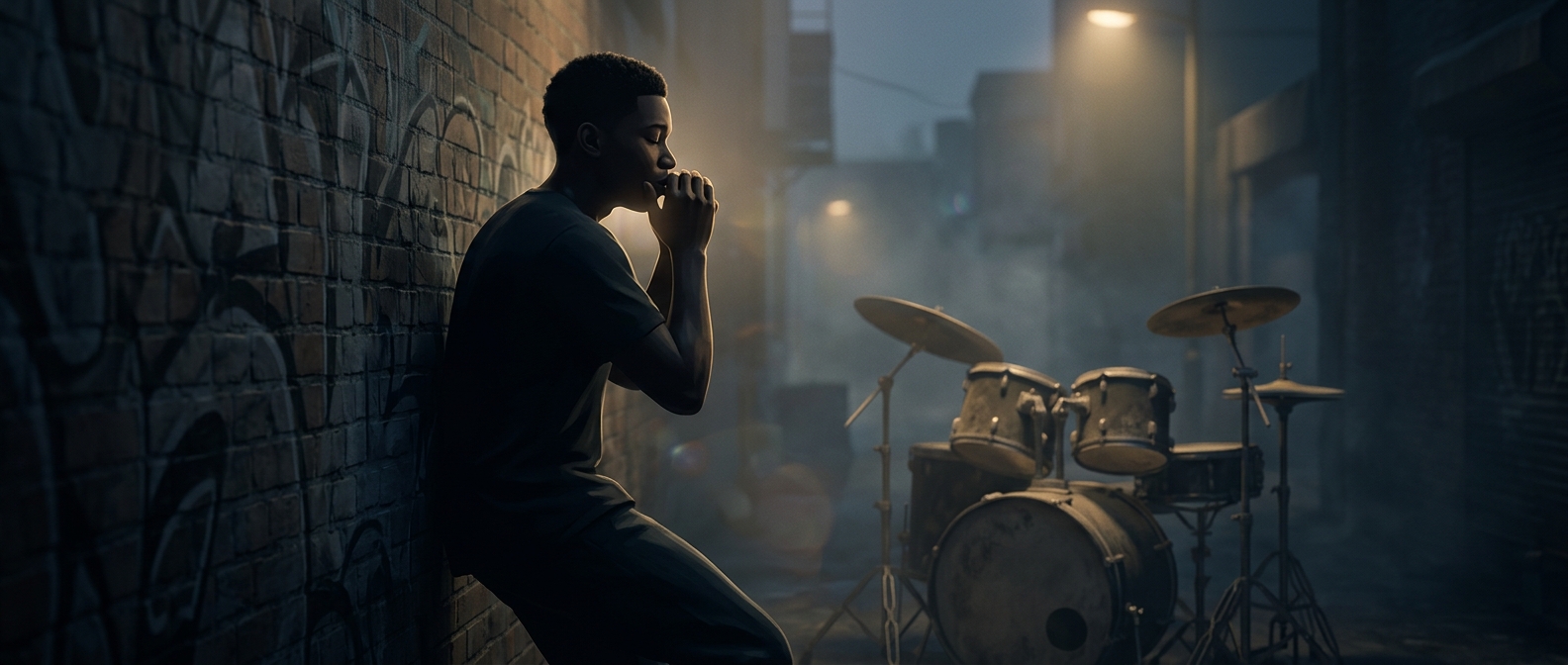
When a Beat Had to Come From Somewhere
Early rhythm machines could supply the steady kick-and-snare patterns a new song needed, but buying one was beyond reach for many young musicians. A voice was already on hand. By shaping breaths, lips, tongue, and throat into drumlike sounds, teenagers could keep a beat without a kit or electronic gear.
The need was practical, but the solution was not simply imitation. A low “b” or inward breath could suggest a bass drum; a sharp “ts” or pop could stand in for a snare or cymbal. Performers learned to connect these sounds into repeating patterns, then alter them on the fly. The body became both instrument and rhythm machine.
From Substitute to Performance
A machine repeats what it is programmed to play. A beatboxer can change the groove midstream, answer a rapper, or build a pattern around the sounds that individual performer can make. That flexibility made vocal percussion useful in settings where equipment was scarce—and compelling even when equipment was available.
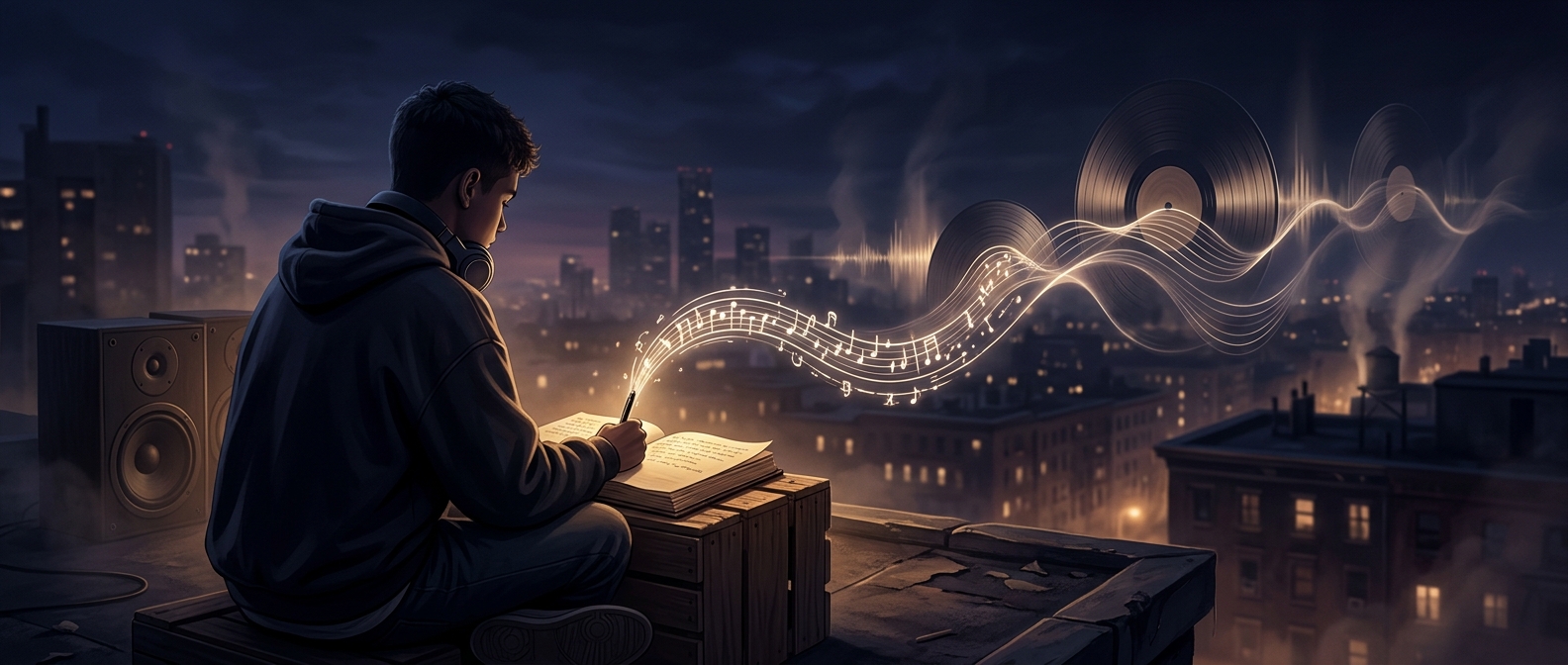
Beatboxing took shape within the wider culture of early hip-hop, alongside rapping, DJing, and other ways of making music with limited resources. The lack of affordable drums and rhythm machines helped create the opening; performers’ skill turned that workaround into its own art. A beat that began as a way to keep music moving could become a live display of timing, sound, and breath.