Why cabin pressure matters
At cruising altitude, the air outside an airliner is too thin for people to breathe normally. The cabin is kept at a higher pressure, much like a gently inflated container. If that pressure falls too far, less oxygen reaches the bloodstream with each breath, so passengers can become confused or lose consciousness before they realize what is happening.
From pressure drop to oxygen flow
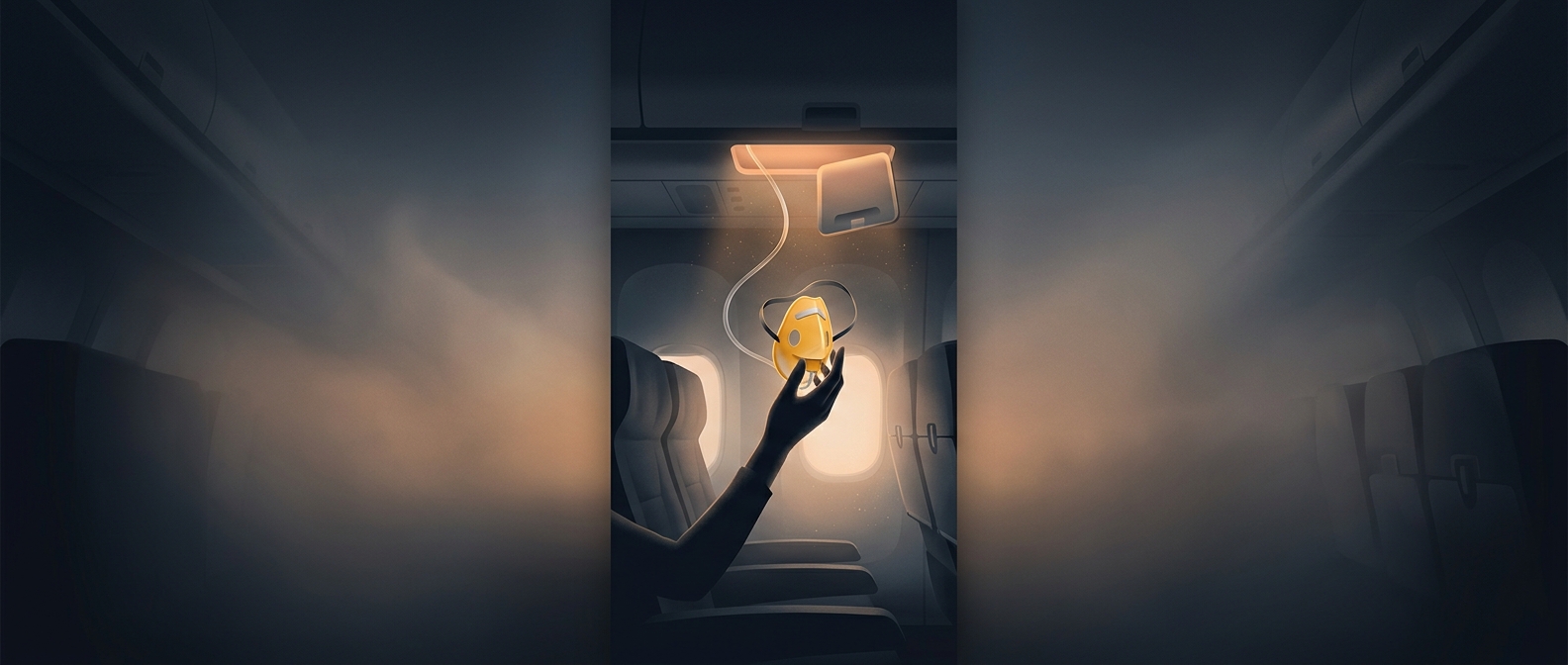
Sensors monitor cabin pressure. When readings cross a set threshold, the system releases the overhead panels and makes oxygen masks available. This automatic response matters because a rapid pressure loss can leave little time for a crew member to diagnose the problem and activate the masks manually.
The masks are a short-term aid, not a way to keep the cabin at normal pressure. They provide oxygen while pilots descend to an altitude where the outside air is breathable enough to continue without supplemental oxygen. The crew may also ask passengers to secure their own masks first; someone who waits to help another person could become impaired within moments.
Why the mask may not inflate
On many aircraft, pulling a mask starts oxygen flowing, but the mask itself may not puff up like a balloon. Oxygen can still be moving through it, and the bag is not necessarily a reservoir that must visibly fill. The important step is to put the mask over the nose and mouth and breathe normally.
The system is designed to respond before passengers can act. A pressure sensor triggers the release, turning a hidden change in the cabin into a clear instruction: put the mask on while the pilots bring the airplane down to denser air.