Why Ten Dots Could Stand for a Whole World
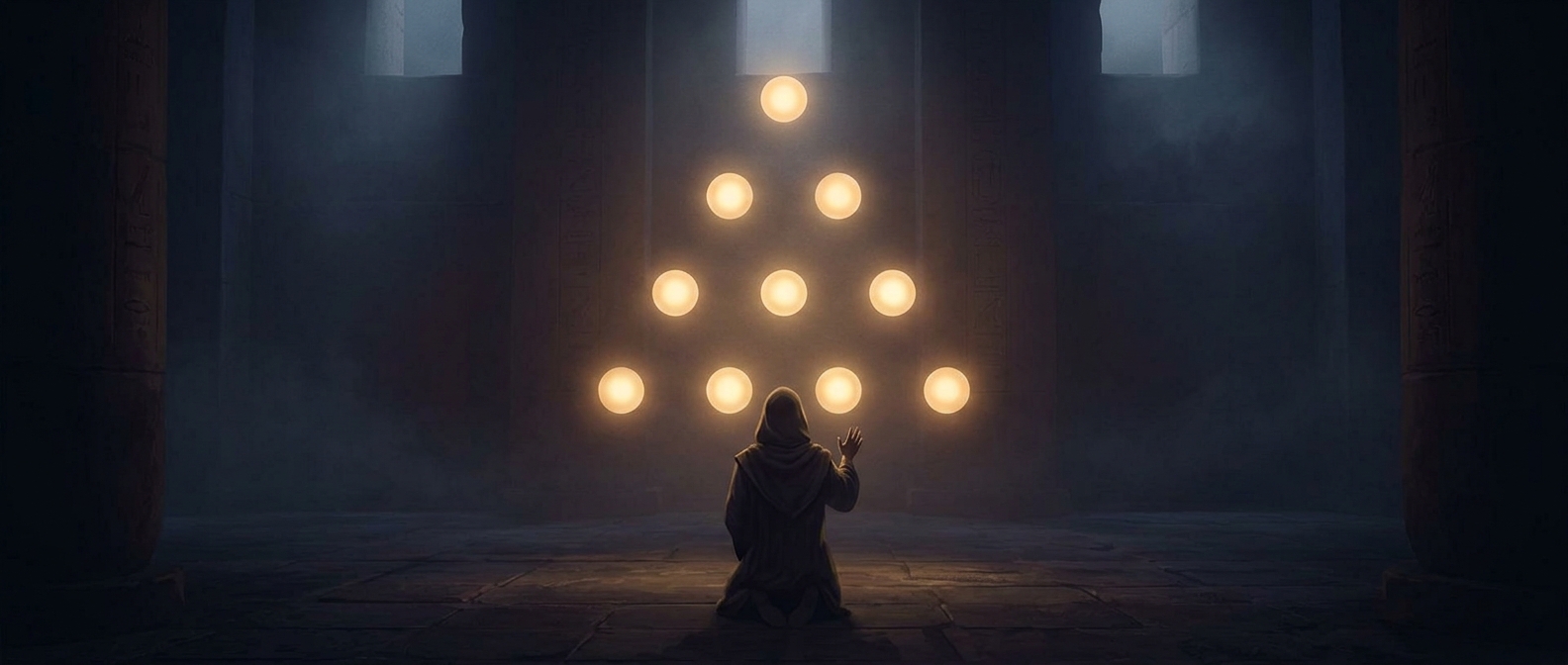
The tetractys is a triangle arranged in four rows: one dot, then two, three, and four. Its total is ten, but its importance to ancient Pythagorean thinkers went beyond counting. They treated the arrangement as a compact picture of how numbers could build up structure—and, symbolically, how a complete world might be organized.
From a Point to a Triangle
Each new row adds one more dot than the last. The rows therefore make a growing sequence, and together they form a larger triangle. In modern arithmetic, this is the fourth triangular number: 1 + 2 + 3 + 4 = 10.
The shape makes the sum visible. Instead of encountering ten as an abstract numeral, a viewer can see it assembled from smaller groups. That mattered in a tradition that looked for patterns in number and treated numerical relationships as clues to order.
A Symbol, Not a Scientific Diagram
For Pythagoreans, the tetractys could carry meanings beyond its geometry. Its four rows and total of ten made it a potent emblem of completeness and harmony. Those were philosophical and religious interpretations, not claims that the dot pattern physically explains the universe.
The symbol’s staying power comes from how much it packs into a simple image: four orderly steps, a clear triangular form, and a total that feels like a finished whole. A handful of dots could thus serve both as a lesson in addition and as a miniature expression of a larger worldview.