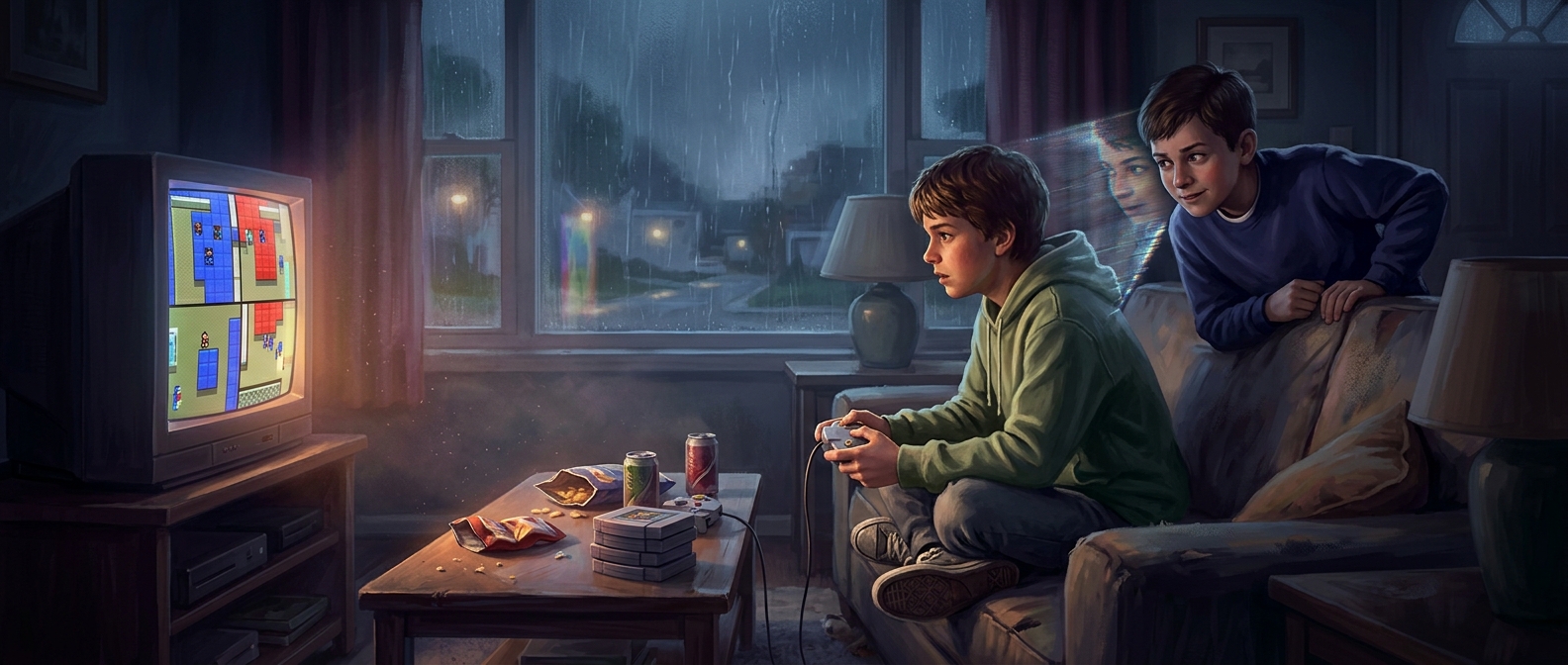
The shared screen was both a feature and a loophole
In couch multiplayer, several people played on one television, often with the picture divided into sections so each player could see their own character. That arrangement kept everyone in the same room—but it also put everyone’s view within everyone else’s reach.
In games built around hiding, ambushing, or moving out of sight, a quick glance at another player’s section could reveal what their character was doing. The peeker gained information the game intended to keep private, then could use it to choose a route or time an attack. The advantage took no special equipment or skill: it came from being able to see the whole television.
A design problem no split-screen could fully solve
The tension came from a mismatch between the game’s rules and the room. A game could hide an opponent from a player’s in-game camera, but it could not stop that player from looking sideways at a sibling’s or friend’s screen. Telling everyone not to peek depended on trust—and a close match gave players a reason to test that agreement.
Developers could make the tactic less useful by reducing how much information another view revealed, but hiding every clue could also make the game harder to read for the person playing. That tradeoff helped make screen-peeking a familiar part of local multiplayer: sometimes an unfair shortcut, sometimes a knowingly tolerated trick, and often a source of arguments that began before the next round loaded.