A voice built from notes and syllables
Hatsune Miku began as a voicebank: a collection of recorded speech sounds that music software can join and shape into sung words. A producer enters lyrics and a melody, then adjusts details such as timing, pitch, and vibrato. The result can sound polished, playful, or deliberately artificial; it depends on the choices made by the person composing the song.
That setup changes who gets to make pop music. Miku is not tied to one singer’s repertoire or schedule. Producers can write songs for her, share them online, and build their own versions of her musical persona. Her catalogue and public image have therefore grown through contributions from many creators, rather than through a single performer’s career.
How a digital performer takes the stage
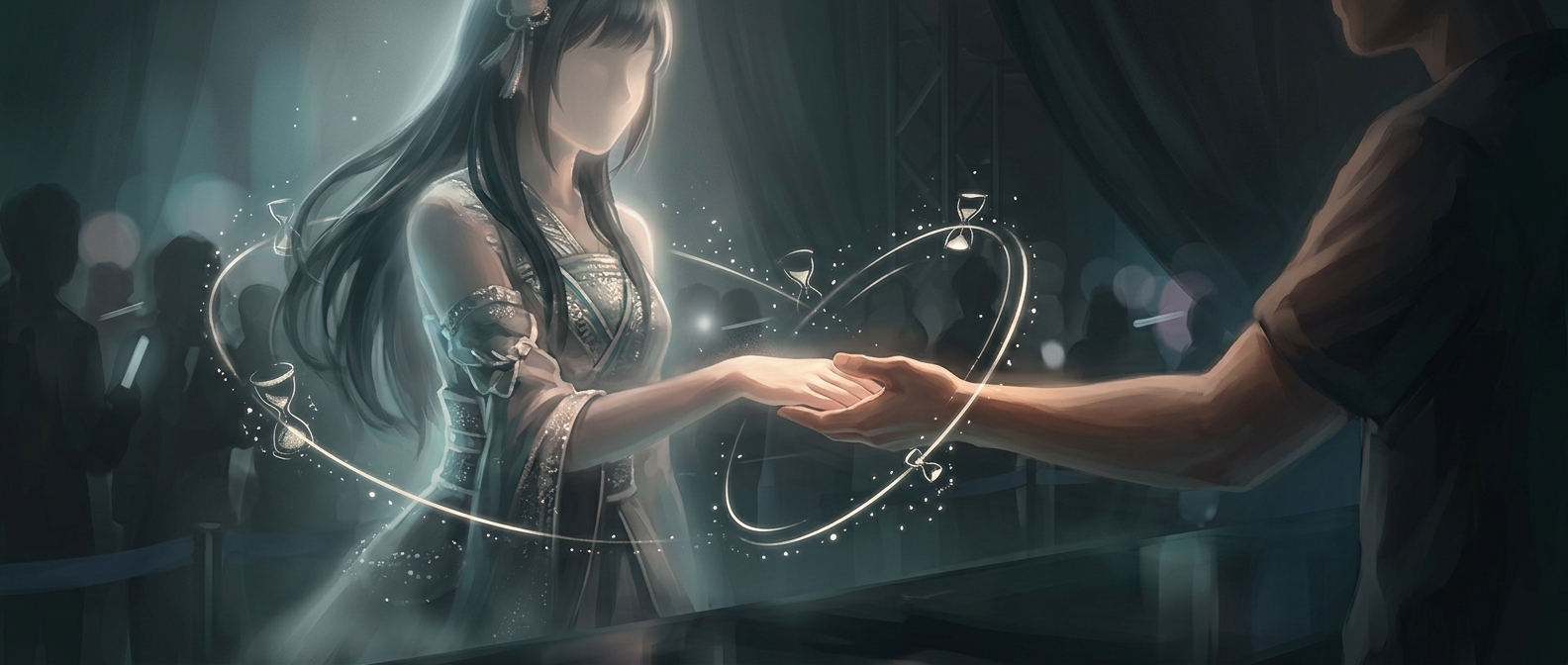
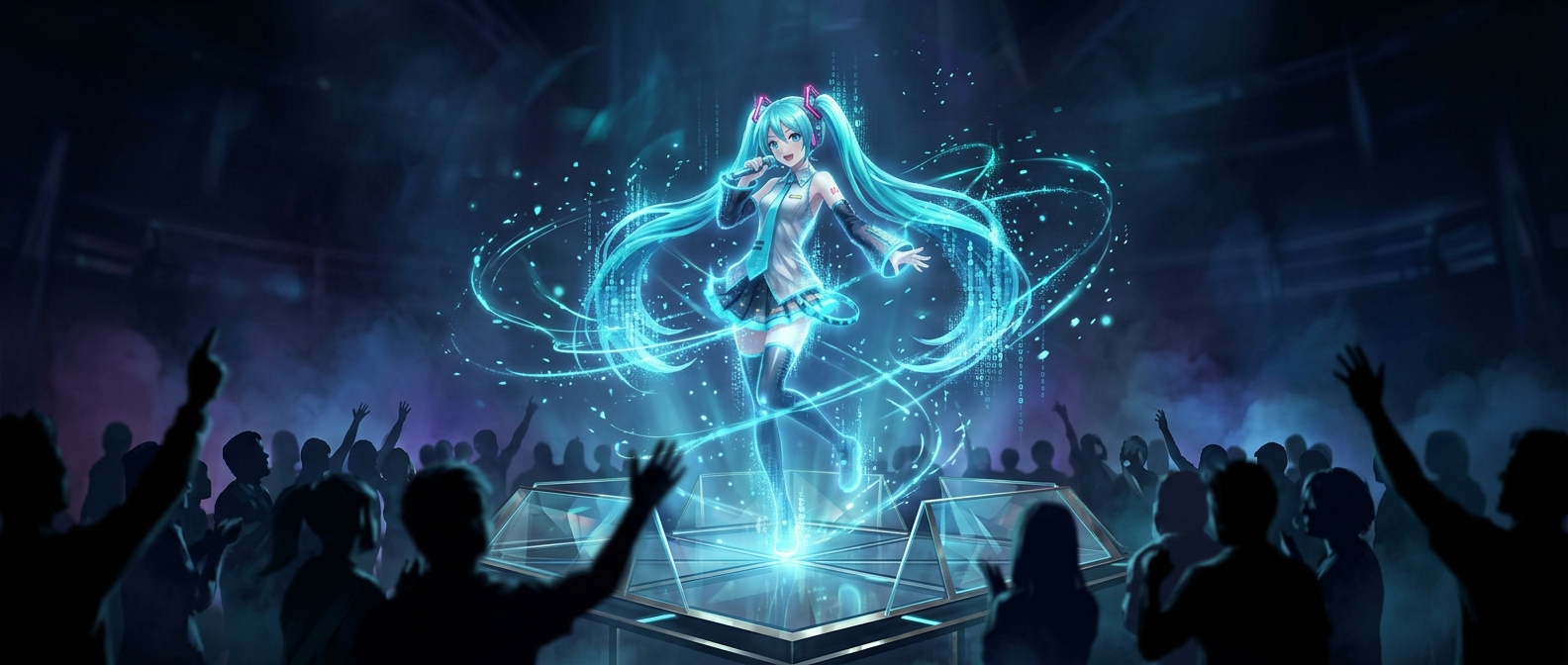
At concerts, the animated Miku is projected onto a special transparent screen, often using a reflective projection technique that makes the image appear to stand onstage. The visual is carefully synchronized with the music, while human musicians perform alongside it. “Hologram” is the familiar shorthand, though the effect is a projected image, not a free-floating three-dimensional figure.
The screen is a practical boundary: Miku can dance, change costumes, and appear consistently from show to show, but she cannot improvise like a live vocalist. The human musicians and production team supply the timing and energy that make the performance feel like an event rather than a playback.
The audience helps make the idol
Fans do more than listen. They discover and circulate songs, create fan art and choreography, and bring the character’s signature glow sticks and gestures into the venue. That participation links an online community to a physical concert hall.
Miku’s unusual appeal comes from this exchange: the performer is digital, but the culture around her is made by people. Each concert turns songs written across a dispersed creator community into a shared, live gathering.