Why a Sidewalk Drawing Needs a Sweet Spot
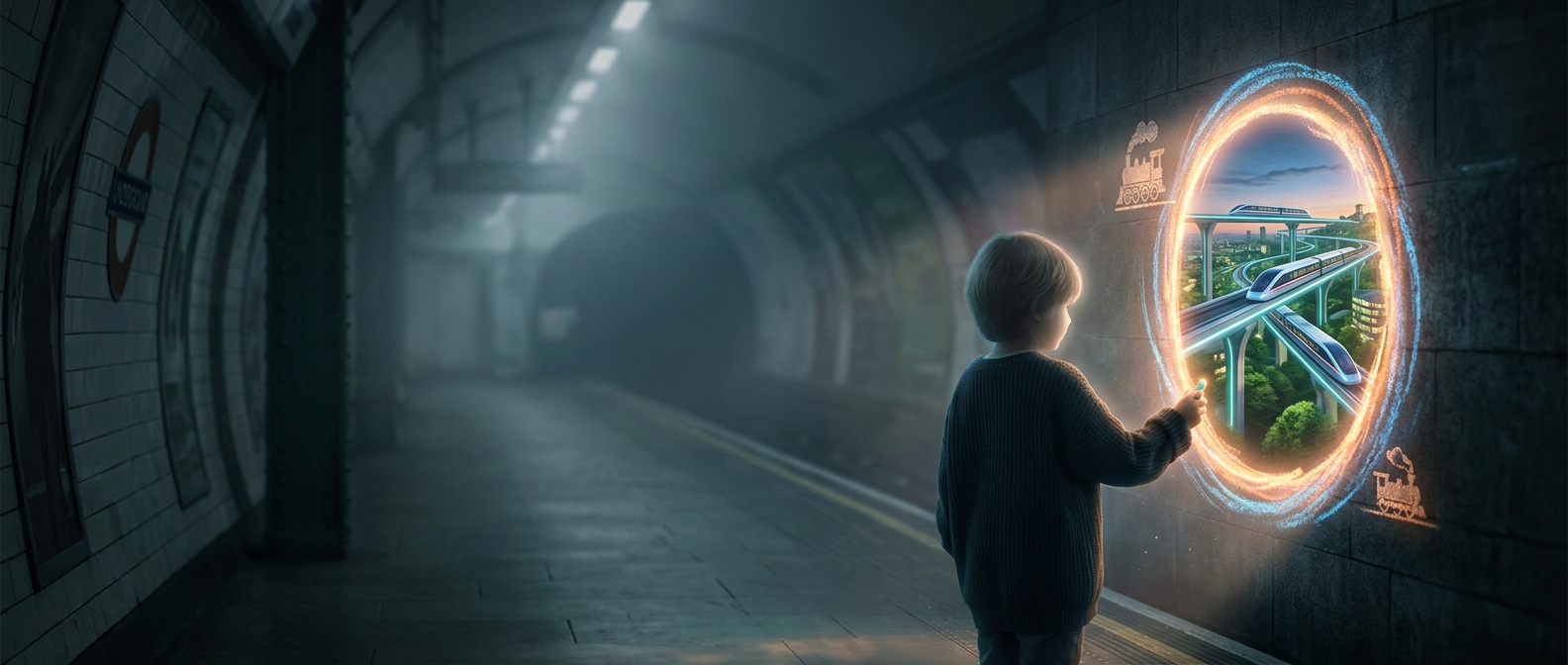
A convincing pavement “hole” is not drawn as a normal picture viewed from any angle. It is a distorted image designed to look right from one particular place. From that spot, the stretched lines and shapes line up in perspective, so the marks appear to belong to a vertical scene rather than a flat patch of concrete. Move to the side, and the alignment breaks: the opening elongates or tilts, revealing the drawing’s true surface.
Artists can plan the image backward from the intended viewpoint. They decide what the opening should look like to a passerby standing in a particular area, then stretch and skew the drawing across the pavement to compensate for the oblique view. A camera or a simple grid can help them check whether the shapes converge as intended.
How Chalk Supplies the Missing Depth
The illusion depends on several clues agreeing. A dark interior suggests a space that recedes; a bright rim can seem to catch light; and overlapping edges make one surface appear to sit in front of another. These are depth cues—visual patterns the brain uses to estimate distance even when the image is flat. Because the pavement itself is familiar and continuous, the drawn cues create a momentary conflict: the scene looks deep, but the ground says otherwise.
That conflict is strongest from the planned viewing spot and usually weakens as the viewer walks past. The drawing does not open a real gap or change the sidewalk; it changes how the surface is interpreted. Its practical consequence is simple: the “hole” works best as a picture with a viewing position, not as an obstacle occupying the pavement.