A portal changes the route, not the arrival
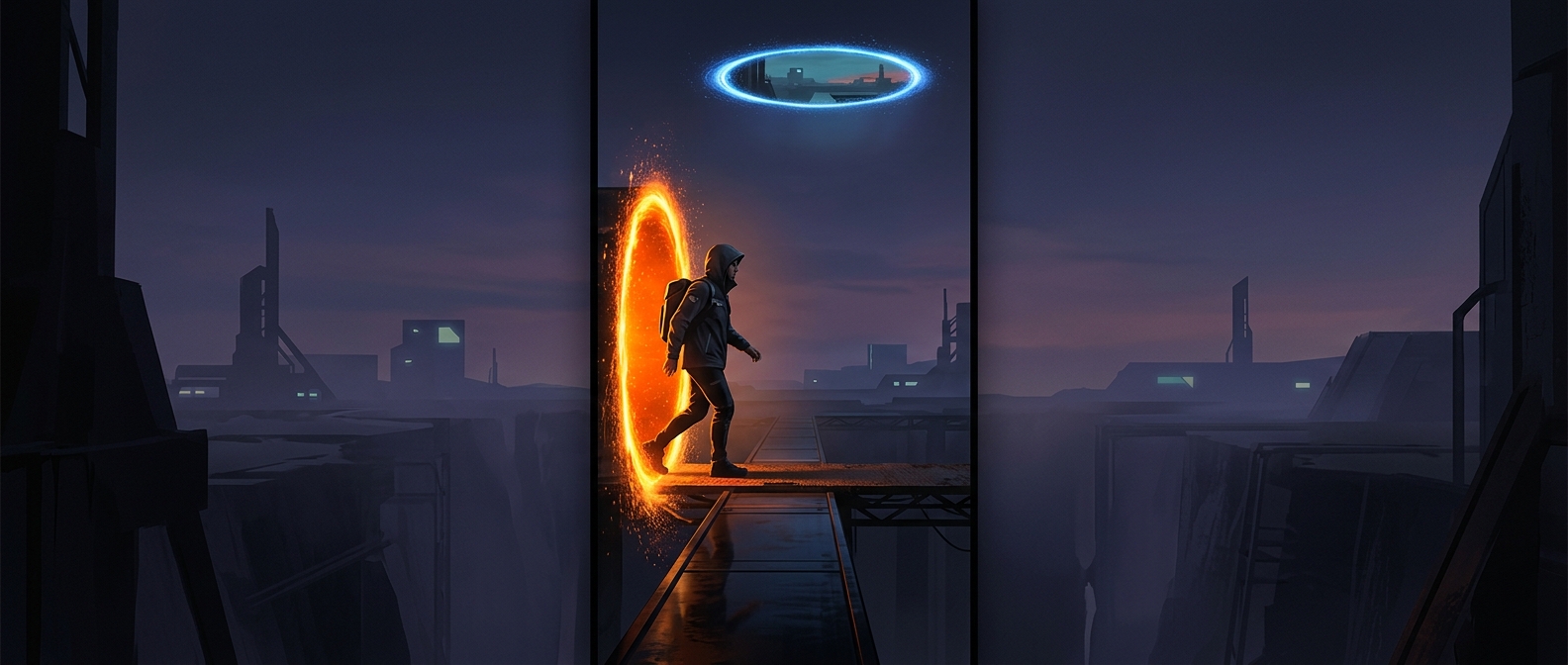
A portal can move someone instantly from one place to another without changing what is waiting on the other side. If its exit opens above the ground, the traveler arrives with empty air beneath them—and gravity takes over at once. The shortcut has skipped the distance, not the drop.
Why the landing still matters
A safe arrival depends on where the exit is placed, not just on whether the destination is correct. A doorway at ground level connects two usable spots; the same doorway suspended over a ledge or shaft delivers someone into a fall. The portal acts like a passage between locations, not a platform that catches or cushions its users.
That distinction turns portal placement into a transport problem. A builder must consider the space around the exit as well as the target: Is there solid ground below? Is the landing area clear? Can travelers step out without being sent toward another hazard?
The shortcut’s hidden cost
A midair exit makes the danger immediate because there is no approach to slow down and inspect the landing. The traveler emerges already committed to the fall. In a world where portals can be opened freely, choosing a destination is only half the job; choosing a safe arrival point is what makes the shortcut usable.