The choreography hidden in a marching formation
A formation can look effortless only because its members are constantly solving a small coordination problem: where to place each step while keeping pace with everyone nearby. In a tight line, even a slight difference in stride can make shoulders collide or leave a visible gap. Teams therefore practice not just marching, but matching step length, timing, posture, and arm movement.
How teams stay in sync
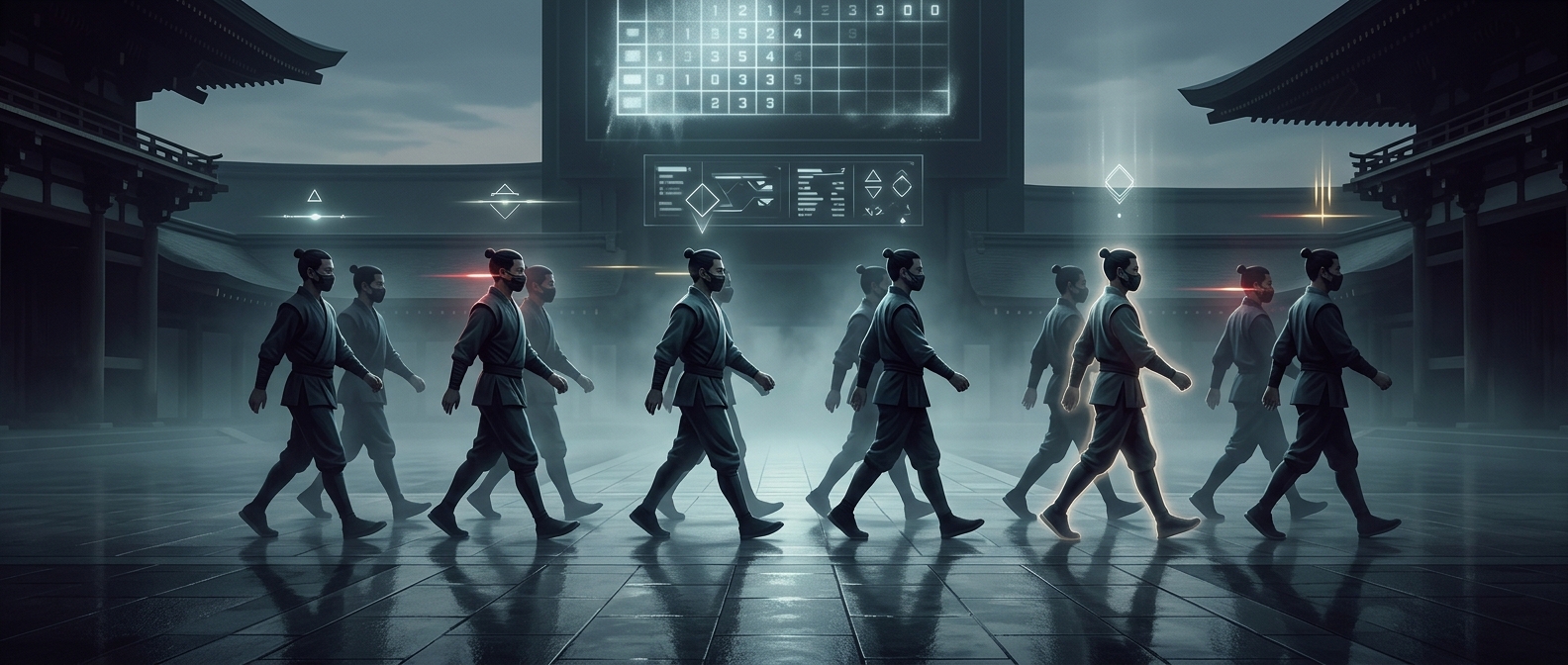
Marchers use shared visual cues—the person ahead, the edge of a row, or a planned change in direction—to judge their position. They also learn the sequence until it becomes familiar enough to perform while moving. That matters because a formation may need to turn or shift shape without losing its spacing. Each person has to adjust subtly, while still keeping the same rhythm as the group.
The result is a performance in which individual precision serves a collective pattern. A single marcher can be perfectly on beat yet still disrupt the picture by drifting out of line; success depends on everyone making the same movement at the same moment.
Why the practice is worth watching
The striking part is how much information a formation carries. A clean turn or sudden change of shape shows that dozens of people have coordinated their timing and spacing without stopping to work it out in the moment. What looks like simple walking is really a moving geometry problem, solved one synchronized step at a time.