A city street becomes the tug-of-war field
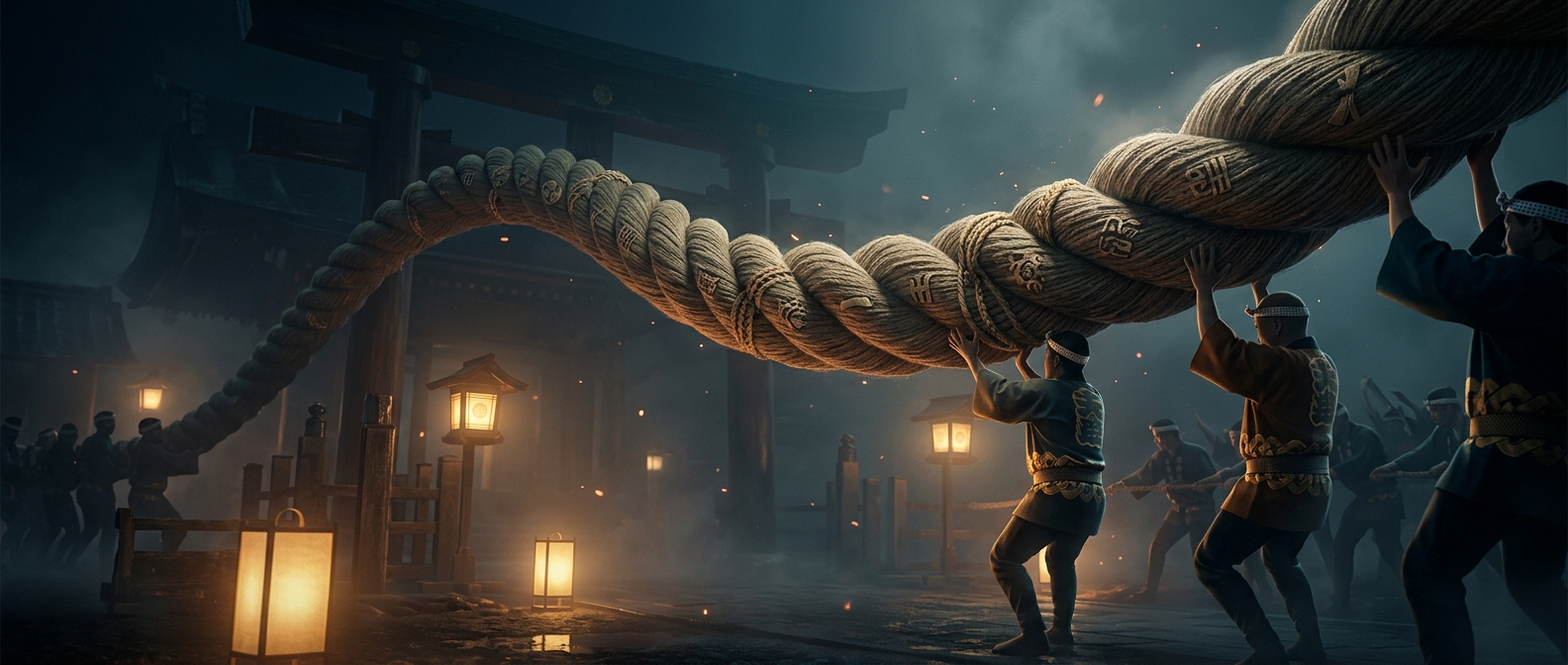
Naha’s Great Tug-of-War, or Naha Ōtsunahiki, turns a central street into a festival ground. The enormous straw rope is assembled from two thick halves, joined at the center with a wooden connector. Teams line up on opposite sides and pull until one side drags the other across the street.
The scale is part of the spectacle, but the rope’s construction matters too: it is braided from many smaller strands, making it strong enough for a crowd to pull together. People who are not on the main rope can join the effort through smaller ropes attached to it, so participation spreads along the length of the procession.
A contest tied to hopes for the harvest
The opposing sides represent east and west, and the contest carries an older agricultural meaning: victory is traditionally associated with good fortune and a plentiful harvest. The pull is therefore more than a test of strength. It turns a shared wish for prosperity into a public, physical act.
After the contest, pieces of the straw rope are prized as good-luck keepsakes. That gives the event an unusually tangible ending: a festival object that thousands have struggled over becomes something people can take home. In Naha, the harvest hope is not just announced—it is woven into a rope, carried through the city, and pulled by the crowd.