A Chair Designed for the Crowd
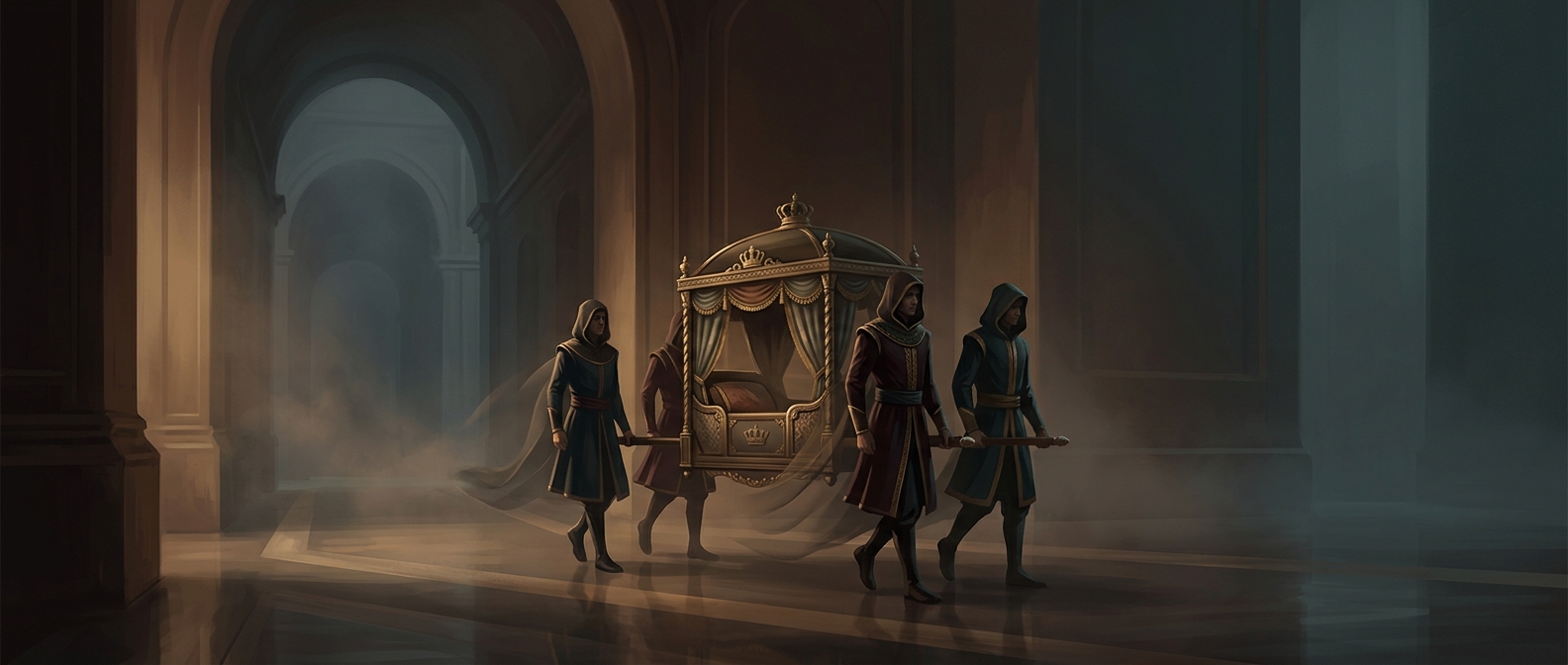
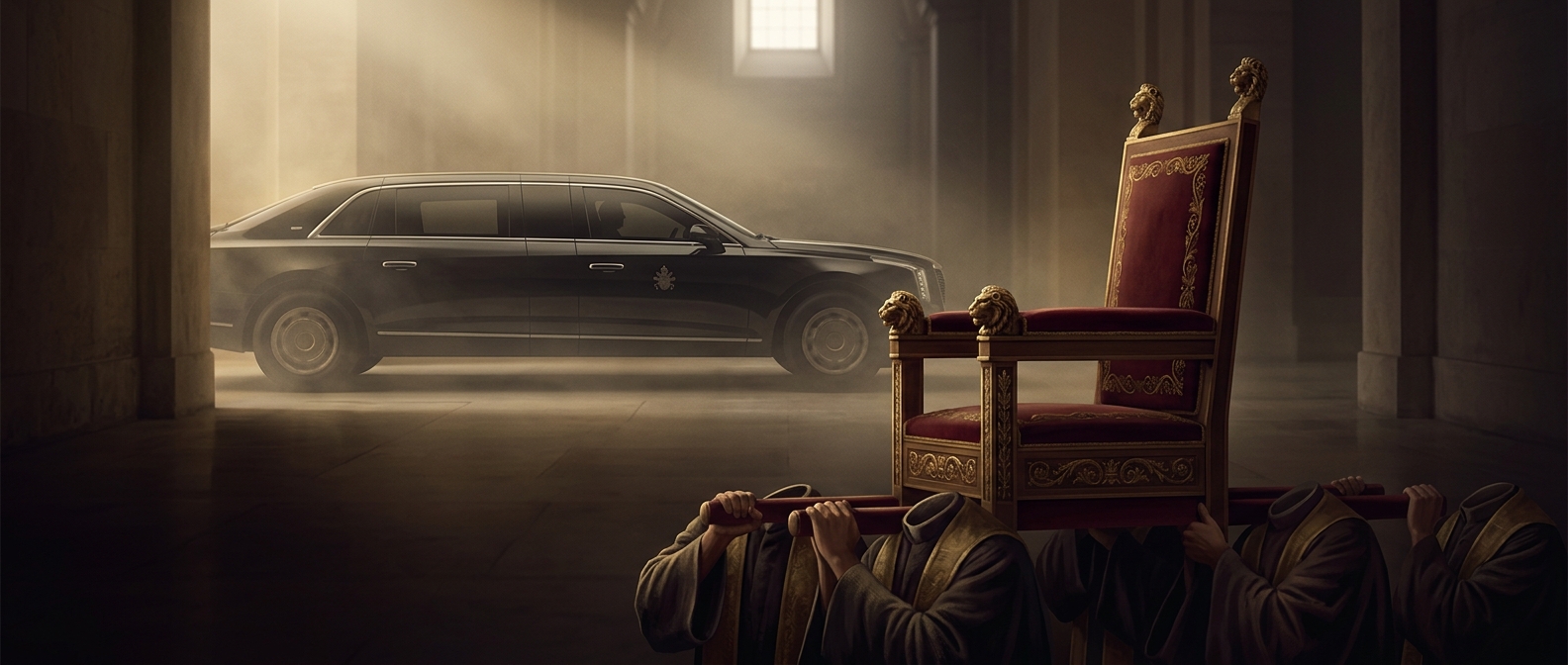
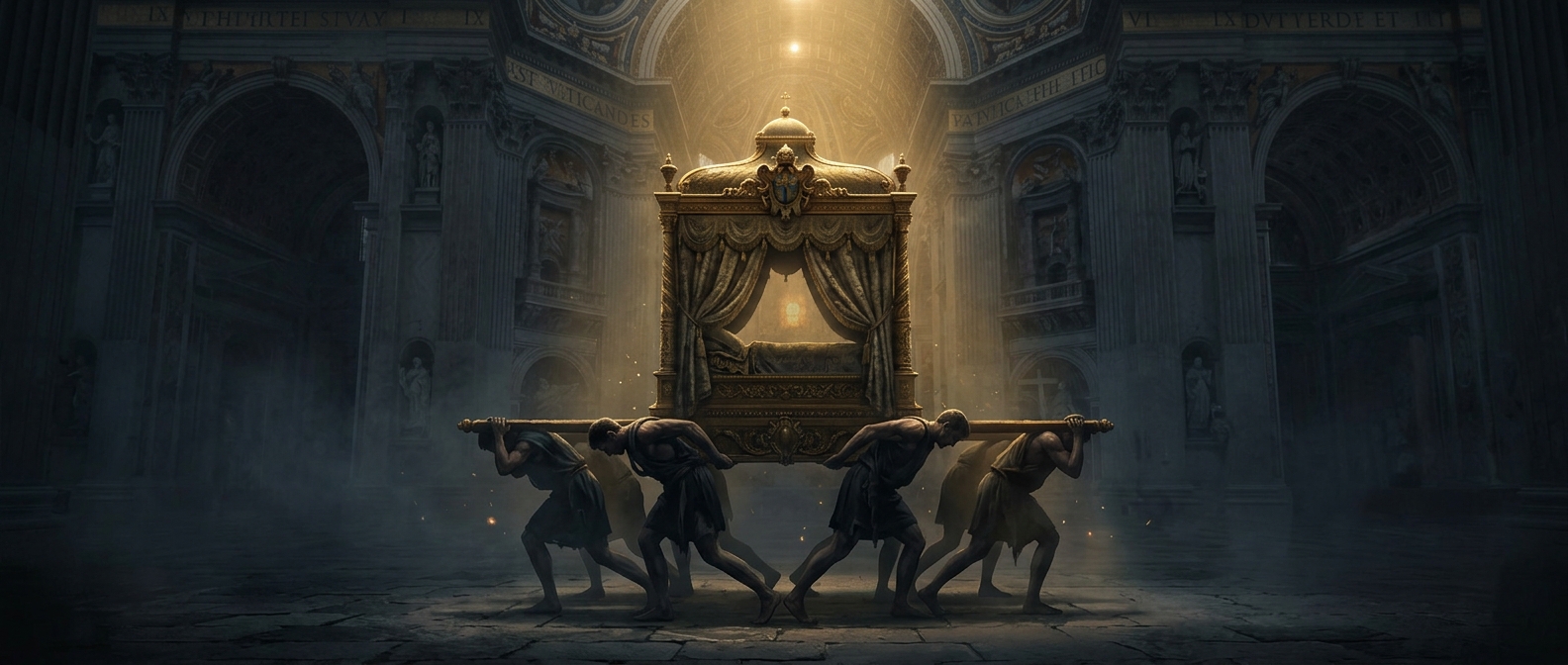
The sedia gestatoria was a portable papal throne: a seat fixed to long carrying poles, lifted by attendants and borne through a church or public procession. Its height gave people gathered at a distance a clear view of the Pope. In an era without cars or loudspeakers to make an arrival visible, the chair itself helped turn movement through a crowd into a public ceremony.
That design shifted the work from wheels and roads to the people carrying it. A chair suspended on poles can sway when its bearers step out of rhythm, accelerate, or turn. The attendants had to keep their pace and posture coordinated so the seat stayed level while moving through confined passages or among spectators. Even a short procession demanded controlled effort, not simply strength.
Transport as Ceremony
The chair was not just a way to get from one place to another. Its elevation and measured movement made the Pope visible and marked his passage as an event. That ceremonial purpose also constrained how it could be used: it suited a formal procession, but it was cumbersome compared with ordinary travel.
The contrast is easy to miss beneath the rich upholstery. The person in the seat could appear still and composed, while the chair’s motion depended on several attendants absorbing its weight, matching one another’s steps, and adjusting together at every turn.