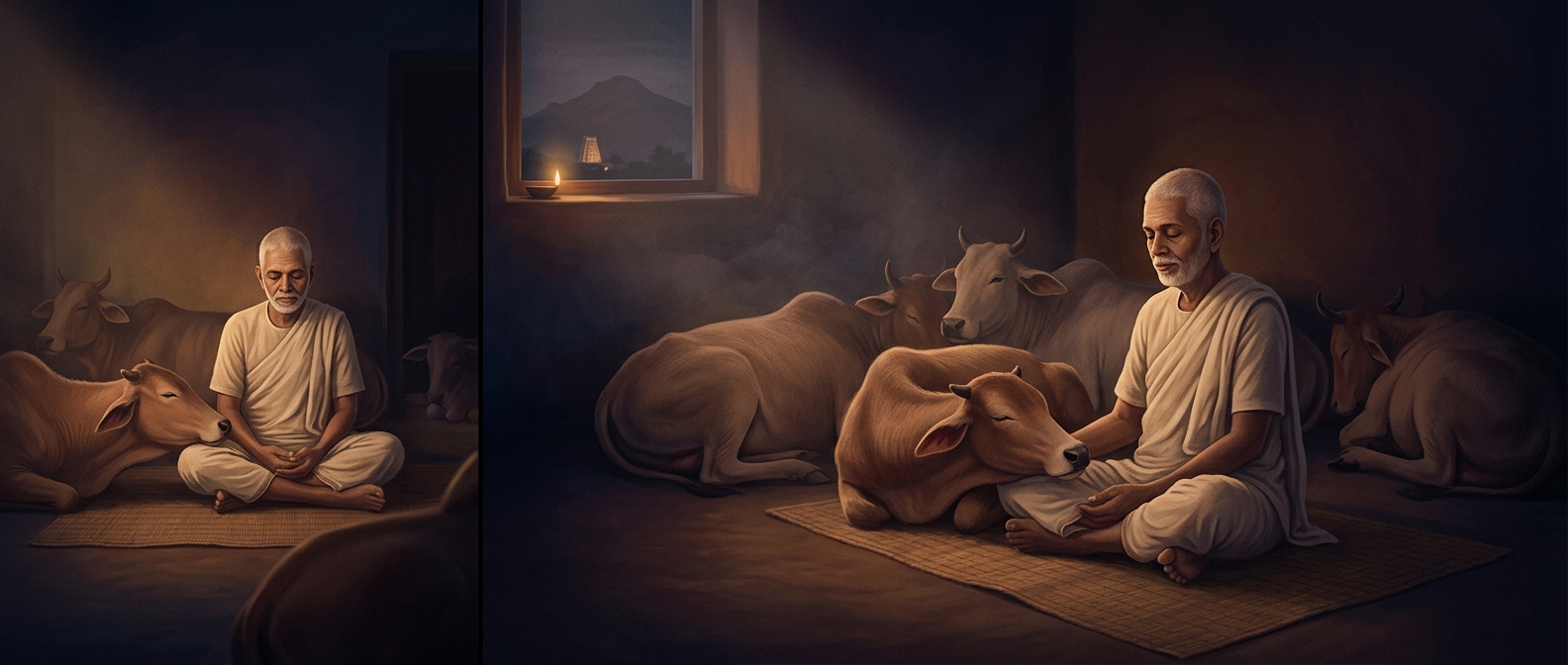
Why saving an animal could be a religious practice
For Chatral Rinpoche, freeing animals was more than an act of rescue. It expressed a central Buddhist commitment to compassion: living beings should not be harmed when they can be spared. In Tibetan Buddhist practice, this kind of animal release is often called tsethar. Practitioners may also understand it as a way to cultivate compassion and generate spiritual merit—benefit understood within the tradition, not something that can be measured as a scientific effect.
The rescue depended on what happened next
Buying animals destined for slaughter interrupted a chain of events: a seller received payment, the animals were removed from that fate, and they were taken somewhere they could live. But survival depended on the final step. A fish released into unsuitable water, or an animal placed in an unsafe setting, might not remain safe. The aim, as described here, was therefore not release for its own sake, but release into waters or sanctuaries where the animals could be protected.
That practical detail connects the religious intention to a concrete consequence. Compassion had to reach beyond the moment of purchase and account for what the rescued animals needed afterward.
A large act made from individual lives
The scale—millions of animals—can make the practice sound abstract. Its meaning rests on the opposite idea: each animal is a living being whose death might be prevented. The striking part is how a spiritual commitment became material intervention, using money and a safe destination to alter what would otherwise happen to individual animals.