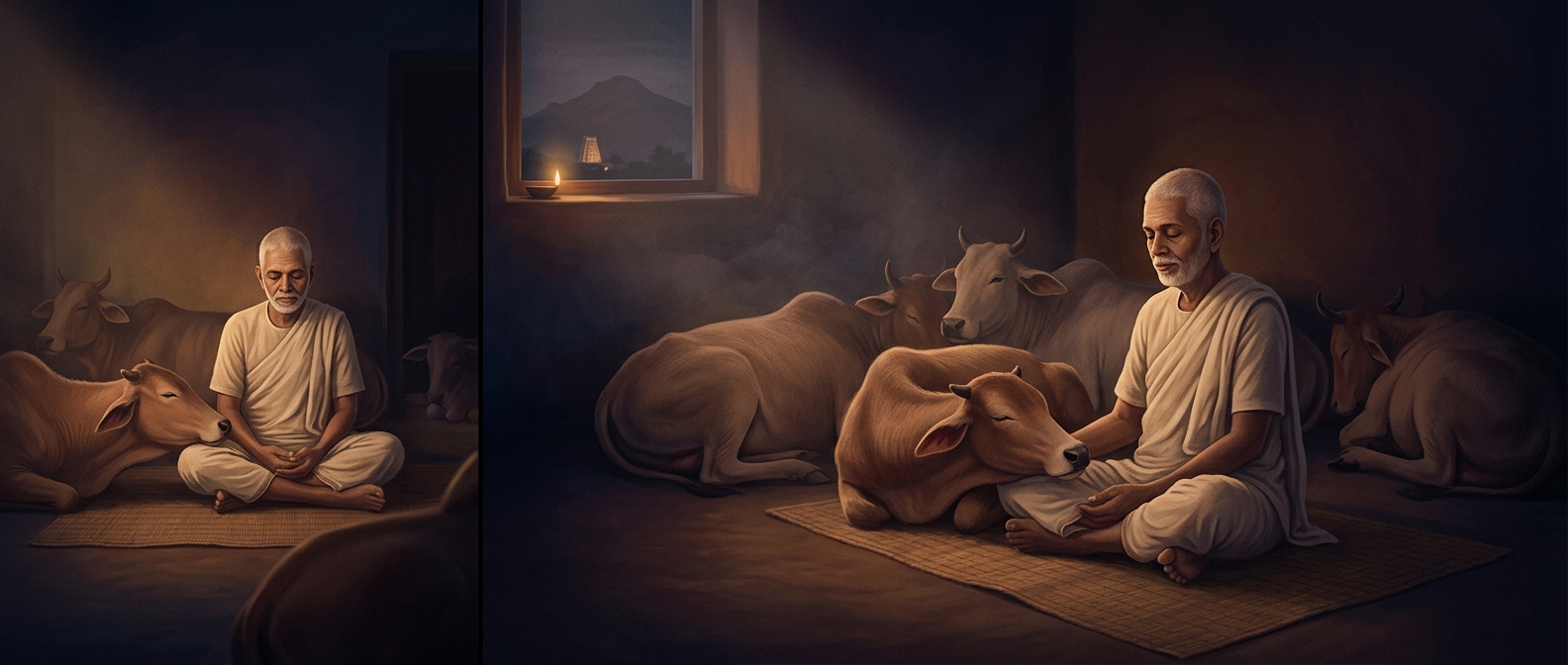
The Offering Changed Along the Road
In the devotional story, Eknath is carrying sacred river water for a pilgrimage offering when he encounters a donkey near death from thirst. He gives the water to the animal rather than saving it for the ritual destination. The act turns the pilgrimage’s central question from Where should this offering go? to Who needs it now?
The water matters because it is not ordinary cargo: it has been gathered and carried for a religious purpose. Giving it away means relinquishing the planned ceremony, not merely sharing a spare drink. The story’s force comes from that choice under pressure—the donkey’s need is immediate, while the offering can be made in another form, or not at all.
Devotion Measured by Compassion
In bhakti, a Hindu tradition centered on loving devotion, religious practice is meant to express a relationship with the divine. The donkey episode makes that idea concrete. Eknath does not treat the ritual and compassion as equal claims to be balanced later; he recognizes care for a vulnerable creature as the more urgent expression of devotion in that moment.
That is why the story is remembered as more than an act of kindness. The water’s sacred purpose is not simply canceled when it reaches the donkey. In the story’s moral logic, the offering becomes meaningful through the compassion that directs it. A pilgrimage may carry a person toward a holy place, but this encounter makes the road itself a test of what the journey means.