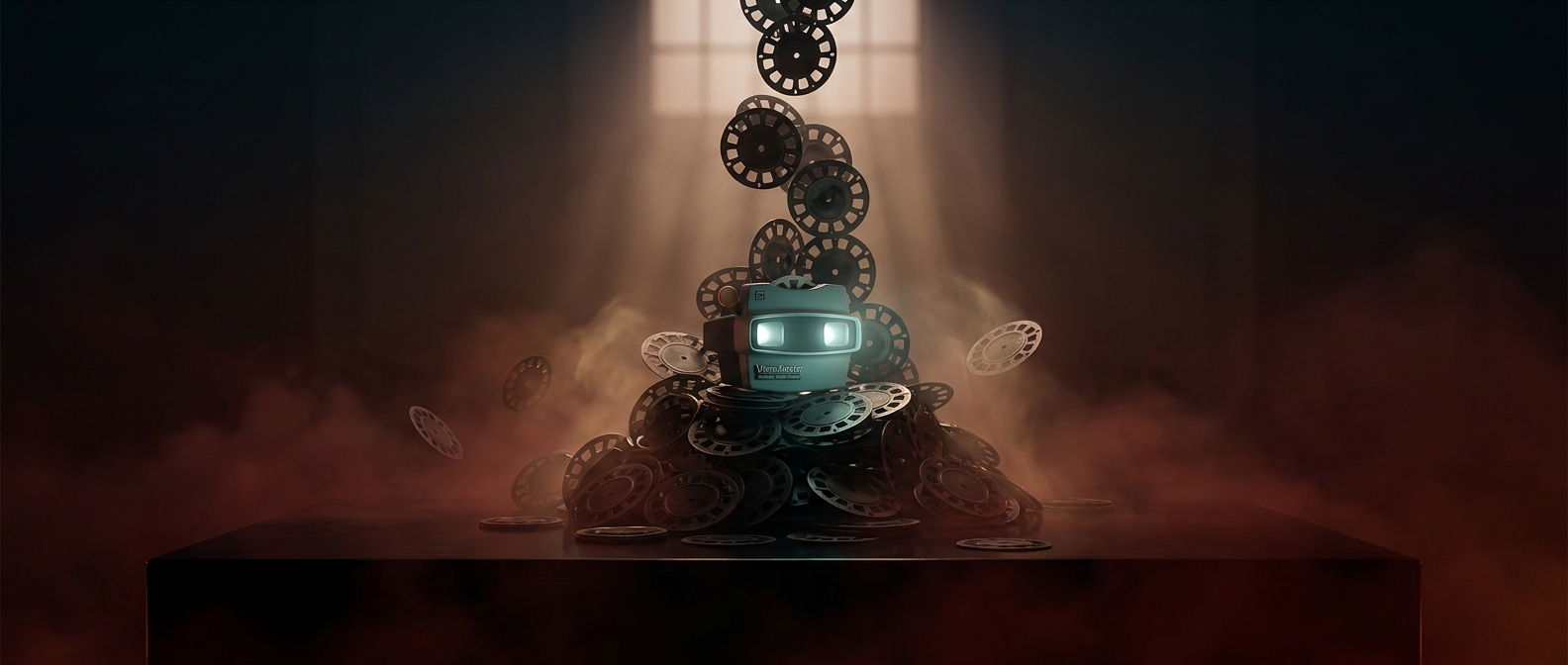
A camera built around the View-Master reel
The View-Master’s 3D effect depended on a pair of photographs, not on a special kind of film image. Two lenses captured nearly simultaneous views from slightly different positions, much like a person’s separated eyes. When a viewer showed one photograph to each eye, the small difference between them created a sense of depth.
The Personal camera extended that system beyond professionally made reels: owners could photograph their own scenes. But a stereo pair was only the beginning. To work in a View-Master, each pair had to be cut to precise dimensions and positioned in the correct orientation inside the company’s distinctive reel. A small misalignment could make the images uncomfortable to view or spoil the 3D effect.
The bottleneck was finishing the pictures
That precision made the camera part of a larger, less convenient process. Exposed film did not become a ready-to-view reel by itself; someone had to select and prepare the tiny images, then mount them in the right places. The specialized equipment and labor put a technician between taking a photograph and enjoying it in the viewer.
This was a different bargain from ordinary snapshot photography. The Personal camera offered a way to make private 3D souvenirs, but the result depended on a proprietary format and careful assembly. The difficult part was not just capturing two views—it was turning them into a reel that the viewer could display correctly. That extra step helps explain why a clever personal camera could remain an enthusiast’s tool rather than an effortless vacation camera.