A cast became a controller input
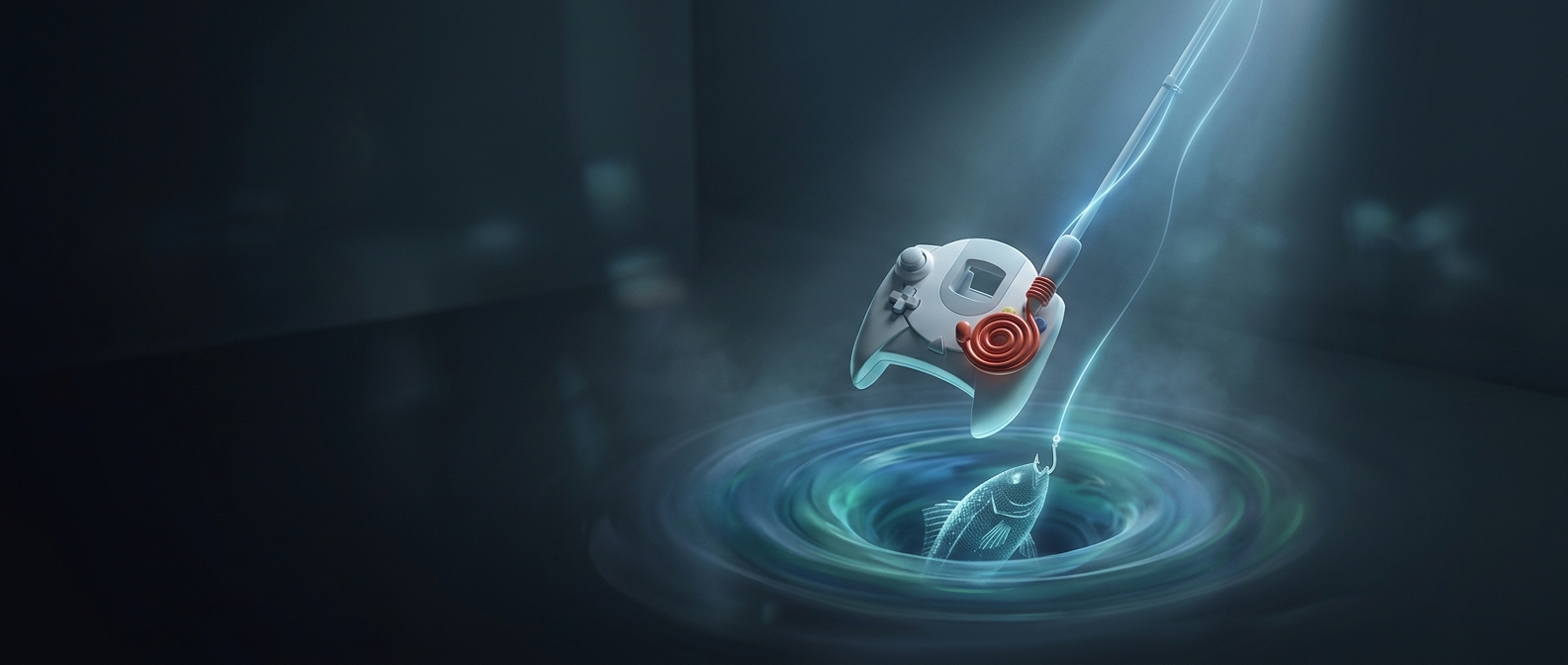
The Dreamcast fishing rod was built to make a fishing game feel less like steering a character and more like handling tackle. Instead of pressing a button to cast, a player could swing the rod; the controller’s motion sensor detected the movement and translated it into an on-screen cast. The gesture supplied information an ordinary gamepad could not: how the player moved the rod, not just which button they pressed.
The reel did more than decorate the rod
A rotating handle let players reel in line by turning it, while buttons on the controller handled other game commands. In Sega’s Sega Bass Fishing, that physical sequence—cast, wait for a bite, then reel—gave the game a more hands-on rhythm. Players still had to follow the game’s prompts and timing; the controller did not reproduce the resistance or unpredictability of a real fish.
Sega sold the rod as a Dreamcast accessory, not as the console’s standard controller. Its design shows how a peripheral could reshape a game around a specific activity: the reel was no longer merely an image on screen, but a thing the player had to turn. That made a living-room fishing game feel distinct from one played with a conventional pad.