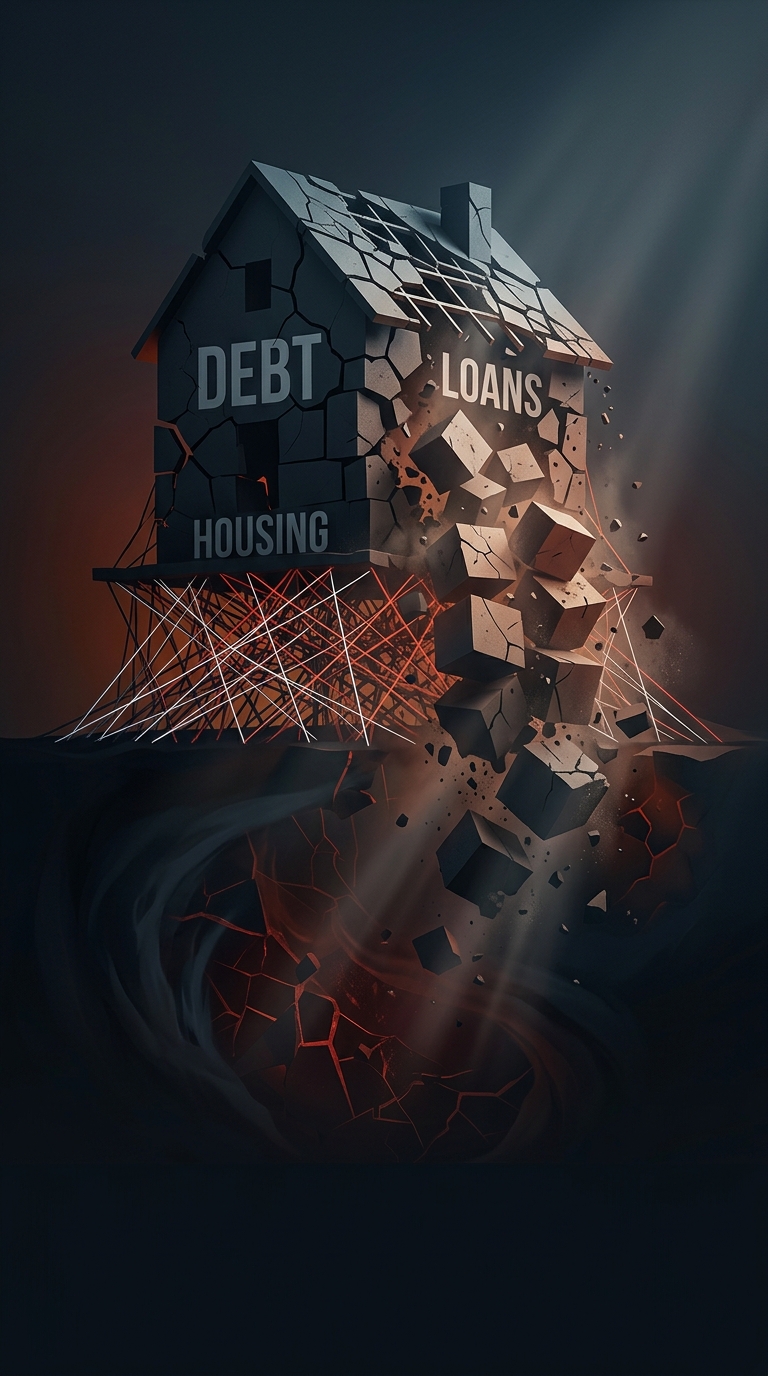
How risky mortgages set off a global financial crisis
The loans at the center of the crisis were subprime mortgages: home loans made to borrowers with weaker credit histories or less ability to handle payments. Many carried adjustable interest rates, meaning the monthly bill could rise after an introductory period. As payments climbed and home prices stopped rising, some borrowers could no longer afford their loans—or sell their homes for enough to pay them off.
Defaults alone, however, would not have shaken the world economy. The danger grew because lenders bundled mortgages into securities and sold them to banks and investors. A security is a financial product that pays out from a pool of loans. This process spread mortgage risk far beyond the original lenders, while making it harder for buyers to see how many underlying loans were likely to fail.
Why mortgage losses became a banking emergency
Investors treated many mortgage-backed securities as safer than they were. Banks and other financial firms also borrowed heavily to buy financial assets, so even a comparatively small decline in asset values could threaten their ability to repay debts. When missed mortgage payments mounted, the value of mortgage-linked investments fell, and firms could not tell with confidence which institutions were exposed to the worst losses.
That uncertainty froze lending. Banks pulled back from lending to one another and to businesses and households; financial firms failed or needed emergency support. Because these institutions and markets were connected across countries, a U.S. housing collapse became a global credit crisis, helping trigger a deep recession.
The memorable chain is not simply “bad loans caused a crash.” Risky mortgages were turned into widely held investments, and heavy borrowing made the resulting losses capable of bringing down the machinery of credit.