Why the ball runs against the wheel
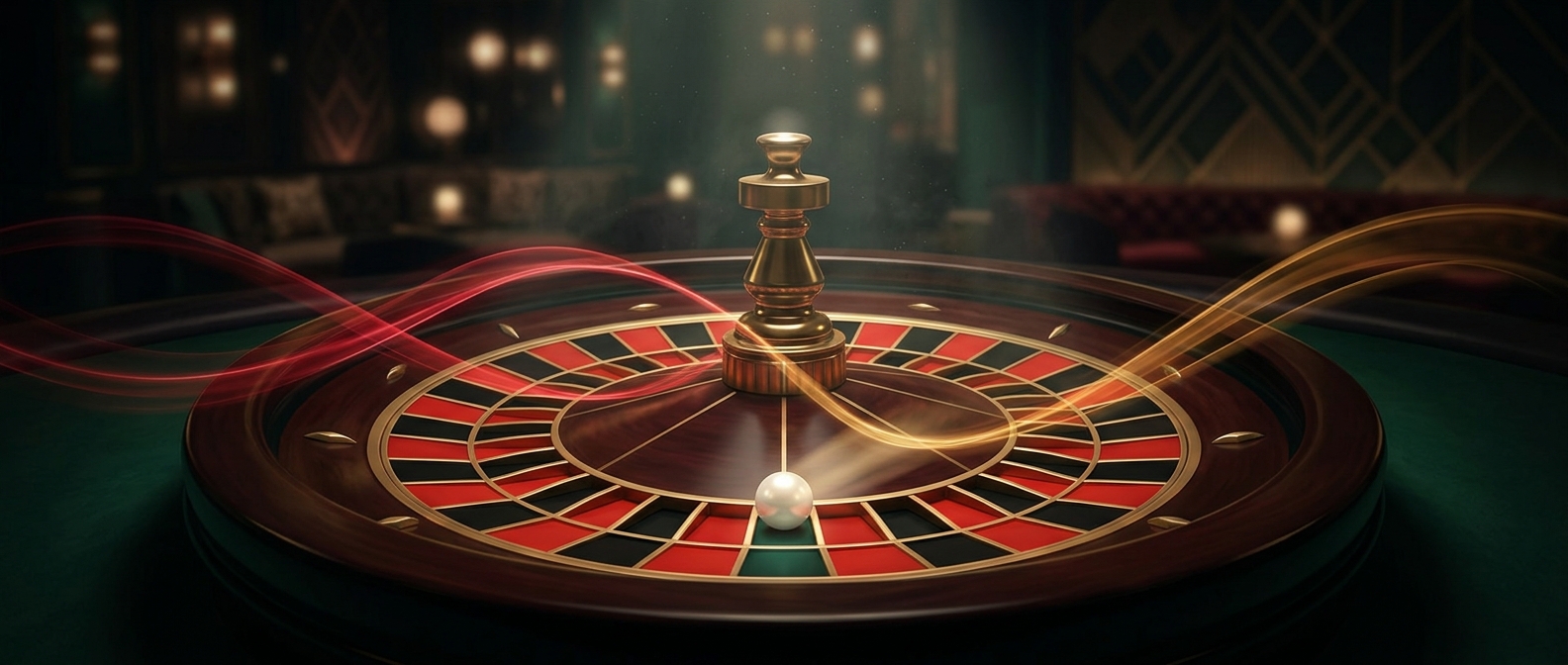
A roulette wheel and its ball move in opposite directions: the croupier sends the ball around the raised outer track while the numbered rotor turns beneath it. The ball can circle the rim several times before gravity and friction slow it enough to leave the track.
That counter-rotation creates a moving meeting point. As the ball loses speed, the pockets and small metal obstacles on the rotor keep sweeping past underneath it. The ball does not simply descend into the number that happens to be closest at the moment it first slows; it can strike a deflector, bounce, and cross several pockets before settling.
Why the opposite spin does not reveal the result
The direction of travel is predictable, but the exact landing is not. Small differences in the ball’s speed, the wheel’s speed, the moment the ball drops, and the way it hits an obstacle can change its final path. Once the ball reaches the pocket area, those details matter more than the broad fact that it began moving against the rotor.
The result is a physical sequence with a visible beginning and a highly sensitive finish: the ball circles one way, the wheel turns the other, and the last few rebounds determine which pocket catches it.