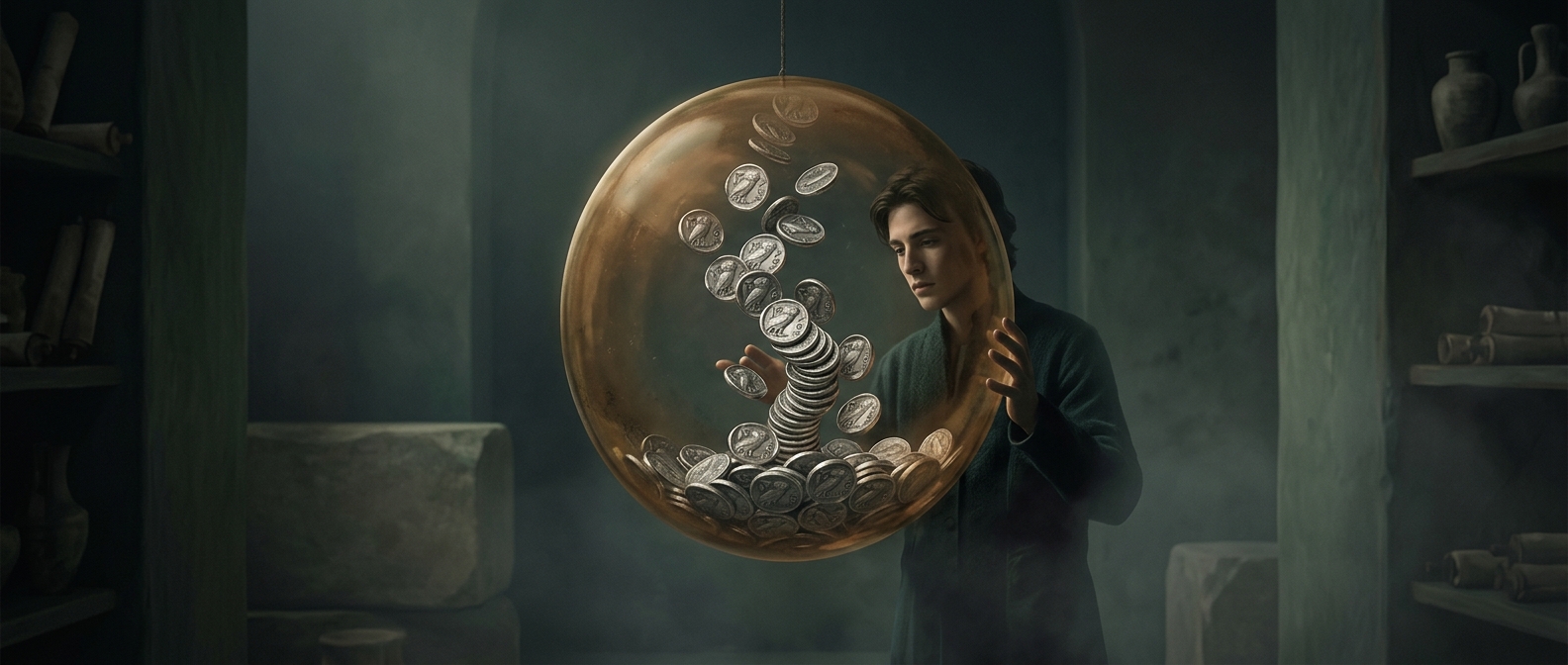
A Familiar Owl Made Silver Easier to Trade
To a merchant handling unfamiliar money, a coin was a small promise: its metal and weight were worth accepting. The Athenian owl coin—typically a silver tetradrachm, or four-drachma piece—made that promise recognizable beyond the city that issued it. Its image of Athena’s owl, often paired with an olive sprig, functioned like a visible mark of origin.
That mark mattered because checking every payment from scratch was costly. A trader could weigh a coin, inspect its surface, or test the silver, but those checks took time and did not always settle doubts. A well-known design gave buyers a reason to expect a familiar standard before they began testing. Repeated acceptance, in turn, made the coin more useful: merchants could take it in one port and expect to spend it elsewhere.
Why Changing the Design Was a Risk
The coin’s value did not come from the owl alone. It rested on confidence in the issuing city’s silver and its consistency in striking coins to an expected standard. But the design helped people recognize whose promise they were being asked to trust. A new image might still have represented good silver, yet traders would have had to learn what it stood for—and decide whether to accept it.
Keeping a recognizable type therefore helped preserve a commercial advantage. The design was not literally frozen: details could vary across issues and over time. What endured was the coin’s familiar visual identity, allowing Athens to maintain recognition as its money circulated through a much wider trading world.
The result was a kind of ancient brand built from metal and reputation. An owl on a coin could save a merchant a moment of hesitation—and, across countless transactions, that familiarity helped silver move.