A shape that turns motion into gathering
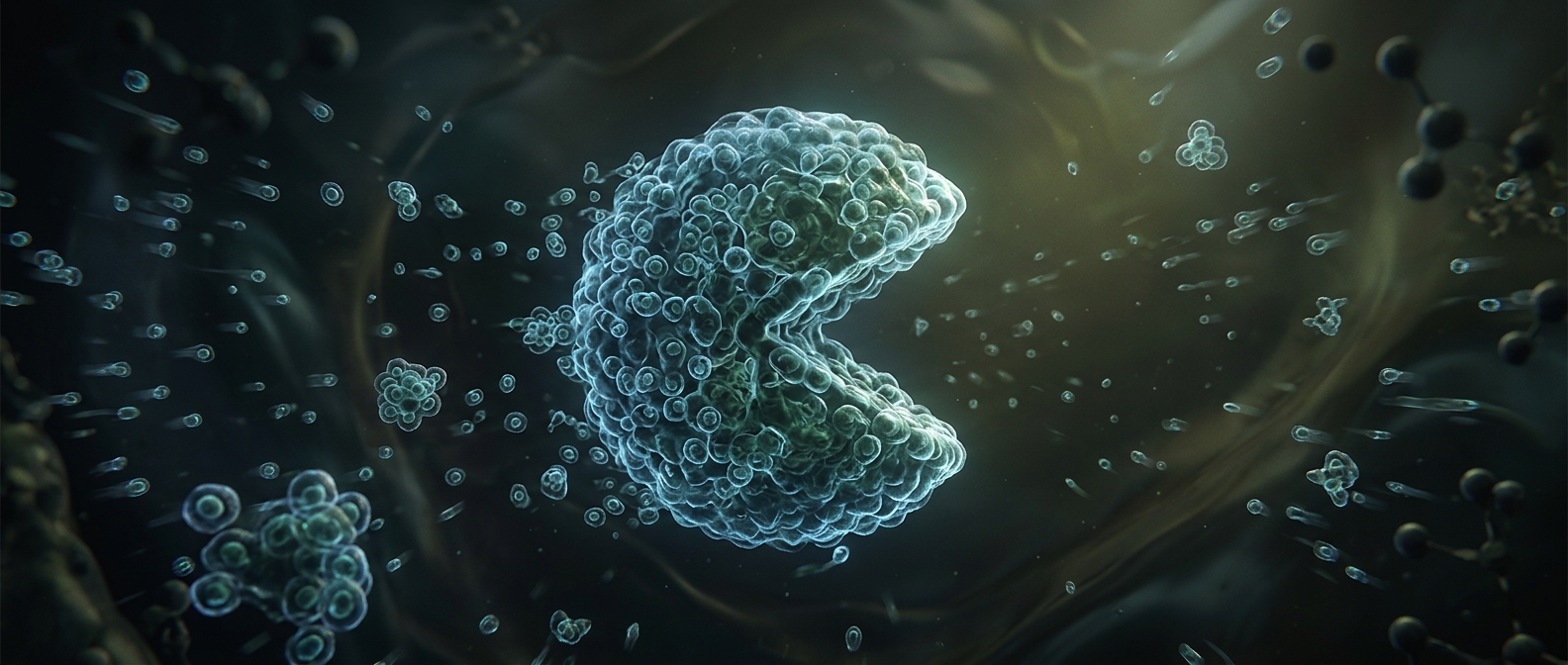
The Pac-Man-like outline was more than a visual joke. It gave a small cluster of frog cells a pocket where loose cells could collect as the cluster moved through them. The parent xenobot—an assembly of living cells shaped by researchers—did not divide. Instead, its movement brought separate cells together, and the gathered cells formed a new cluster.
From loose cells to a moving cluster
The process depended on two things working together: the parent’s shape and the cells’ ability to organize themselves. Frog cells on the xenobot’s surface bear tiny hairlike structures called cilia. Their coordinated beating helps propel the cluster through its surroundings. With a notch that could corral loose cells, the moving xenobot swept them into a compact pile rather than simply pushing them aside.
Once gathered, the cells could develop into smaller xenobots. This kind of replication is called kinematic self-replication: an object makes another by arranging available material through its movement, rather than by growing a copy from within or splitting in half.
Why the shape mattered
The result showed how a change in geometry can alter what a cell assembly does. The cells were not following a plan to reproduce; researchers shaped the parent so its motion and form could make collecting cells more likely. The important design move was turning locomotion into a gathering tool.
That distinction matters: the new clusters came from loose frog cells in the environment, not from eggs laid by the parent. The xenobot’s “offspring” were assembled from material around it—an unusual form of reproduction in which the scoop, not a womb or a split, made the next generation possible.