Why a moving screen can unsettle a still player
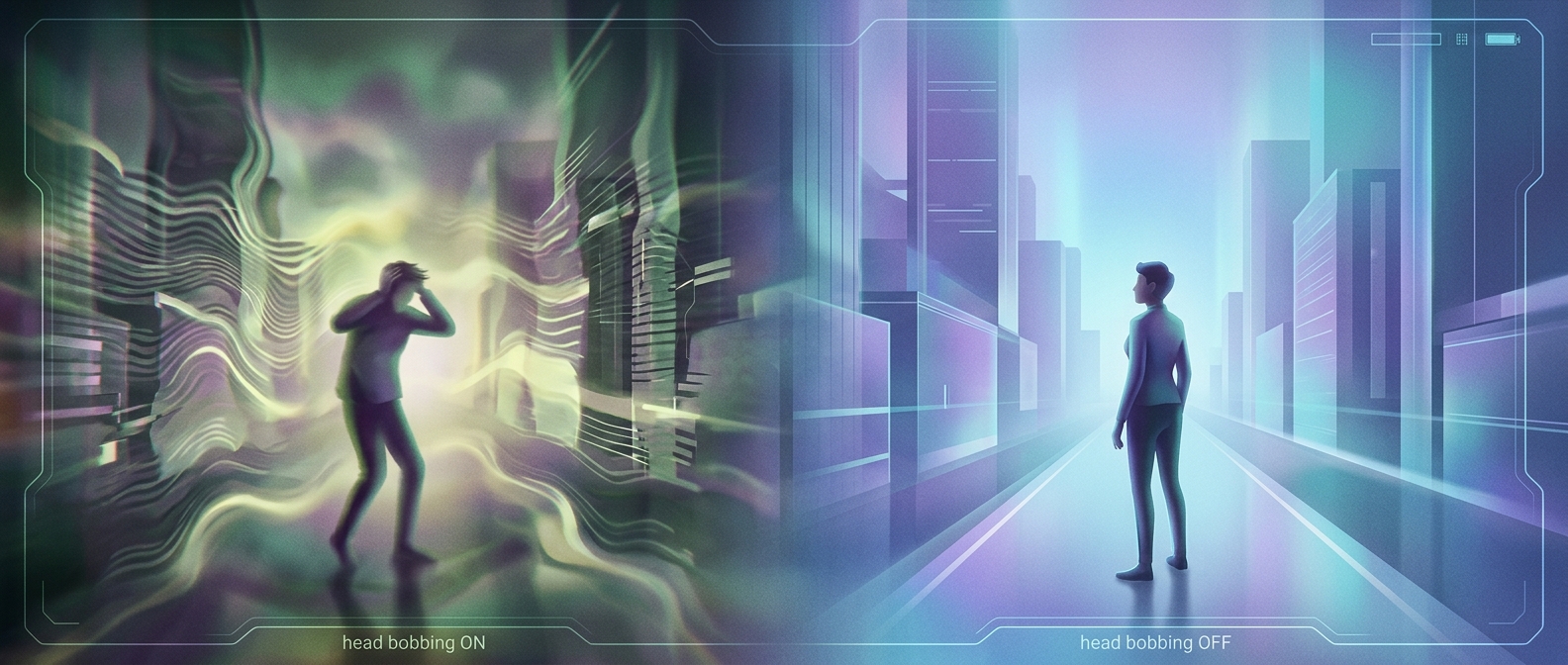
When a game camera rises and falls with each virtual step, the player’s eyes receive a rhythmic signal that the body seems to be moving. But while sitting still, the inner ear—the system that helps the brain track balance and motion—reports little or no corresponding movement. That mismatch can contribute to nausea, dizziness, or eyestrain, much as motion in a vehicle can feel uncomfortable when what you see and what your body senses do not line up.
The effect varies from person to person. It may also become more noticeable during long sessions or when the camera’s movement is especially pronounced. Because the bob repeats with every step, the visual motion can keep tugging at the player’s attention even when they are trying to focus on aiming, reading, or navigating.
A small setting, a meaningful tradeoff
Designers add head or camera bob to make footsteps feel embodied: the view moves as though attached to a walking person rather than floating through the world. That can make movement feel more physical, but the same motion is not comfortable for everyone. A toggle separates the two goals. Players who like the walking sensation can keep it; others can reduce an unnecessary source of screen movement without changing how their character travels through the game.
The practical point is that a camera effect can change the experience even when it does not change the game’s mechanics. Turning off bobbing may make a long session more comfortable—and leave the player’s attention on the action instead of the screen’s repeated sway.