How a Cat’s Grumble Became a Ghast’s Cry
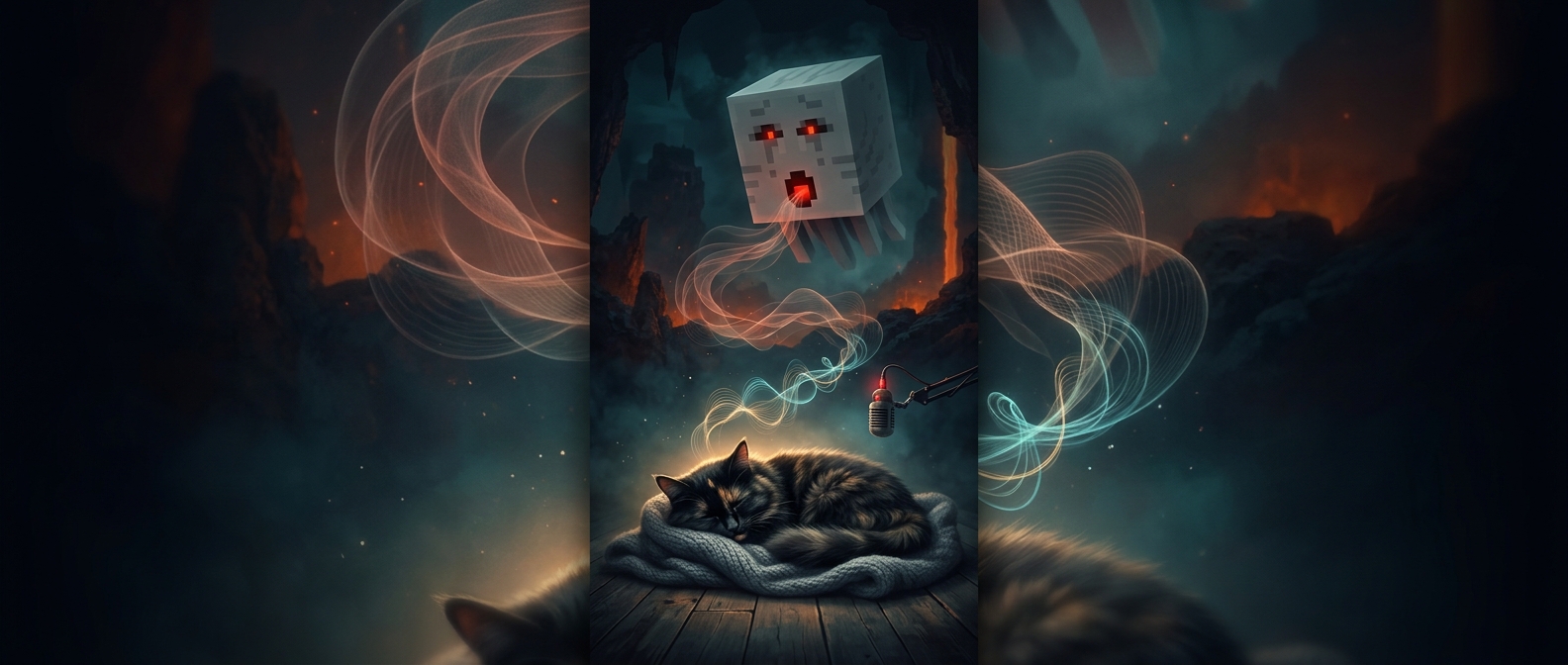
A ghast’s wavering moan sounds less like a creature speaking than a noise drifting through a cave. That otherworldly quality began with an ordinary recording: Minecraft composer Daniel Rosenfeld, known as C418, captured his cat grumbling as it woke from a nap. He then slowed and distorted the sound, turning a recognizable feline murmur into something strange and unsettling.
Why Slowing the Sound Worked
Slowing audio changes more than its pace. It lowers the perceived pitch and stretches small shifts in the original sound across more time. A brief, rough grumble can become a long, wavering cry. Distortion further obscures the source, so the listener hears the sound’s texture and movement without immediately identifying it as a cat.
That transformation suited the ghast: a floating enemy whose presence is often heard before it is seen. Its drawn-out cry helps make the Nether feel inhabited by something uncanny, while keeping the sound grounded in a physical recording rather than building it entirely from synthetic effects.
A Small Recording, Made Unrecognizable
The result depends on the gap between source and effect. The original cat sound is familiar and intimate; slowed and altered, it becomes eerie enough to suggest a distant monster. The ghast’s voice is a domestic sound reshaped until its original context disappears.