Why Max Payne wears the same grimace
In the original Max Payne, the hero’s face was based on Sam Lake, the game’s writer. Lake’s sharply squinting, tight-mouthed expression became part of the character’s look—and a practical fit for a game whose 3D characters had far less facial animation than players expect today.
A face in a game is not simply a photograph pasted onto a head. Artists map a flat image, called a texture, onto a three-dimensional model. That image supplies details such as skin, eyes, and mouth; the model supplies the shape. If the facial features in the texture already show a strong expression, the character can appear expressive even when the model does little to change its face.
A limitation that became a signature
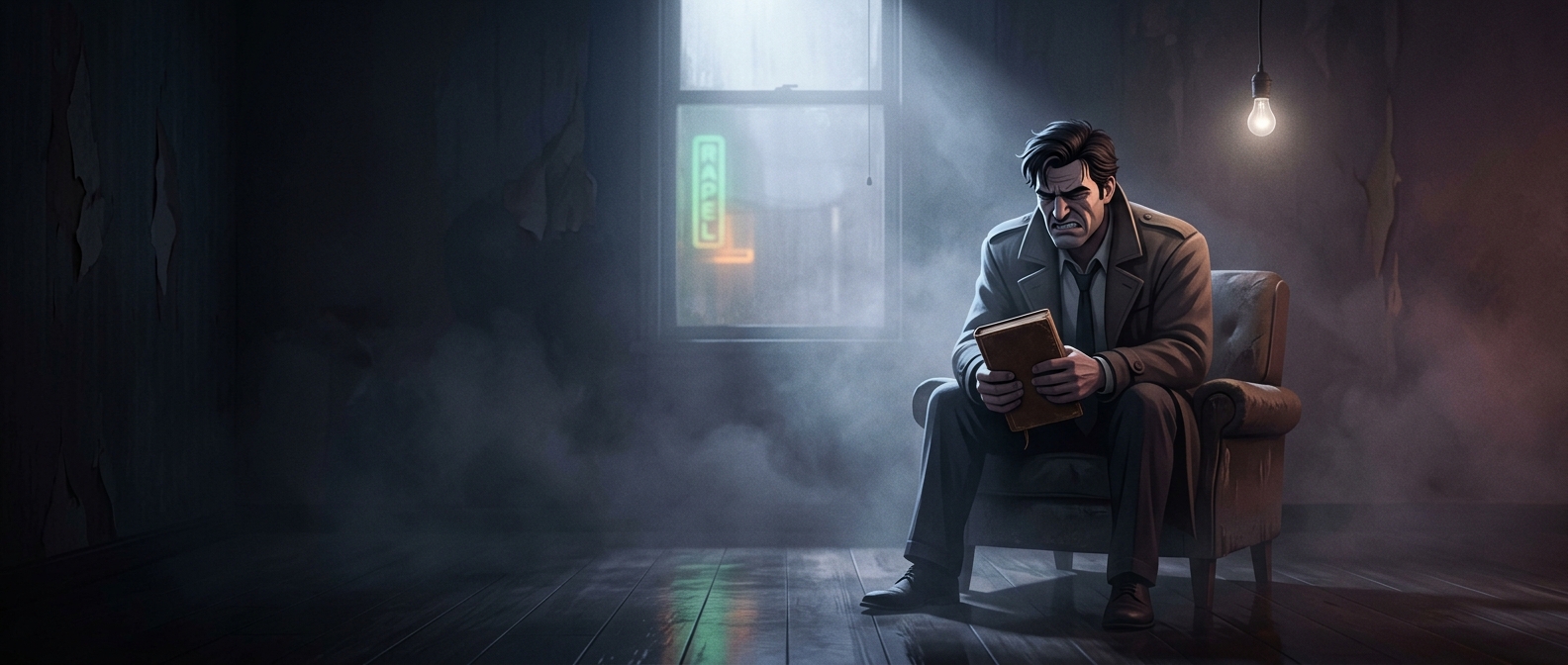
That distinction helps explain Max’s permanently strained look. The original game could move him through dramatic action, but his face did not transform with every moment of it. Instead, the same narrow-eyed scowl followed him through shootouts and slow-motion dives, reinforcing the story’s hard-boiled, exhausted mood.
The result can look unintentionally comic: Max seems to be grimacing through danger for reasons beyond the danger itself. But the face also gave the low-resolution character a memorable identity. A technical constraint became a visual shorthand for a man who never seems able to relax.