A Combat Game Makes Room for a Sideways Joke
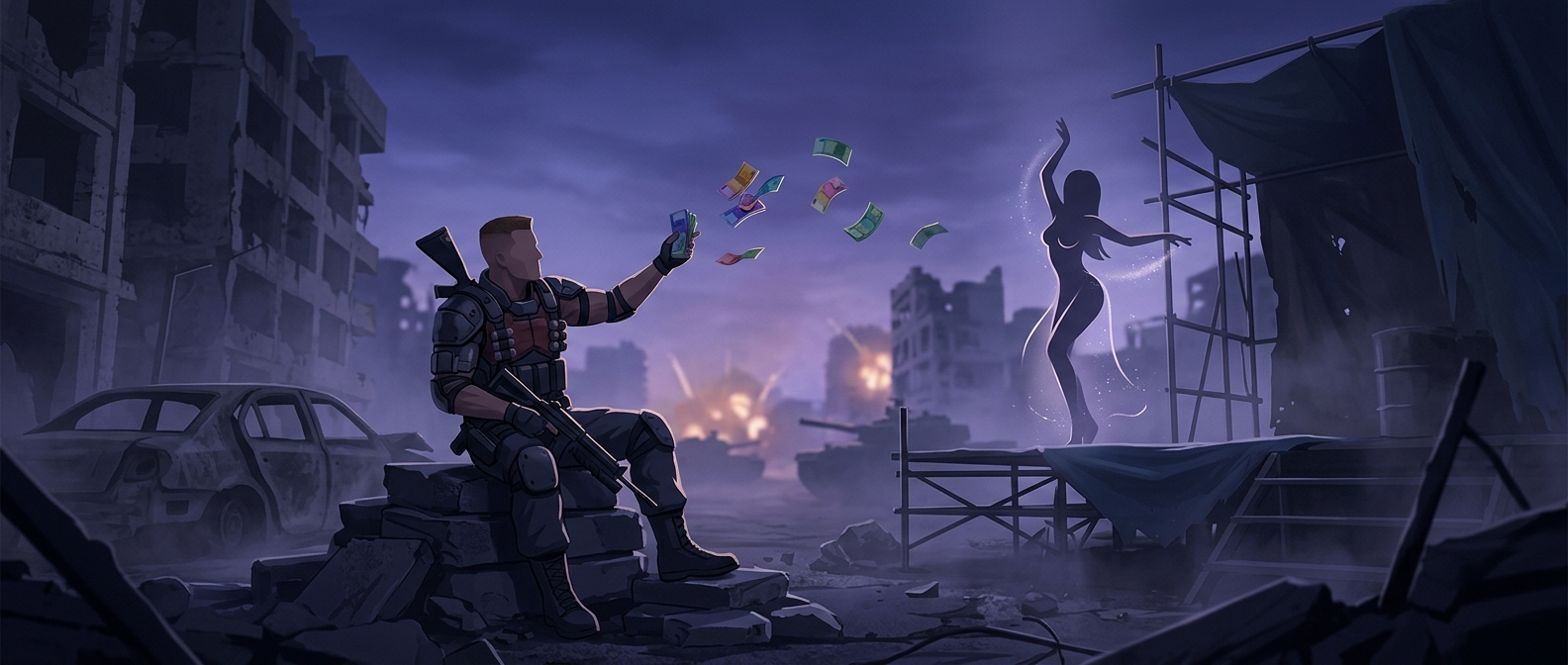
In Duke Nukem 3D, stopping to tip a dancer is an optional interaction, not a mission objective. The player can interrupt the urgent work of fighting aliens to engage with a nightclub detail that has little practical value in the invasion. That pause is the joke: the world is in crisis, but Duke’s attention can still be diverted by the familiar conventions of a seedy nightclub.
The Setting Becomes Part of the Punch Line
The scene works because the game lets its environments do more than provide backdrops for gunfights. A ruined club remains recognizable as a club, with dancers present amid the destruction. Interacting with them turns the setting into a small comic detour—and makes the contrast between planetary disaster and casual tipping something the player performs, rather than merely watches.
That kind of optional business also shapes Duke’s characterization. His bravado is paired with a deliberately crude, self-indulgent streak. The game does not ask the player to treat his choice as heroic or strategically necessary; the absurd mismatch is the point.
A Tiny Choice, a Distinctive Tone
The moment captures a broader design decision: Duke Nukem 3D mixes fast action with interactive scenery and irreverent humor. The player controls the timing, so the scene can briefly break the pace of combat before the invasion resumes. The memorable detail is not that tipping helps save the world—it doesn’t—but that the game lets Duke stop as if the emergency can wait.