A shared world without a shared schedule
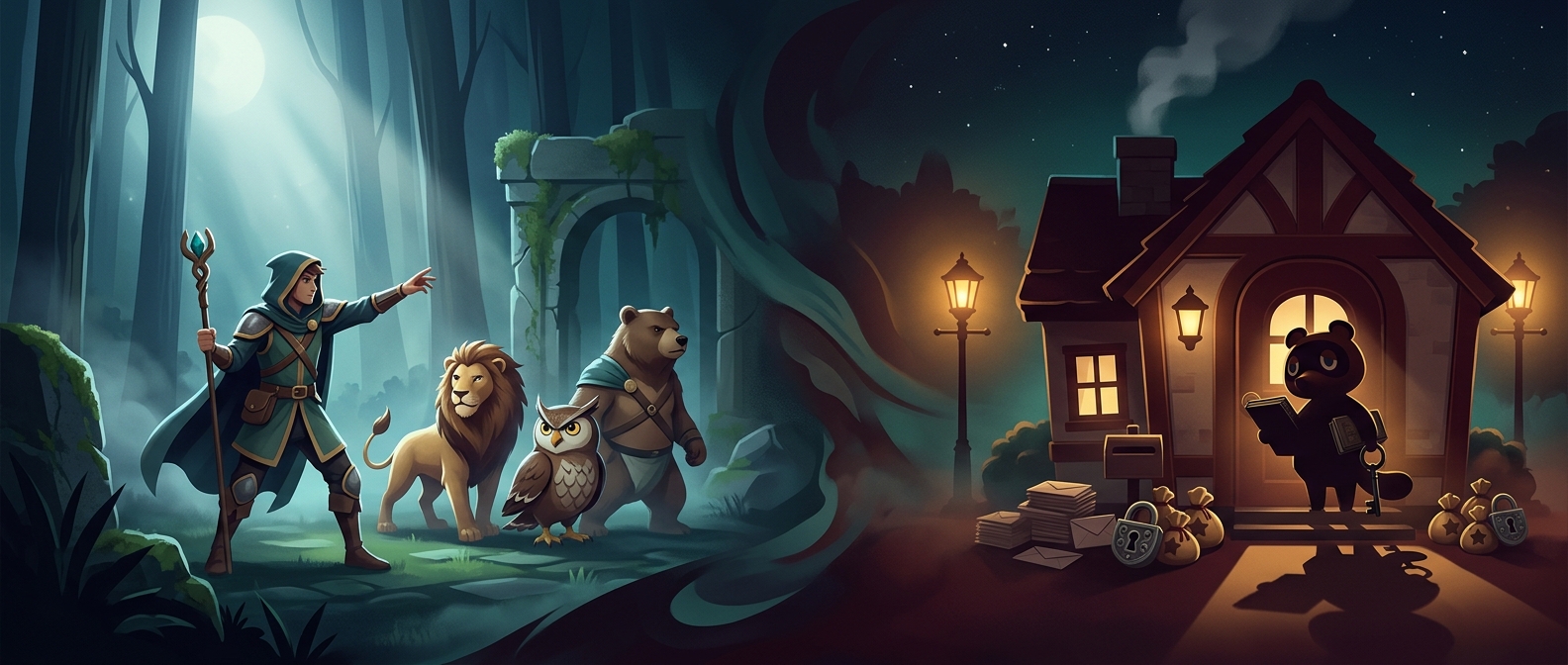
Most multiplayer games make being together an event: players meet at the same time, enter a match, and act in the same moment. Animal Crossing makes room for a different kind of company. Family members can take turns visiting the same town, and what one person does remains part of the world the next person encounters.
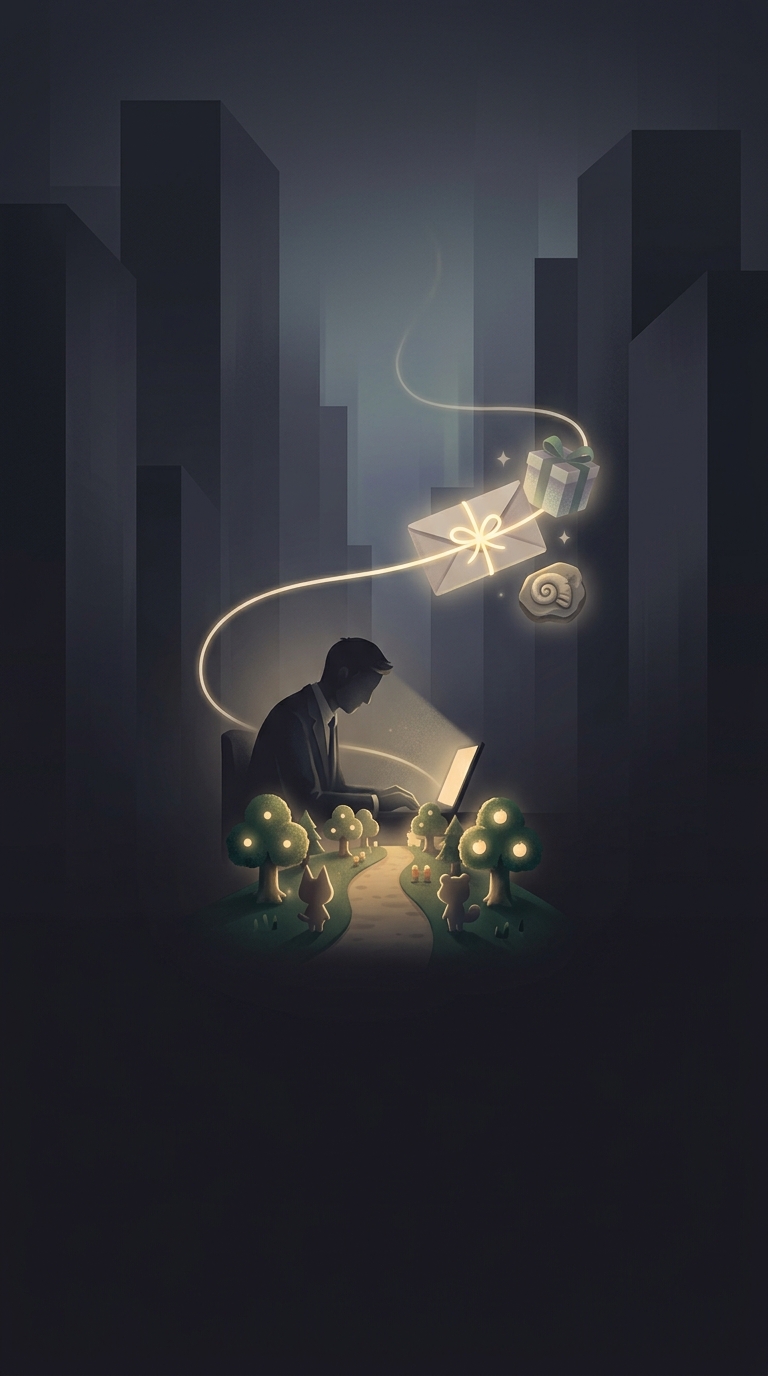
That persistence changes the meaning of a small action. A gift, a letter, or a change to a shared space is not just an interaction with the game; it is a message left for a particular person to discover. The game does not need to interrupt either player or arrange a meeting. The world itself carries the exchange forward.
Real time gives the town a rhythm
The in-game clock tracks the outside day, so a visit can feel tied to a familiar moment rather than to a round that starts and ends on demand. When someone returns later, the town has moved on in time. That makes play less about keeping pace with another person and more about checking in on a place they both recognize.
The design is deliberately low-pressure. Players do not have to be online together to contribute, and one person’s activity need not be the other’s immediate focus. Instead, the possibility of finding evidence of someone else’s visit gives ordinary play a social layer: a familiar space can hold a trace of who was there before.
The feeling of company comes from what remains
This is a different promise from live co-op. There may be no conversation or shared task in the moment. The connection comes from anticipation and recognition—knowing that a family member might see what you left, and later seeing what they left in return.
By making small actions persist across separate play sessions, Animal Crossing turns a game world into a kind of household noticeboard. You can be apart in time and still feel that someone else has been there.