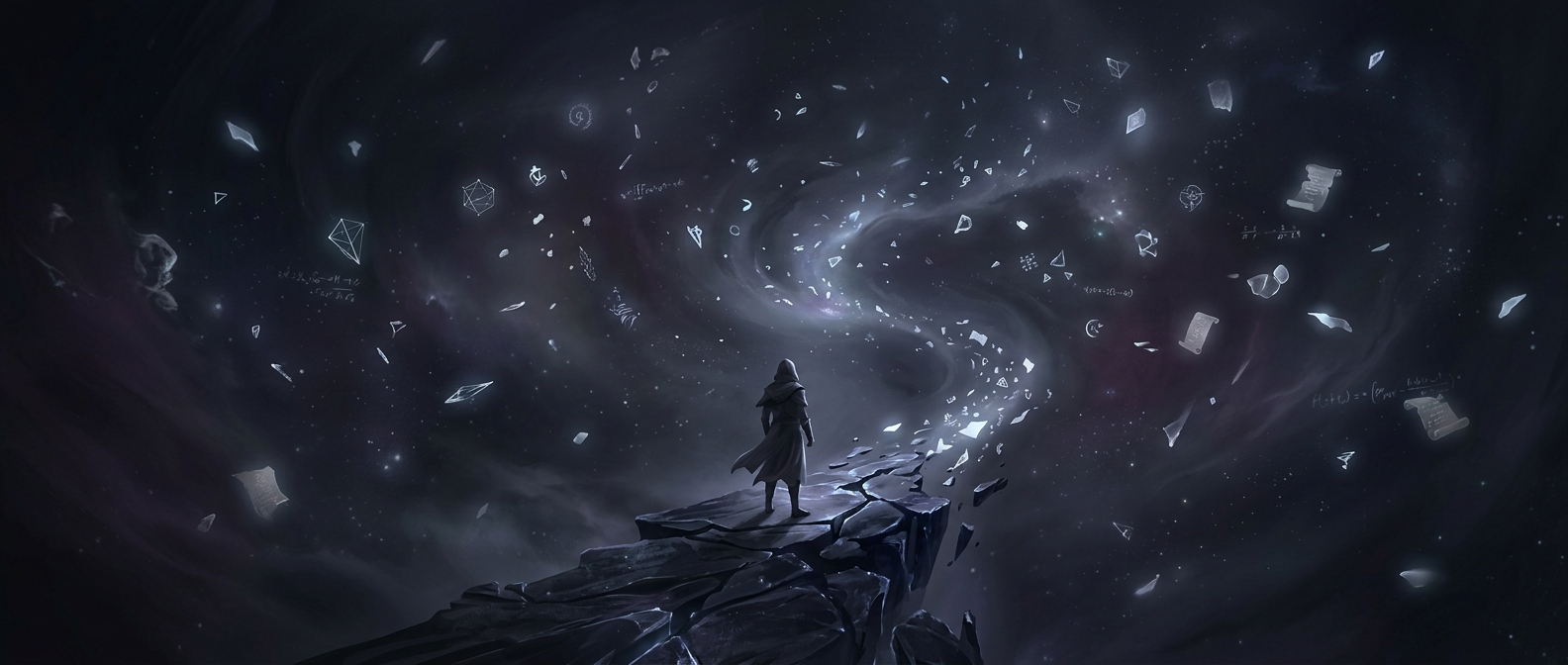
The mind as a landscape of unfinished thought
In some esoteric teachings, the mental plane is more than a poetic name for private thinking. It is imagined as a layer of reality where ideas take shape before they are expressed through words, choices, or physical actions. A thought is treated almost like a pattern: once formed, it can linger and influence what a person notices or does next.
That image gives “intellectual debris” a specific meaning. The debris is not necessarily useless knowledge; it can be any unexamined idea left cluttering attention—an old assumption, a fear rehearsed repeatedly, or a borrowed belief mistaken for one’s own. In this framework, such patterns can obscure clearer intentions, much as clutter makes it harder to find a useful object.
Why the metaphor matters
The mental plane is a spiritual concept, not a scientifically established place. Its practical force lies in the way it encourages people to treat thought as consequential rather than weightless. If ideas can shape perception and action, then sorting through them becomes a form of preparation: notice which beliefs are being carried forward, and which are merely taking up space.
The striking implication is that, in this worldview, making something real begins before any visible action. It begins with the thoughts a person keeps feeding—and the ones they finally choose to set down.