A birth chart is more than a list of signs
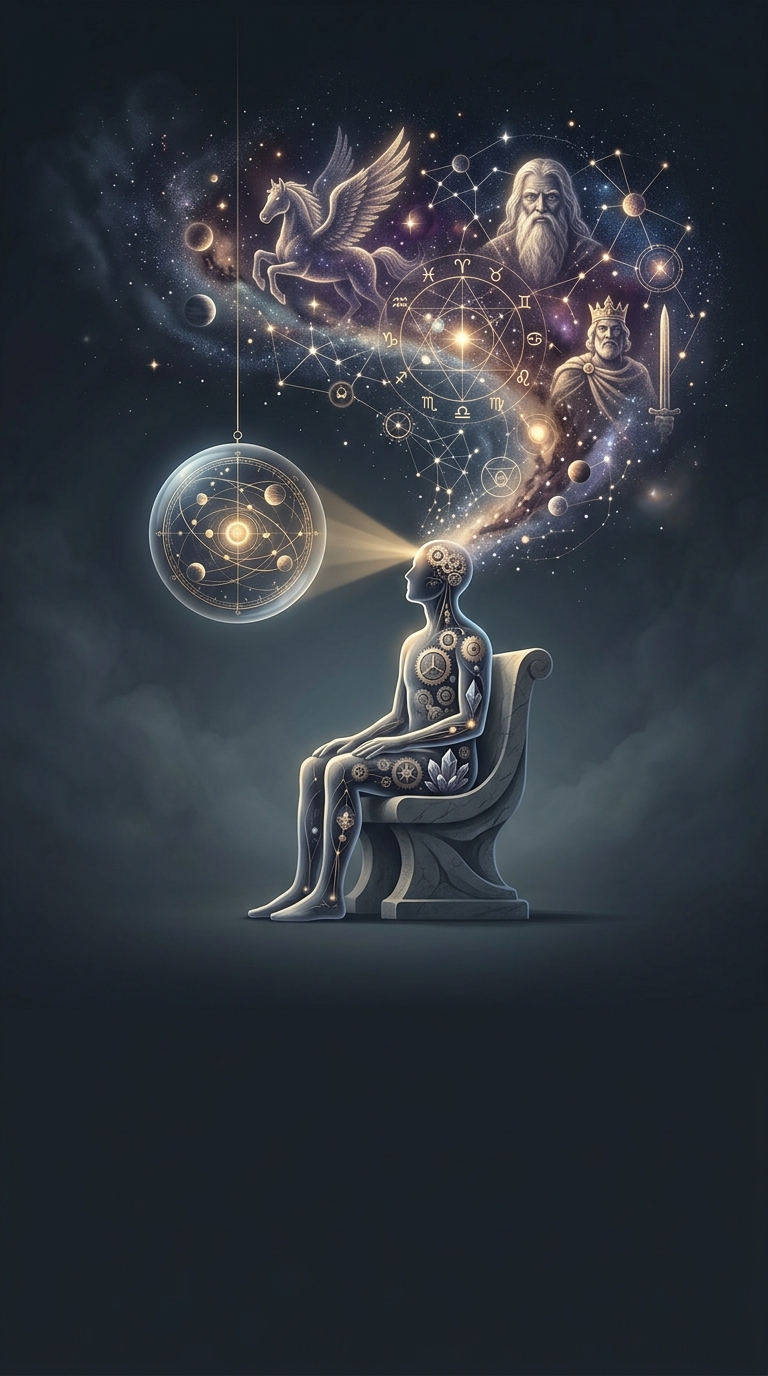
In astrology, a birth chart maps where the Sun, Moon, and planets appeared in the sky at a particular time and place. Each body is assigned a position along the zodiac, measured in degrees. A planet’s sign tells only which 30-degree slice it occupies; its exact degree adds another layer of detail.
Astrologers also interpret the angular relationships between planets, called aspects. For example, two planets separated by roughly 90 degrees are said to form a square, while a separation of about 120 degrees is called a trine. These relationships can involve planets in different signs, so reading a chart requires more than matching each sign to a personality label.
Why the math gets compressed
A social-media post can make one claim legible in seconds: a sign is bold, sensitive, or stubborn. A full chart is harder to package. Its interpretation depends on several positions and their relationships, and astrologers may weigh those factors differently. Degrees, aspect patterns, and chart angles resist a single catchy description.
So popular astrology often turns a layered symbolic system into a set of portable traits. That makes the material easy to share and recognize, but it also changes what is being presented: a simplified sign-based reading stands in for an interpretation that would consider the chart’s geometry.
What a degree can—and cannot—tell you
Within astrology, degrees help specify where a planet sits and how closely it relates to another. They are part of the system’s interpretive vocabulary, not a scientific measurement of personality. The memorable meme is therefore best understood as a shorthand for one slice of astrological practice, rather than a complete reading of someone’s chart.