Why the Hanged Man Is Not Panicking
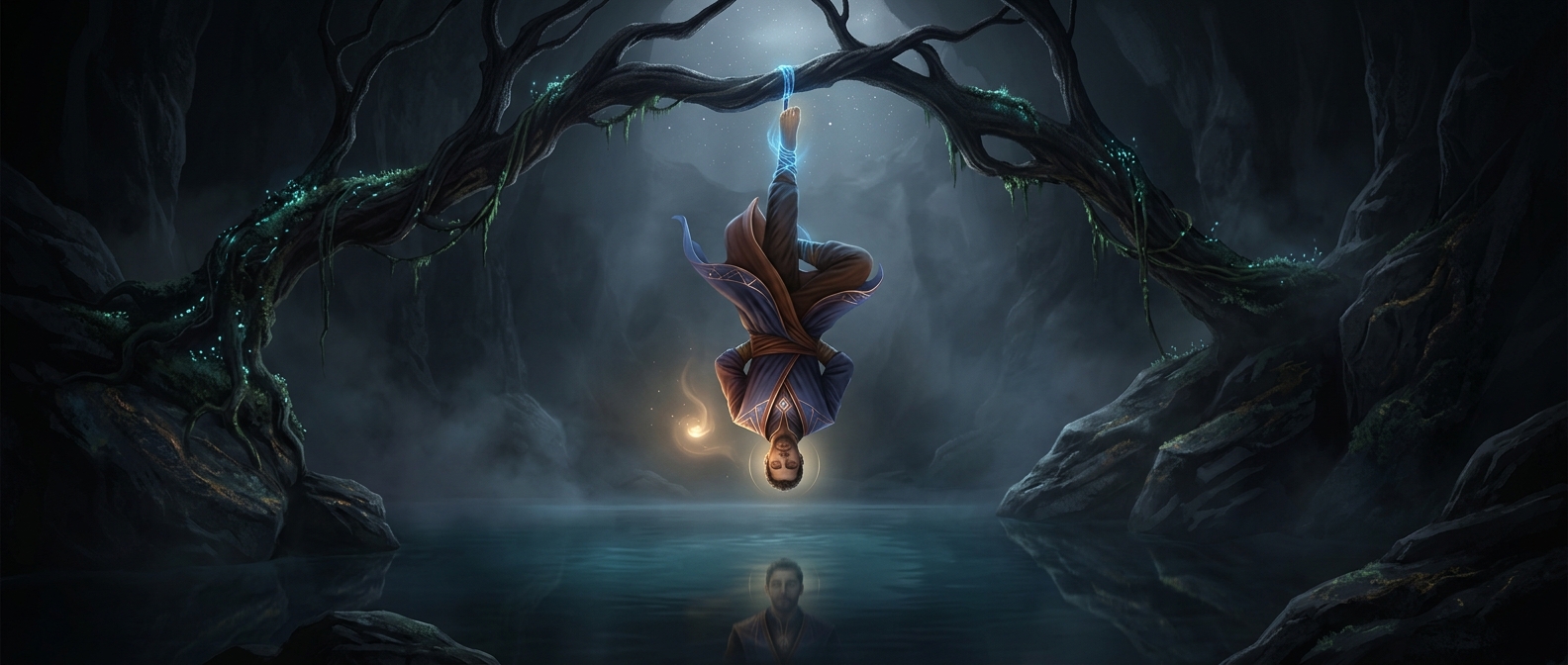
In many tarot decks, the Hanged Man is shown suspended by one foot, with the other leg bent and the face calm. The image borrows the visual language of punishment, but its composition suggests a chosen pause: the figure is held in place rather than struggling to escape. That tension between an alarming position and a peaceful expression is the card’s central symbol.
Tarot readers commonly interpret the suspension as a moment when ordinary action has stopped. Instead of forcing a decision or pushing ahead, the figure waits—and, in the meantime, sees familiar things from an unfamiliar angle. The card’s upside-down viewpoint makes that idea visible: a reversal can be disorienting, but it may reveal assumptions that were hard to notice before.
A Pause With a Cost
The card can also point to giving something up temporarily: time, control, or a preferred course of action. In that sense, its calm is not simple comfort. The person is still constrained, and waiting may be difficult; the possible value lies in what the pause makes possible, not in suffering for its own sake.
In a reading, the Hanged Man is usually treated as a prompt to reconsider what can—and cannot—be changed right now, rather than as proof that a supernatural force has fixed the future. Its memorable lesson is practical: sometimes the next move becomes clearer only after you stop insisting on making one.