Why the Caminito del Rey clings to the gorge
The route began as work infrastructure, not a scenic attraction. Hydroelectric facilities in Málaga province needed a way for workers to move between installations in the steep El Chorro gorge. A narrow path fixed to the rock made that passage possible where building a road would have been difficult.
Its position solved one problem by creating another: the walkway ran high above the gorge, with little room to spare. As the original structure deteriorated, missing sections and unstable surfaces turned a working route into a dangerous one. The same exposure that made it useful also made its decay especially hazardous.
A new path above the old one
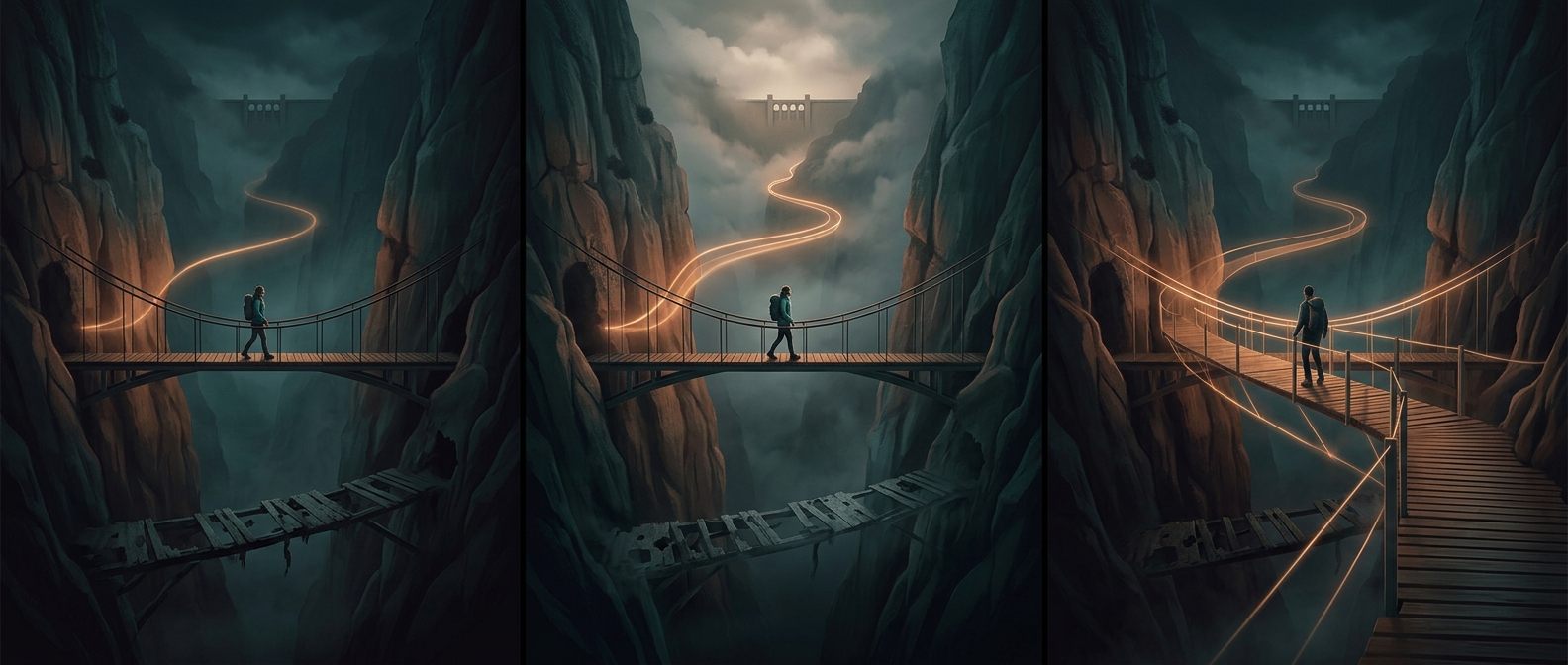
The modern route keeps the original line but changes what visitors walk on. A new wooden walkway was built over the old path, using the existing route as a guide rather than simply erasing it. This lets visitors follow the gorge’s contours while avoiding the crumbling footing that made the old passage notorious.
That layered design preserves a visible connection to the route’s industrial past: in places, the older structure remains beneath the newer walkway. The gorge is still close at hand, but the experience no longer depends on trusting the remains of a failing path.
The view is part of the engineering
The walkway’s appeal comes from the same constraint that shaped its construction: the route has to follow a narrow ledge through a deep ravine. Instead of flattening the landscape into a conventional trail, the rebuilt path carries visitors along the gorge wall, where the drop and rock faces are part of the passage itself.
The result is a rare kind of restoration: safer access without removing the old route from view. Visitors can experience why workers once needed the path—and see how a structure built for utility became a landmark because of where it runs.