The clock and the sun do not quite agree
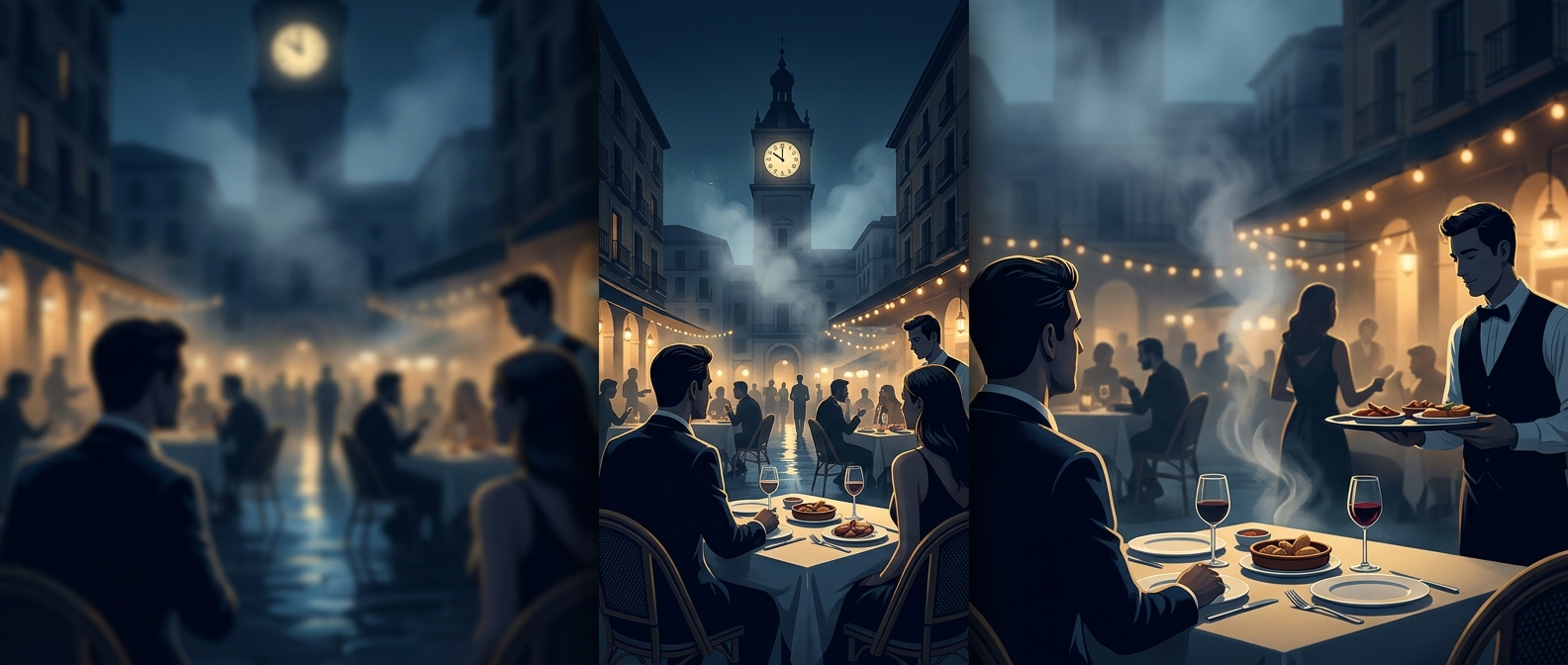
Spain’s late dinner hour makes more sense when you look at the whole day, not just the restaurant schedule. The country’s official clock is relatively far ahead of the sun: in much of Spain, solar noon—the point when the sun is highest—is later by the clock than visitors from nearby time zones might expect. Long summer evenings can make a late meal feel natural, while the clock helps keep daily routines shifted later too.
A long middle of the day
Meals are often arranged around a substantial midday lunch, which may be the day’s main sit-down meal. When lunch runs late, dinner tends to move back as well. In some workplaces and towns, a long break in the afternoon has historically separated the middle of the workday from its later hours; shops and services may still pause, though schedules vary widely and many people now work straight through.
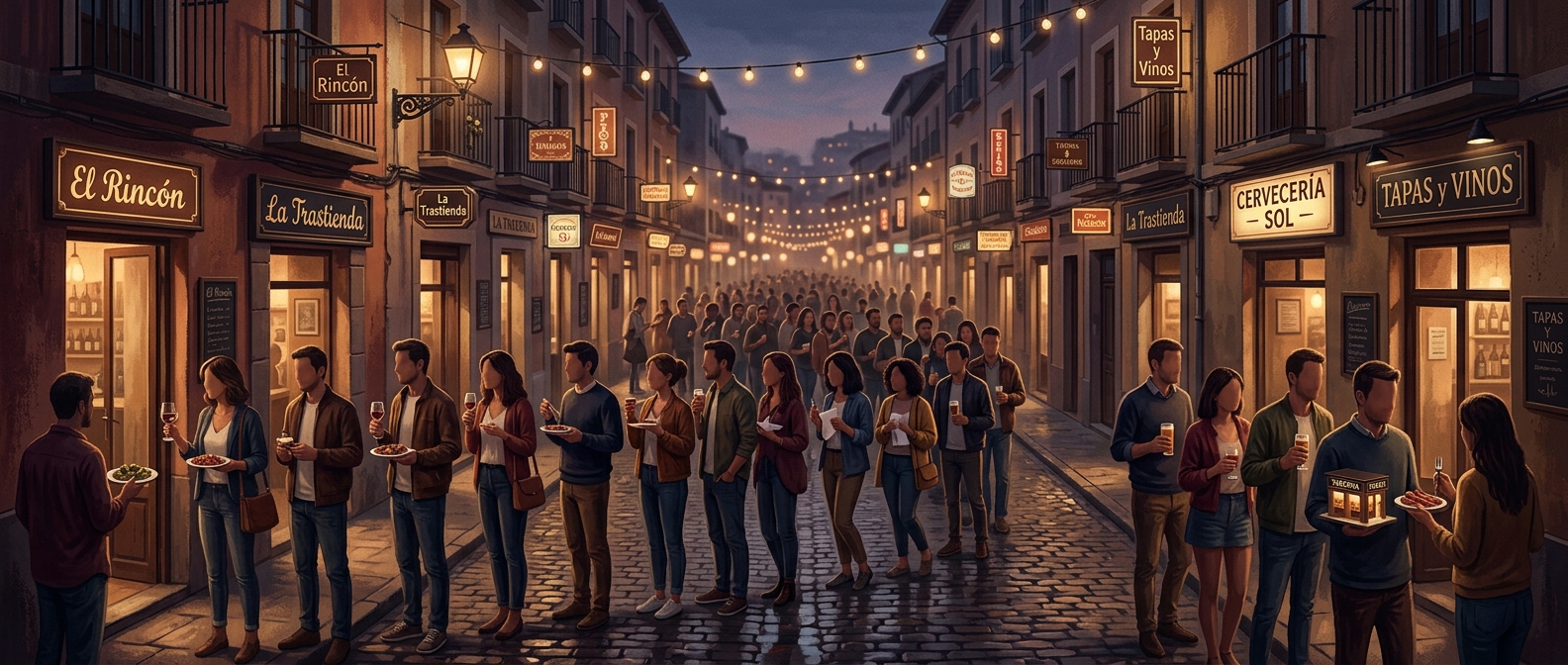
That gap helps explain the afternoon snack known as merienda. It is a small bite—perhaps a sandwich, pastry, or fruit—rather than a second full meal, and it can bridge the hours between lunch and dinner. Visitors who eat lunch early may find that bridge especially useful.
A schedule, not a rule
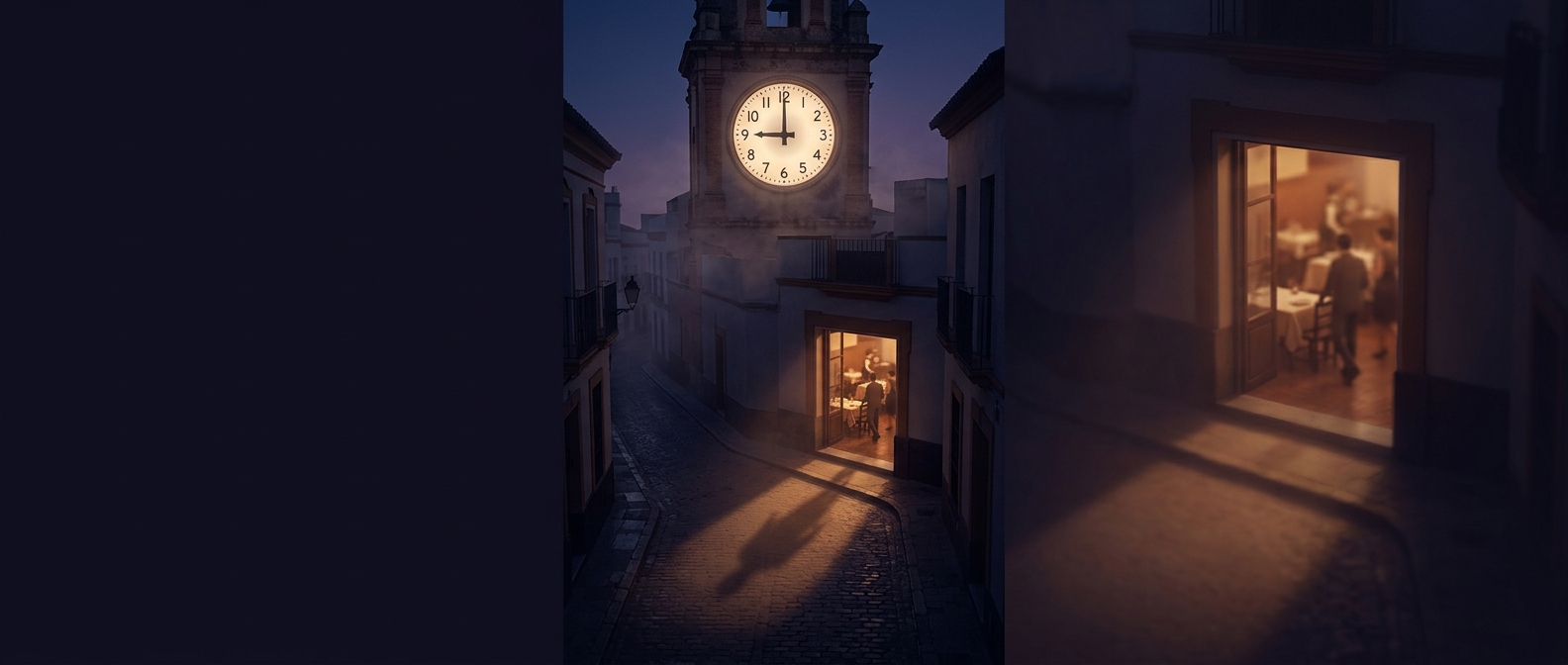
Dinner at nine or later is common in many places, but it is not a fixed national rule. Restaurant opening times, work hours, and habits differ by region, season, and household. In tourist areas, kitchens may serve earlier to accommodate visitors; away from them, arriving at a restaurant at a time that feels like early evening elsewhere can mean finding it not yet ready for dinner.
The practical lesson is to plan around local meal rhythms rather than assume dinner follows the same timetable as at home. A merienda can keep an early afternoon lunch from turning into an unexpectedly long wait.