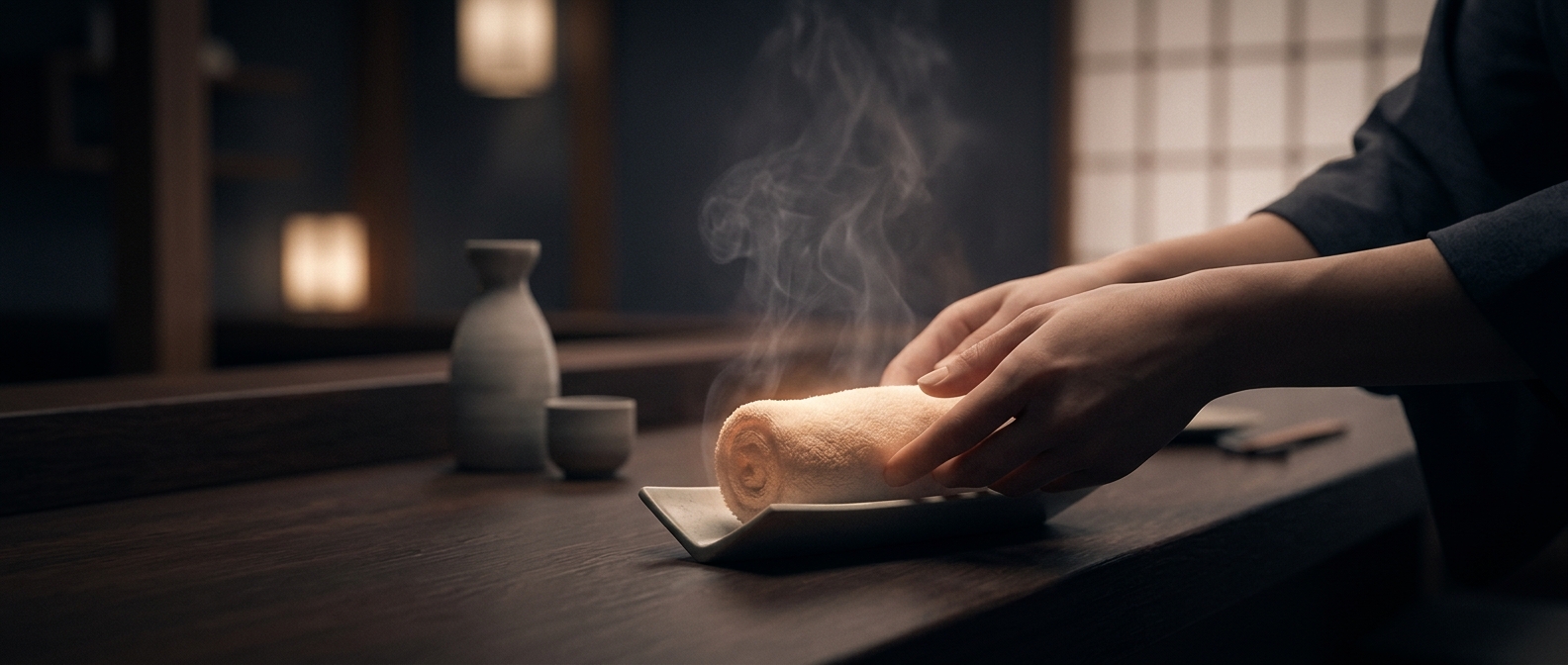
Why a Warm Towel Arrives Before the Food
In Japan, the small damp towel served before a meal is called an oshibori. Its timing is practical: diners can wipe away the grime of travel or a day out before picking up chopsticks and touching food. The ritual also marks a transition from arriving at the restaurant to settling in for the meal.
Restaurants may offer the towel warm or cool, depending on the season and setting. A warm oshibori is especially welcome in cold weather; a chilled one can feel refreshing in the heat. It may arrive rolled in a paper wrapper or on a small tray, ready to use without asking for water or a restroom.
A Small Gesture With a Clear Boundary
The towel is intended for hands, not as a general-purpose washcloth. In a restaurant, that keeps its use simple and predictable: clean your hands, then set the towel aside before eating. The distinction can surprise visitors accustomed to using a napkin to wipe their face, but the oshibori’s role is closer to a quick hand-cleaning service than to a meal napkin.
Because it is offered so routinely, the gesture can seem effortless. Behind it is a useful bit of hospitality: the restaurant takes care of a basic need before the first dish arrives, letting diners begin comfortably without interrupting the meal.