Why a glass lift can feel less secure
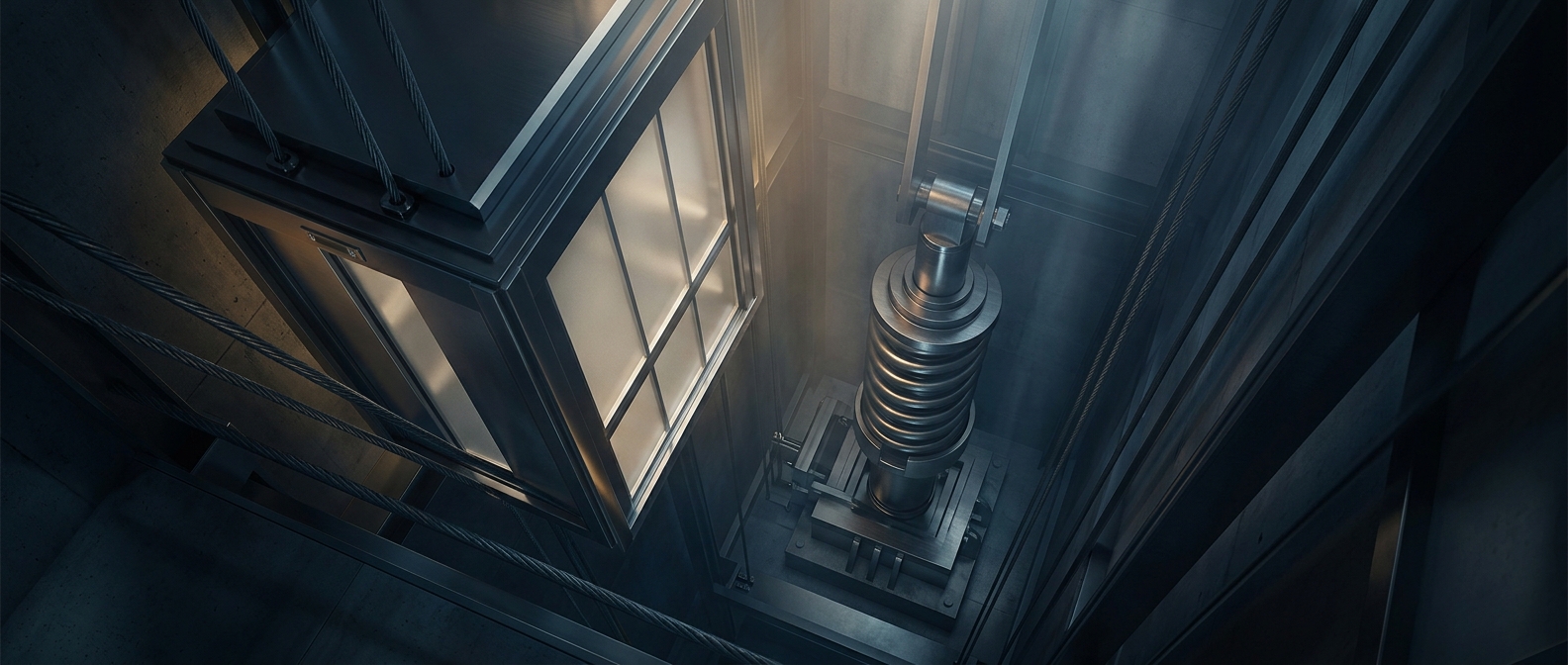
A clear wall changes what the ride looks like, not necessarily how the cabin is supported. The elevator still travels on guided rails and is held and moved by its lifting system; the glazing is part of the enclosure, not a window opening onto empty space. But a rider’s sense of motion depends heavily on visual cues, and a view straight down can make the height feel immediate.
Your eyes supply the drama
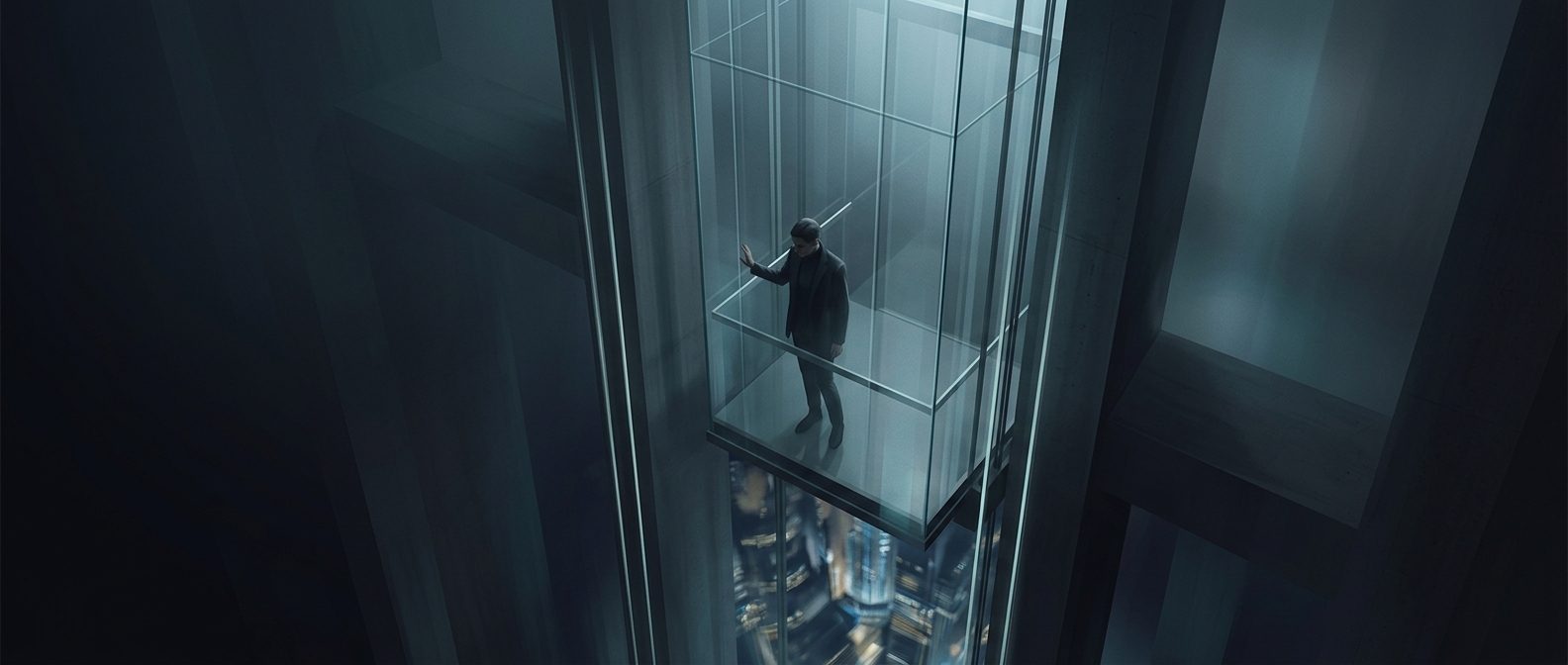
Inside a conventional lift, the walls block most evidence of movement. You feel acceleration and hear the motor, but the cabin gives you little to watch. In a glass lift, floors, ledges and distant buildings slide past. Nearby features sweep through the view quickly, while faraway ones appear to move more slowly. That pattern—called optic flow—is a strong signal that you are moving, even when the cabin itself feels steady.
Looking down adds another cue: the ground seems to recede beneath you. Your balance system senses acceleration and tilt, but it does not directly tell you how high you are. The combination can make a smooth ride feel exposed or unusually fast. People who are uncomfortable with heights may respond to the view more than to any physical change in the lift.
Transparency is an engineering choice
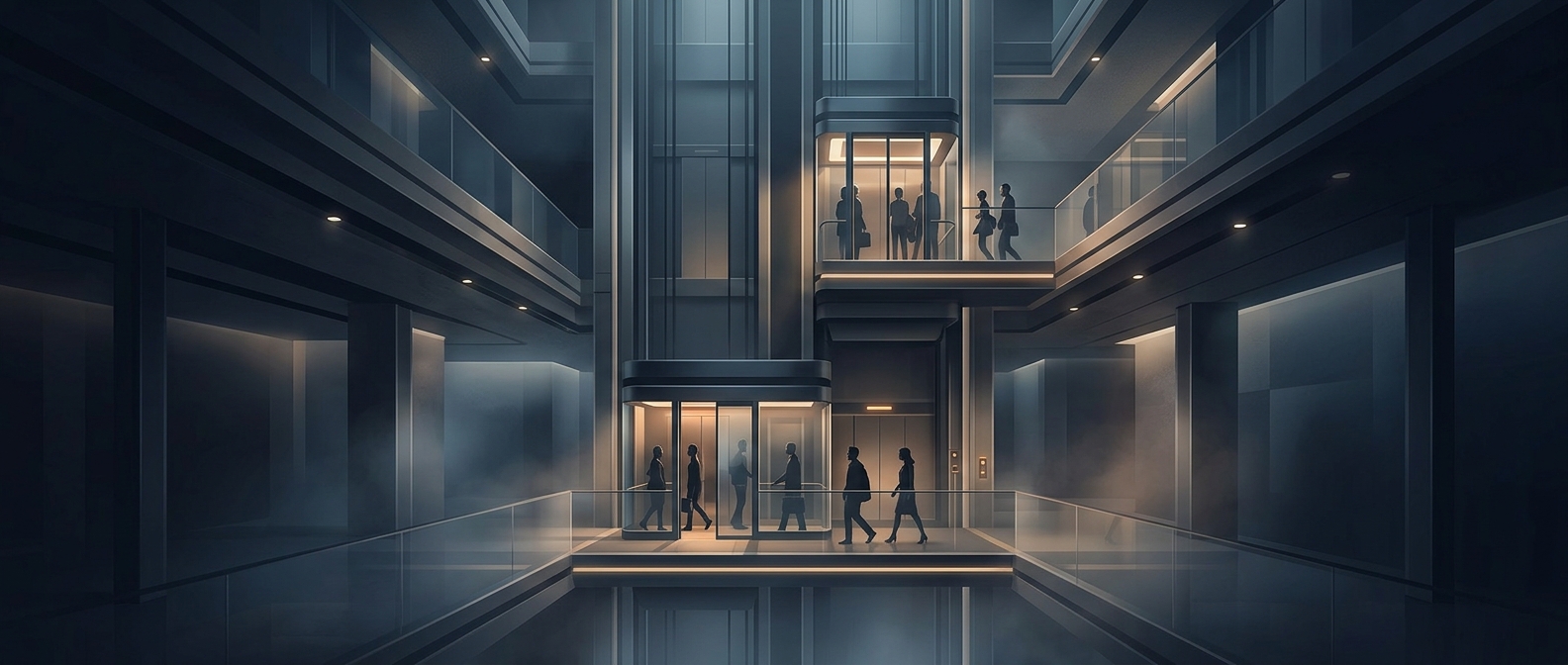
Glass lets designers make a lift part of a building’s view rather than hide it in a closed shaft. That choice brings practical demands: the panels and their fixings must be suited to the loads and conditions of their installation, and the lift still needs its usual guided, controlled path. Clear walls also make movement visible to people outside, turning an ordinary trip between floors into a feature of the building.
The striking effect comes from that contrast: the cabin remains a bounded space, while the moving landscape makes its boundary feel less protective. A glass lift can therefore be mechanically ordinary and still feel like a very different ride.