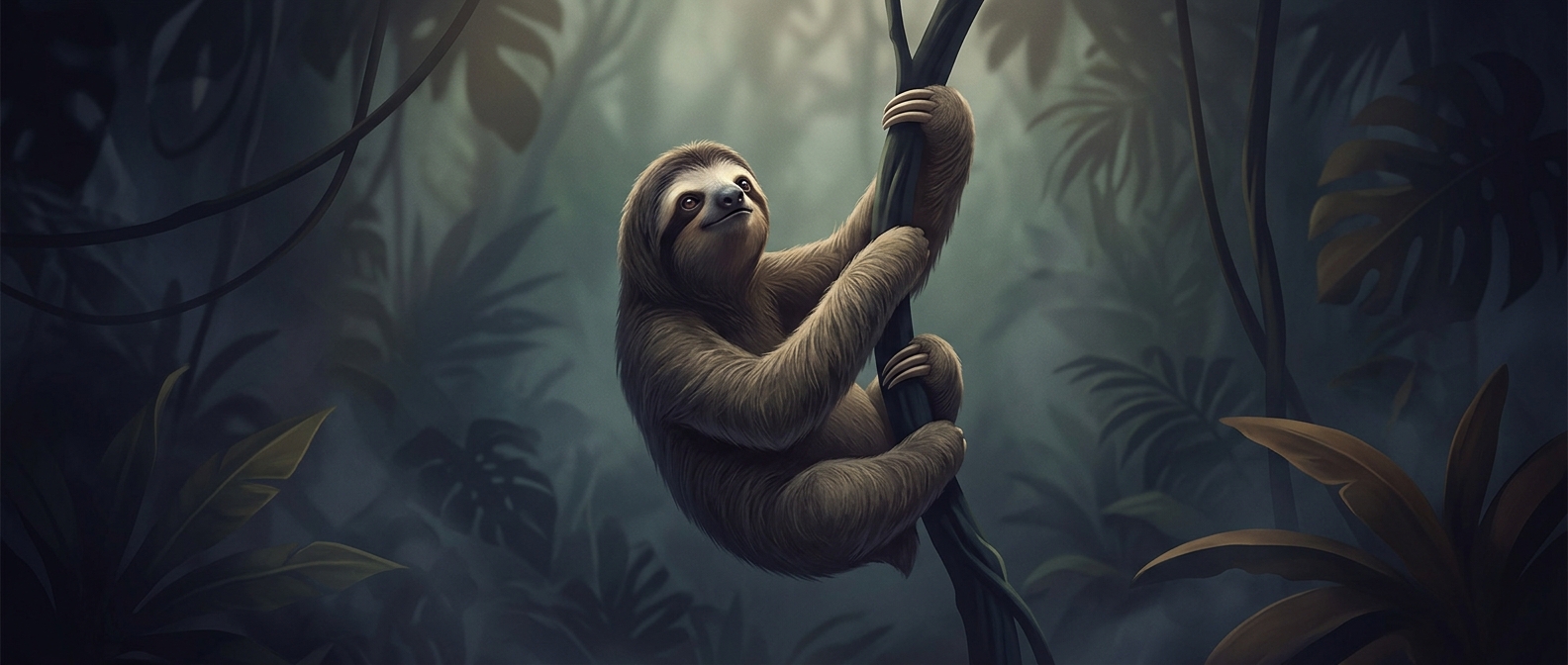
A sloth’s grip depends on what its claws catch
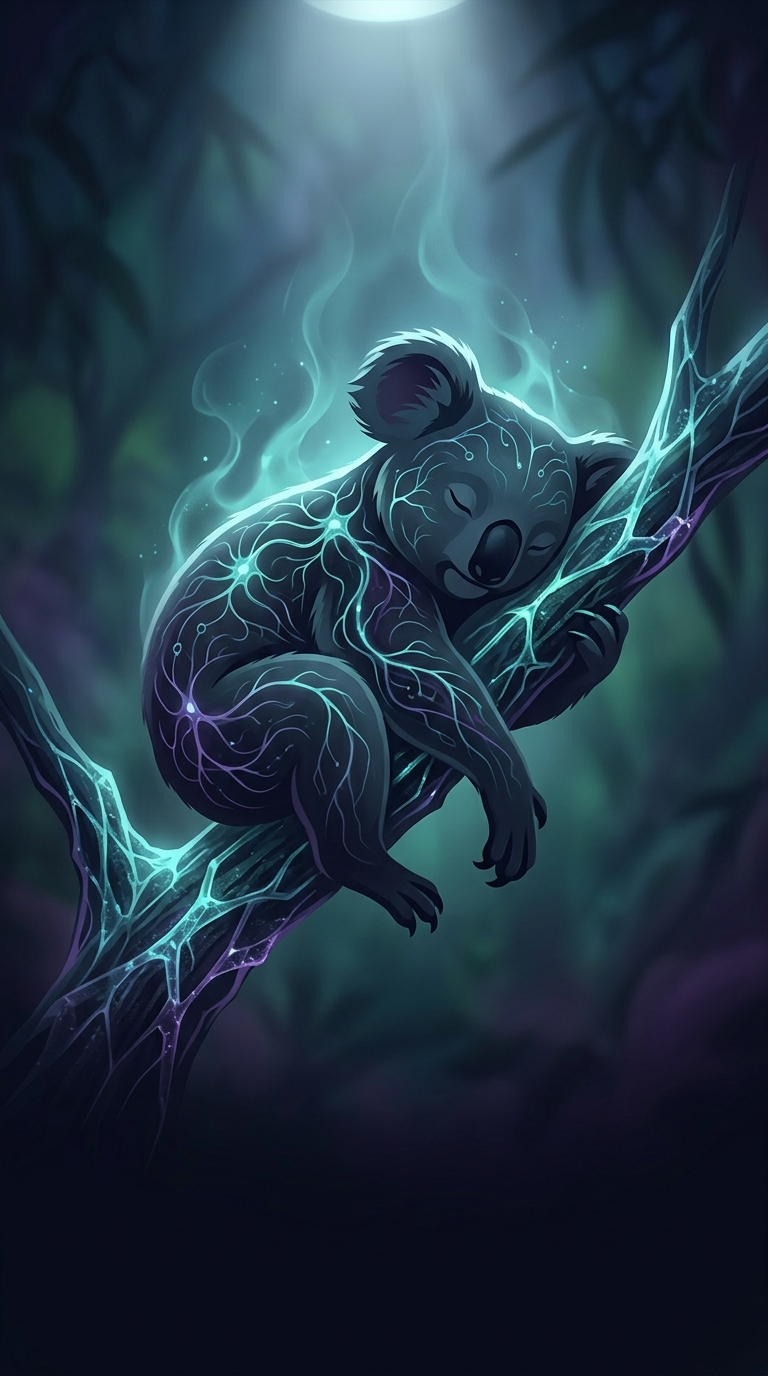
A sloth does not hold on by squeezing a branch with strong, continuously working muscles. Its long, curved claws hook around a firm object, and the arrangement of tendons in its limbs helps keep the grip in place. That saves effort while it hangs—but it also means the claws need a usable surface to hook.
A reach can go wrong before the grip begins
When a sloth moves a limb to find a hold, poor eyesight can make it harder to judge exactly where that limb is in relation to nearby objects. If it reaches toward its own body, the movement may look like a search for support, but the limb cannot serve as the solid branch the claws need. Releasing one hold before the next is secure can therefore leave the animal with nothing to hang from.
This is a mismatch between a specialized grip and a difficult bit of targeting: the claws work well once they find the right object, but they cannot make an unsuitable one into a support. A brief misjudgment can turn a slow, controlled reach into a fall.