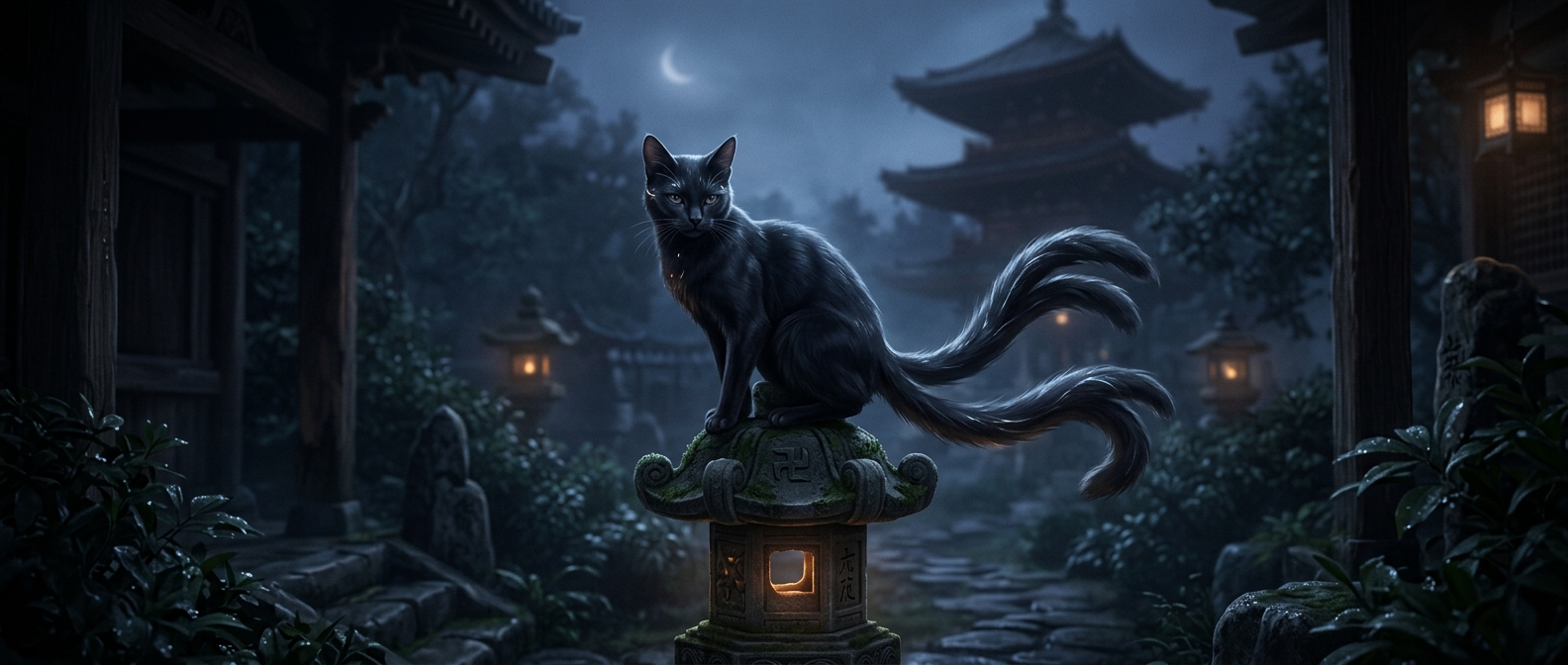
The forked tail marks a change in status
A nekomata is not simply an unusual-looking cat. In Japanese folklore, the divided tail signals that an ordinary animal has crossed into the uncanny: age and time have transformed it into a being with powers beyond a household cat’s. The visible split makes that change easy to recognize in a story or illustration. One familiar creature has become something that may no longer obey human expectations.
The name is commonly understood in connection with a cat’s forked or branching tail, though folklore varies by region and tale. Nekomata stories belong to a wider tradition of yōkai—a broad category of strange beings and phenomena in Japanese storytelling. Their forms are not fixed by a single authoritative canon, so details can shift between tellings.
Why the stories gave cats an edge
Cats lived close to people but remained difficult to read: they moved quietly, saw well in the dark, and could vanish from sight with little warning. Folklore could turn those familiar traits into signs of hidden ability. A split tail then served as a compact visual warning: this cat was no longer just a pet.
The fire-setting legends sharpen that unease. Fire could devastate homes, so a story that linked it to a mysterious cat made a household danger seem deliberate and personal. The nekomata’s tail did more than distinguish its body; it announced that a once-familiar animal might now be capable of unsettling harm.