From watching the sky to reading omens
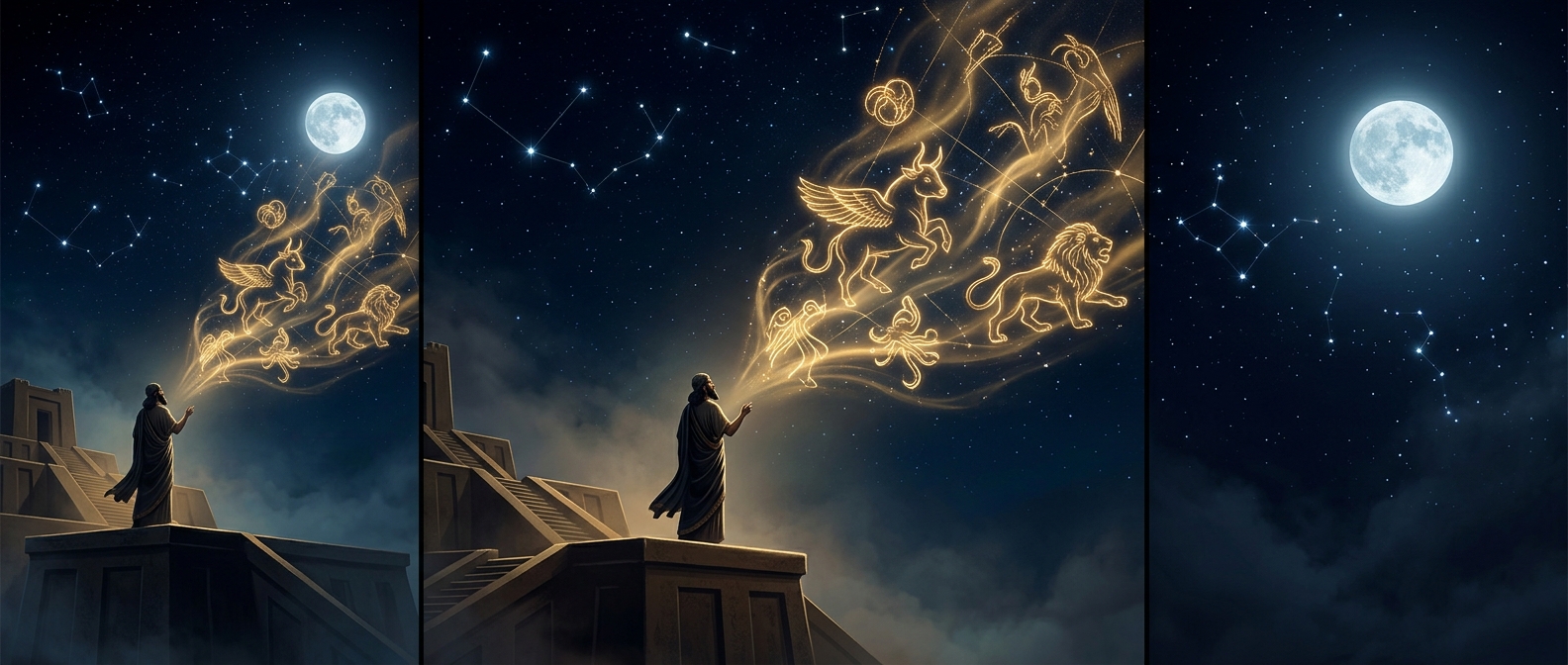
Mesopotamian sky-watchers did more than notice bright stars: they kept records of when the Moon changed shape, when planets appeared, and where they moved against familiar star patterns. Repeated observations made the sky a kind of calendar. Seasonal patterns could help people anticipate the agricultural year and plan around its rhythms, even though the planets did not provide a dependable forecast of local weather.
Over time, the records acquired another use. Celestial events were interpreted as signs that might foreshadow events on Earth. In this system, an unusual appearance in the sky could be linked to a possible danger or change in the kingdom. The interpretation was not simply a private feeling: it belonged to a learned practice of recording patterns and consulting established omen traditions.
Why the king mattered
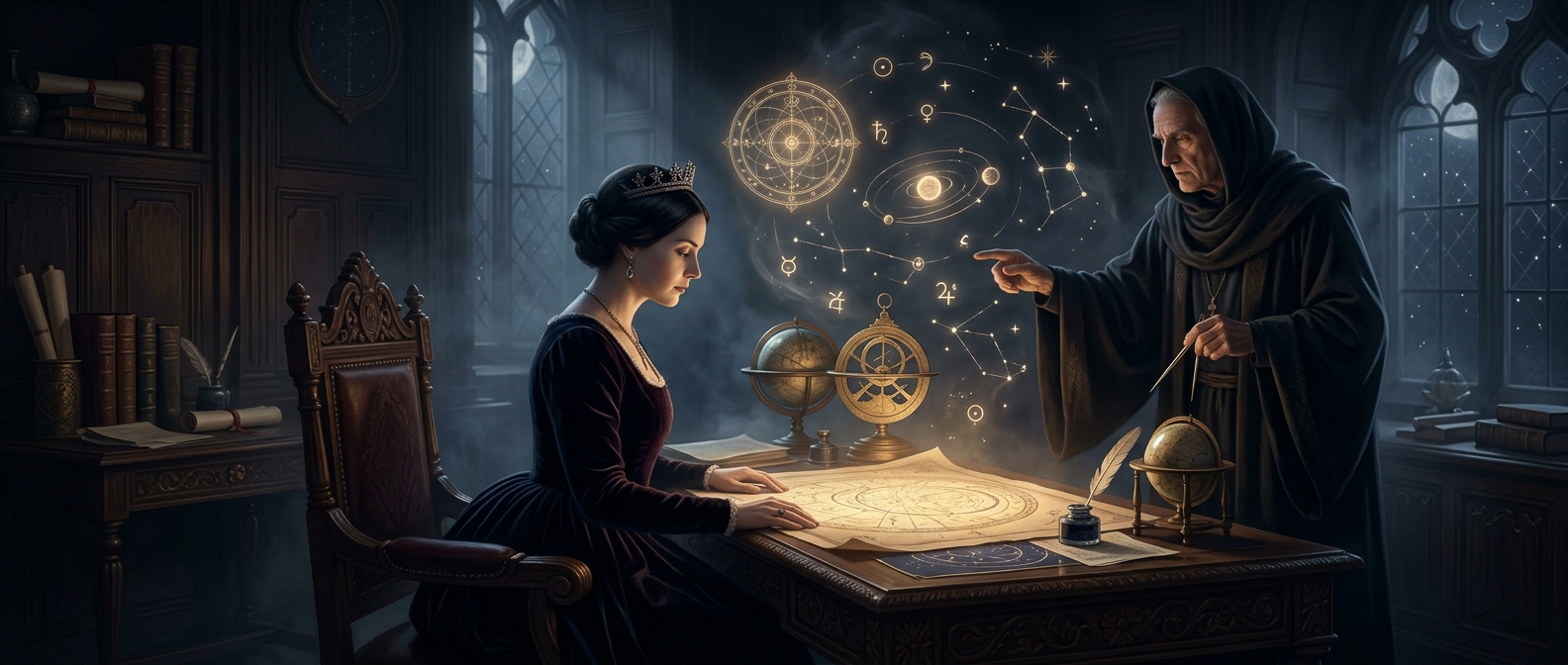
The earliest Mesopotamian astrology was chiefly about the state, not about telling individuals what their personalities were like. A prediction concerning the ruler could be treated as a warning about the safety or fortunes of the whole kingdom. That gave court officials a reason to watch the heavens closely: if a troubling omen appeared, the court could respond with protective rituals or other measures intended to avert harm.
The underlying logic joined two kinds of observation. People tracked what happened in the sky, then compared it with the political and natural events that followed. The shift was from using celestial cycles to organize time to treating celestial events as messages about power and danger. Astrology thus grew from practical sky-watching into a way for rulers and specialists to make uncertainty seem legible—and to decide what to do when the signs looked ominous.