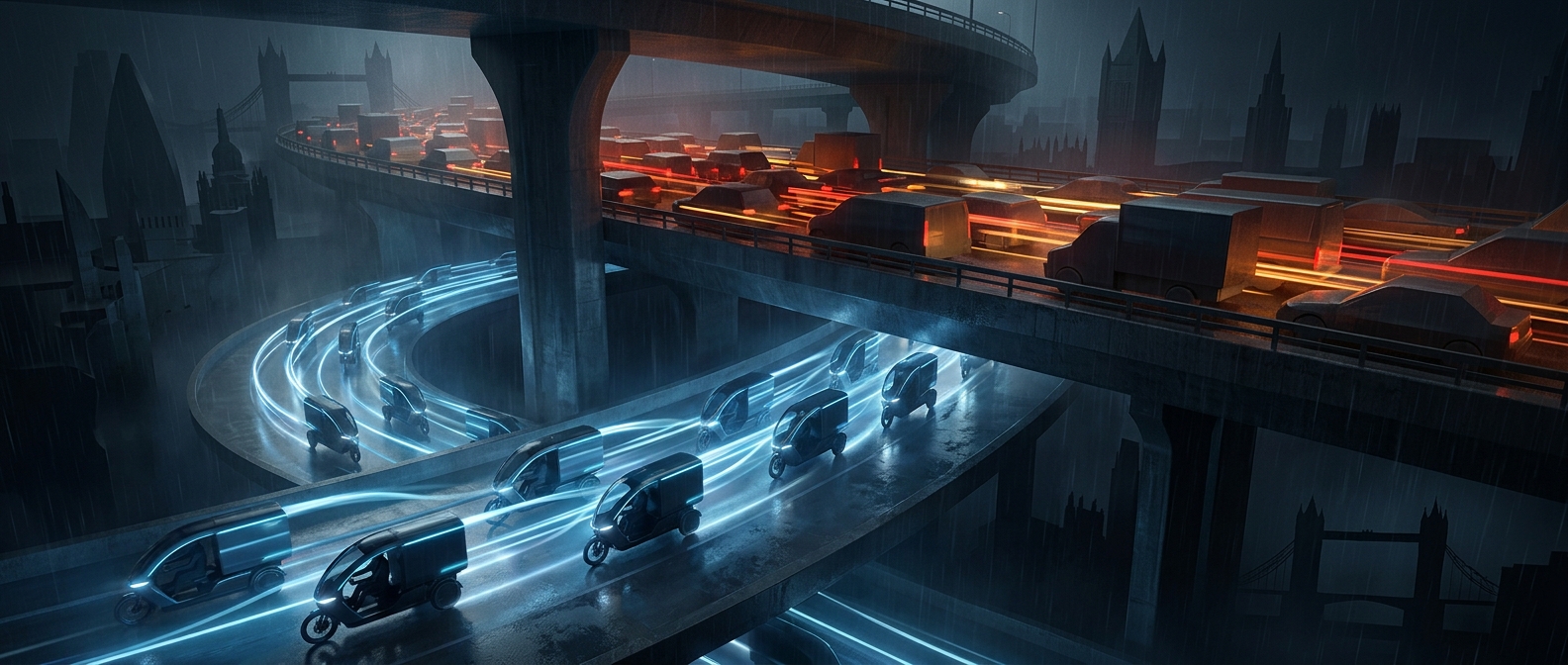
The last mile is a parking problem
A delivery van can carry far more parcels than a cargo bike, but its advantage shrinks when it reaches a crowded block. The driver may have to circle for a legal space, park several doors away, then walk packages back and forth. On a short, dense route, those repeated stops can consume more time than the driving itself.
A cargo bike changes the shape of that problem. It can often pull close to a building entrance and use small gaps that a van cannot, so the rider spends less time searching for a place to stop and less time carrying each parcel from vehicle to door. The bike is not beating a van in a race down an open highway; it is avoiding the delays that pile up at the curb.
Why the switch works best in cities
The advantage depends on the route. In compact neighborhoods, many deliveries sit close together, and the parcels can fit in a cargo box or trailer. A van may spend much of its capacity moving a large vehicle between nearby addresses, while a bike can keep moving through congestion and make frequent stops with less maneuvering.
That does not make bikes a universal replacement. They carry less, and long distances, bulky items, bad weather, or routes with few nearby deliveries can favor a van. A practical system can use vans to bring parcels to a neighborhood hub, then send cargo bikes out for the dense final stretch.
The curb becomes part of the delivery network
The deeper change is logistical: companies are treating access to the curb as a scarce resource, not just a place to park. A bike’s small footprint can make a quick stop possible where a van’s size turns the same delivery into a parking search. On a crowded street, the most useful vehicle may be the one that can stop closest to the door—not the one that holds the most parcels.