Why the final block is so expensive
A delivery route can be efficient across a neighborhood and still lose time at the very end. A van may have to leave its route, find a legal place to stop, and make a single drop before moving on. That parking-and-walking overhead is costly when the package is only a small order.
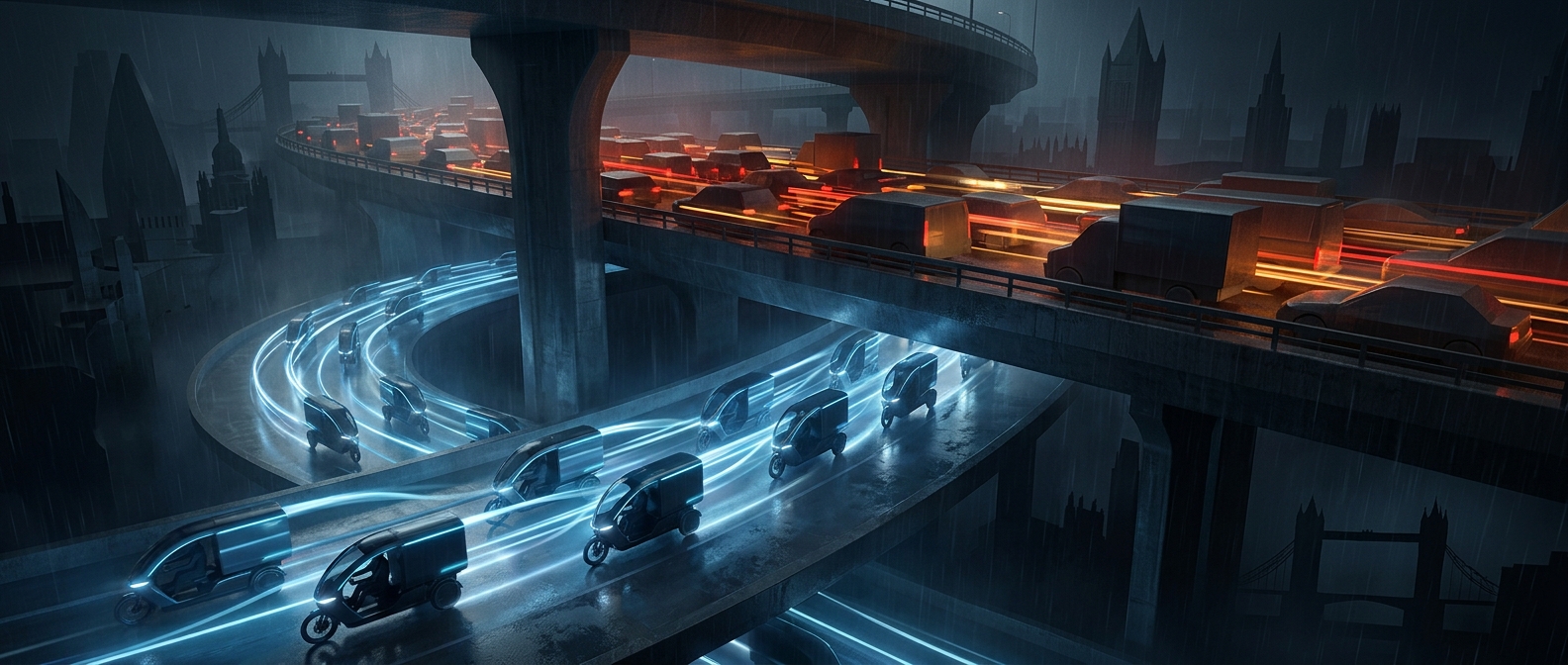
A local hub changes the shape of the job. Goods can be brought there in batches, then sent out on shorter trips. A small electric pod can carry a limited load directly toward nearby customers without requiring a full-size vehicle for every doorstep delivery. The advantage comes not from moving faster, but from matching the vehicle to the short, low-volume trip.
Compact size creates a different tradeoff
To travel without a driver, a pod must sense its surroundings and choose a safe path around people, objects, and changing street conditions. Its low speed and small footprint can make that task more manageable than navigating a large vehicle, but they do not remove the challenge: sidewalks are shared spaces, and a machine must avoid obstructing pedestrians.
The model works best where many deliveries are close enough to a hub to keep each trip short. It also shifts some work upstream: orders have to reach the hub and be organized for the pod’s limited capacity. The doorstep trip may become simpler, but the system only saves effort when the hub, vehicle, and delivery area fit together.