Why a moving car can make a passenger queasy
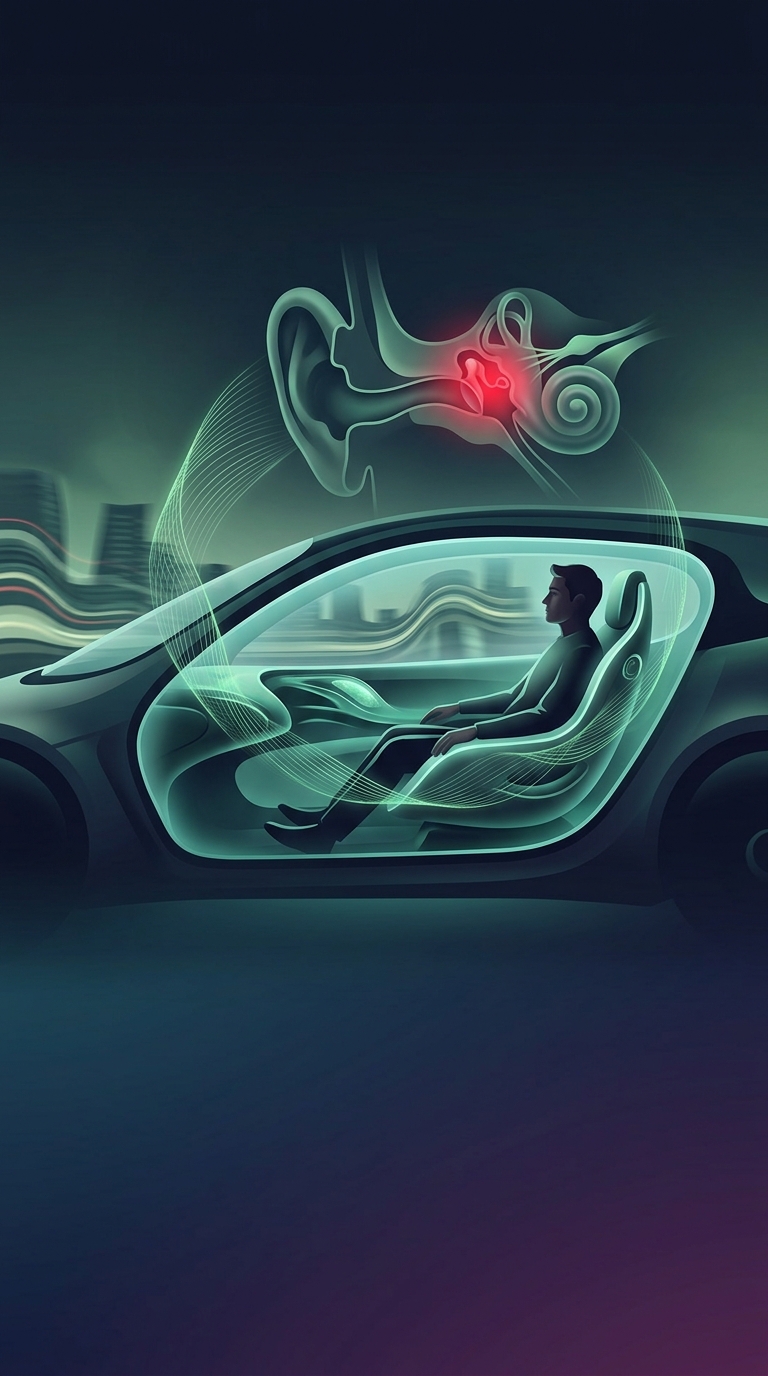
Motion sickness often starts when the brain receives signals that do not fit together. The inner ear senses changes in speed and direction, while the eyes report what is happening around you. If your body feels a turn but your eyes are fixed on a book or screen, the mismatch can trigger nausea, dizziness, and cold sweats.
Drivers get an extra source of information: they steer, brake, and see the road ahead, so they can often anticipate a maneuver before their body feels it. A passenger may have no such warning. In a self-driving car, everyone can be a passenger—even the person who would otherwise be driving.
Automation changes what riders do—and what they feel
The promise of autonomy is that riders can spend the trip working, watching videos, or relaxing instead of looking through the windshield. But a screen gives the eyes a stable scene while the car turns or slows underneath the rider. Facing away from the direction of travel or reclining can make it harder to see motion coming, too.
The vehicle’s movements matter as well. A late brake, a quick lane change, or repeated small corrections can make the body sway in ways the rider did not anticipate. A driver may make those same movements without feeling as sick because their visual attention and actions are tied to the car’s motion.
Comfort becomes an engineering constraint
Autonomous vehicles can be designed to reduce the mismatch, not merely to avoid collisions. They can plan gentler turns and braking, limit abrupt corrections, and give passengers a view of the road or a clear cue before a maneuver. Those choices may compete with other goals, such as taking the fastest route or responding quickly to traffic.
That is why motion sickness is a practical concern for self-driving design: a vehicle can navigate safely yet still leave riders feeling unwell. If passengers cannot comfortably read, work, or look away from the road, one of autonomy’s most appealing uses becomes much harder to deliver.