Why an Eclipse Called for Noise
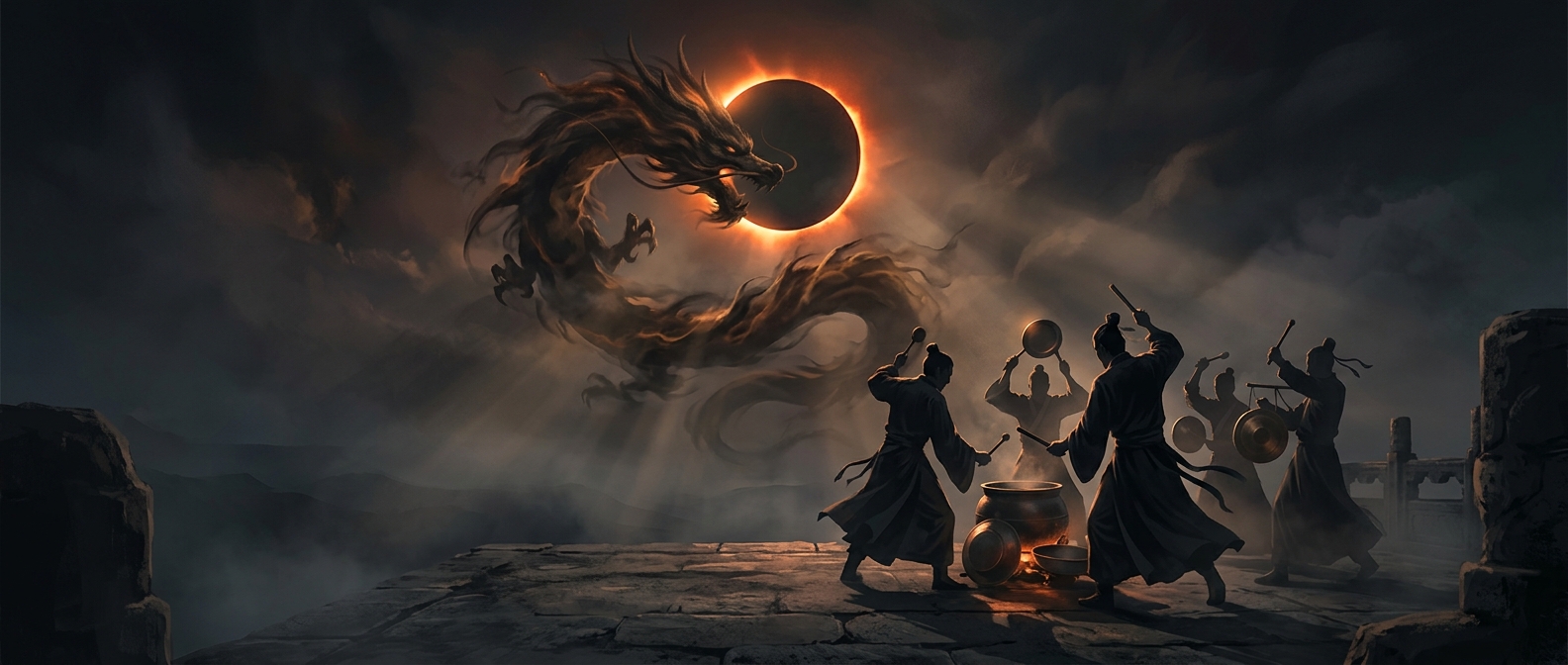
In traditional Chinese accounts, a solar eclipse could be pictured as a dragon or other creature swallowing the sun. Making a racket—by striking drums, pots, or other noisy objects—was a way to drive the attacker off. The sound was not incidental: it turned a frightening event in the sky into a crisis people could answer together.
An eclipse also carried political meaning. In Chinese court traditions, unusual events in the heavens could be read as warnings about disorder on Earth, including the conduct of a ruler. The ritual therefore addressed two fears at once: that the sun was under attack and that its disappearance signaled trouble for the state.
Why the Ritual Seemed to Work
A solar eclipse has a built-in ending. As the moon moves across the sun and then continues along its path, sunlight gradually returns. To people watching without a modern explanation, the sequence could look like a creature had taken the sun and the noise had forced it to release its hold.
That apparent success made the ritual compelling: the community acted at the moment of danger, and the feared darkness passed. The lasting image is not just of people making noise, but of a society treating the sky as a message—and answering it with a sound everyone could hear.