A race that explains the order
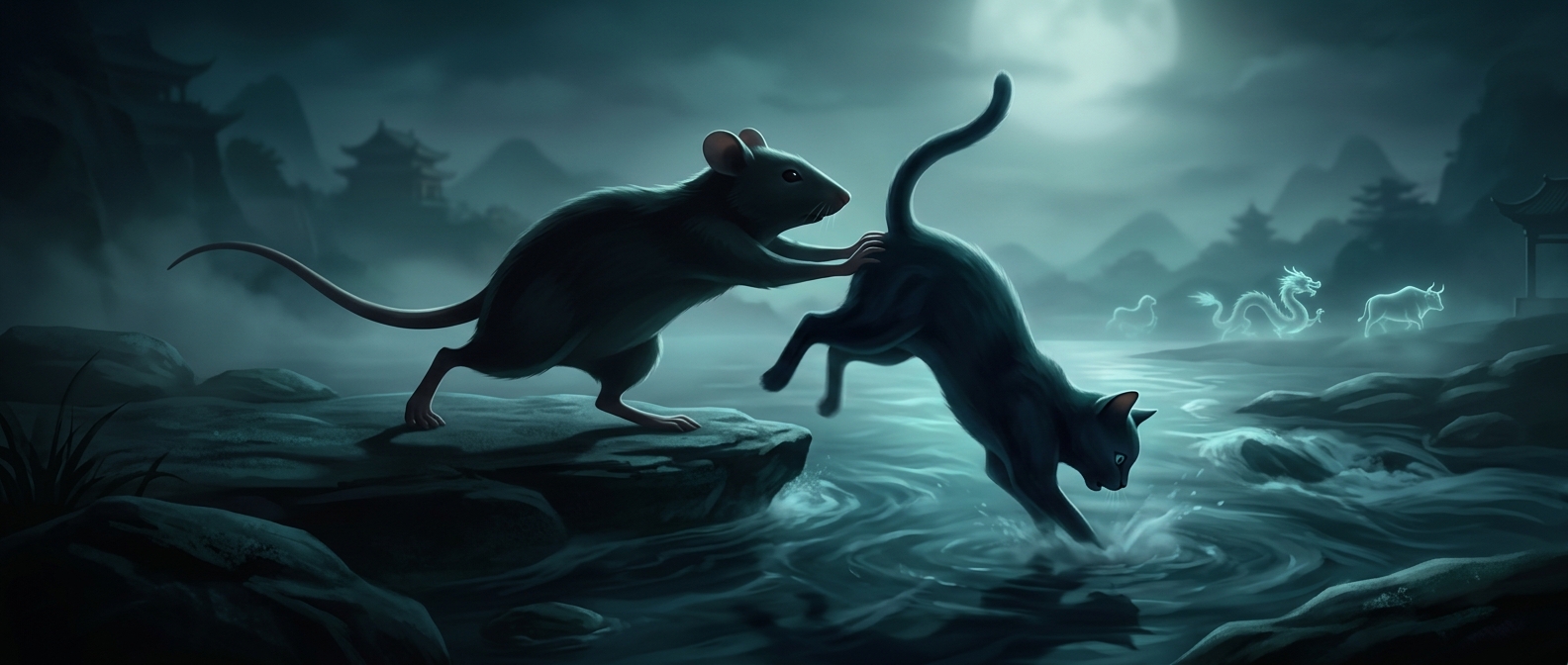
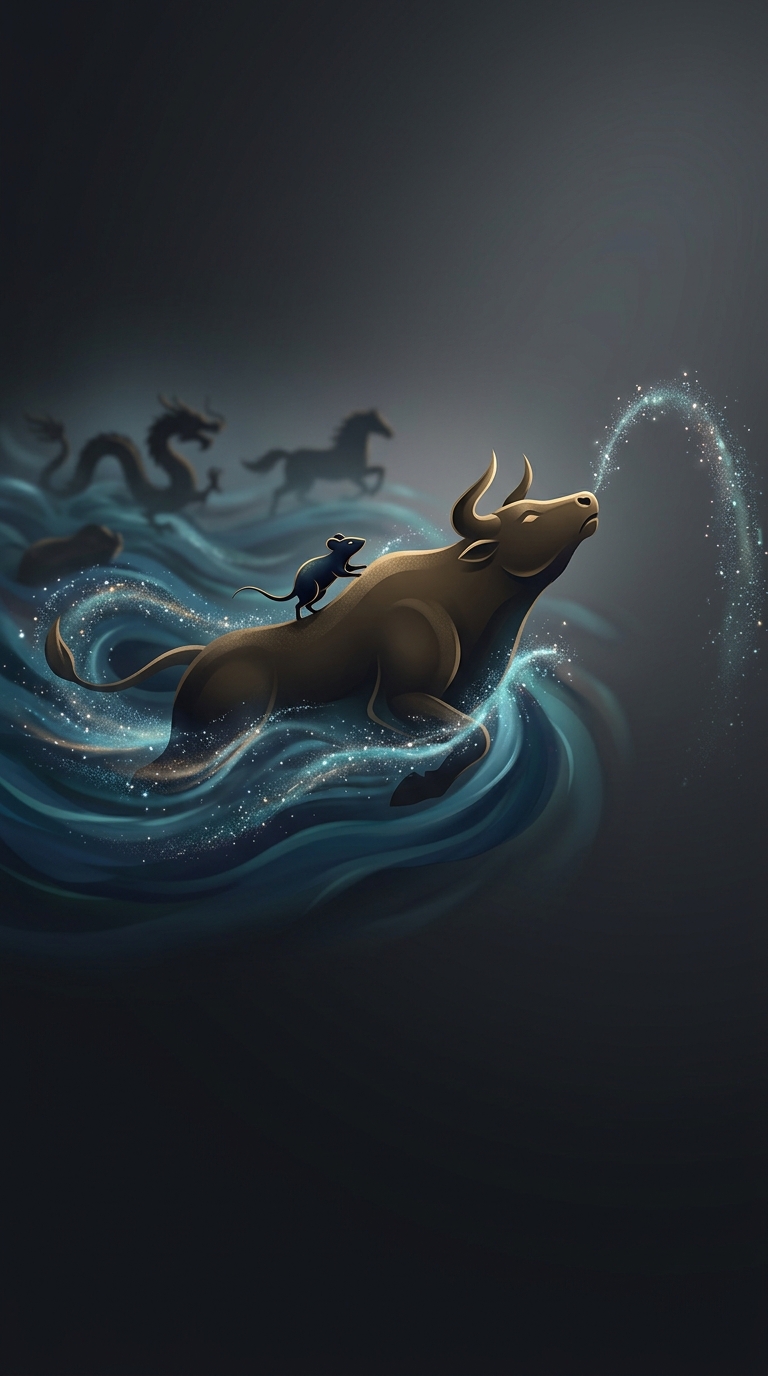
The river-crossing tale gives a memorable answer to a practical question: why do the twelve animals come in this particular sequence? In the story, the rat’s clever ride on the ox turns a contest of strength into a contest of timing. The animals’ arrival order becomes the order of the zodiac cycle.
Like many origin legends, the story is best understood as a way to make an inherited system vivid, not as a record of how the calendar was created. Its characters also make the sequence easy to remember: each year has an animal, and the animals return in the same order after twelve years.
Why twelve years?
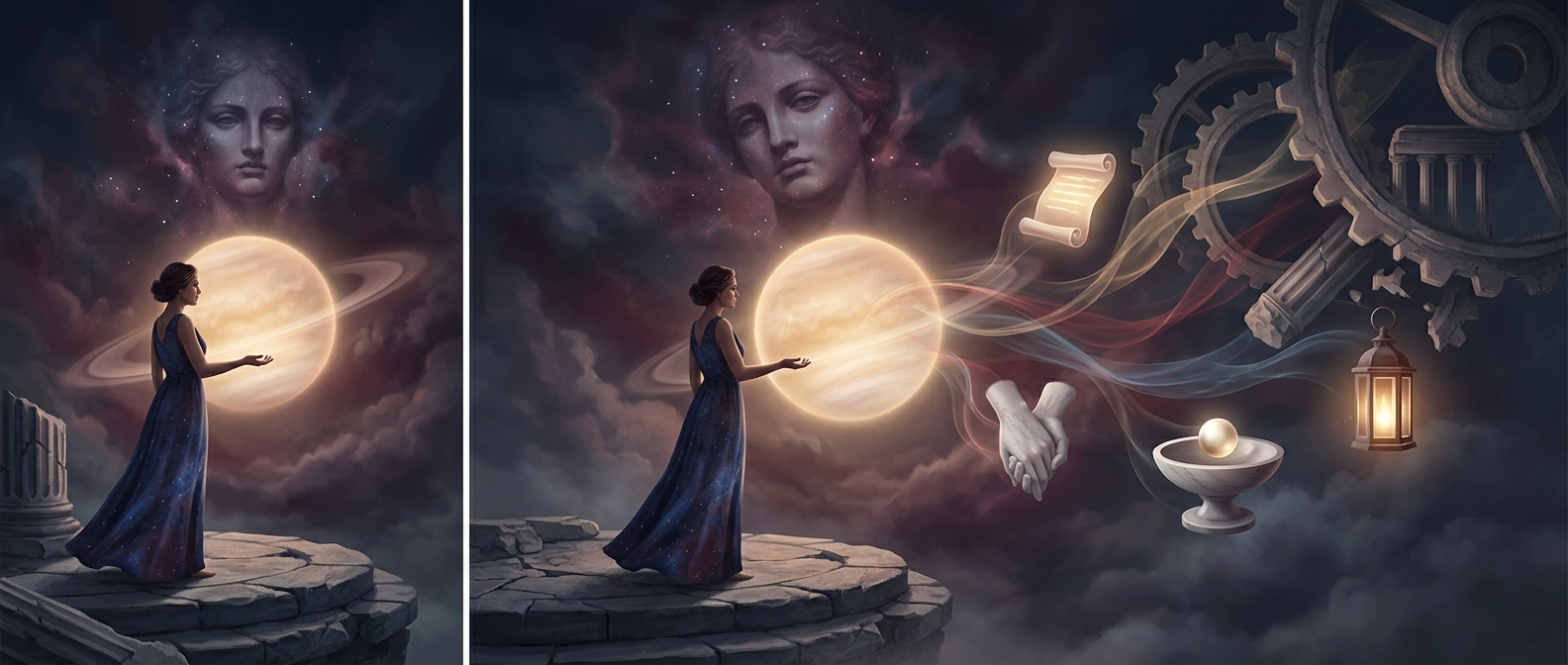
The cycle has an astronomical counterpart in Jupiter. Seen from Earth, Jupiter moves slowly against the background of stars and takes about twelve years to complete a circuit of the sky. Ancient Chinese calendrical systems used Jupiter’s changing position as a marker of time; the twelve-part cycle of years was associated with that movement.
This is different from a zodiac defined by constellations along the ecliptic—the apparent path the Sun follows across the sky. The animal cycle is a repeating calendar sequence, not a set of twelve star pictures that Jupiter passes through in the modern Western sense. Jupiter’s actual orbit takes just under twelve Earth years, so the traditional cycle is a useful approximation rather than an exact match to the planet’s return.
A calendar made memorable
The animal cycle is part of a broader Chinese system for naming years, alongside the ten Heavenly Stems. Pairing the ten stems with the twelve Earthly Branches produces a larger sixty-year cycle. The animals, attached to the branches, offer a familiar shorthand within that more intricate framework.
The legend and the sky thus serve different purposes: the race makes the order stick, while Jupiter helps explain why a twelve-year rhythm made sense. A story about a rat and an ox carries a trace of an older effort to measure time by watching a slow-moving planet.