Repetition Turned a Rerun Into a Chance to Participate
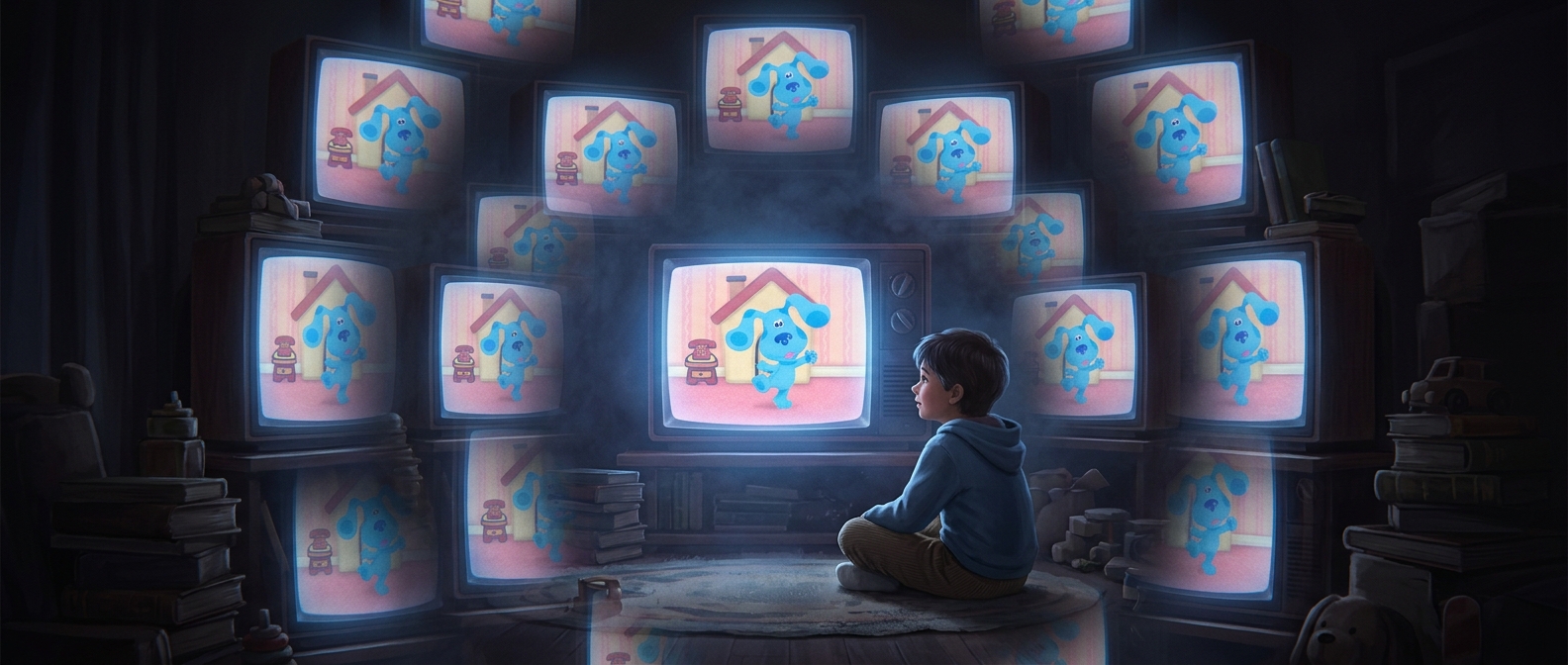
When Blue’s Clues aired the same episode throughout the week, children did not have to solve its puzzles from scratch every time. The first viewing could introduce the clues and questions; later viewings made their order familiar. A child who had only watched quietly at first could begin to recognize what was coming and try an answer before the show moved on.
That shift matters for young viewers. Recognizing a clue is easier than encountering it cold, and repeated exposure gives a child more chances to connect the clue with the question it helps answer. The episode’s structure becomes predictable enough that the child can focus less on figuring out what is happening and more on joining in.
Familiarity Made Confidence Part of the Format
The benefit was not only remembering the right answer. A child could experience the pleasure of knowing what to look for, anticipating a question, and responding along with the program. Each repeat offered another opportunity to move from watching the problem unfold to feeling capable of helping solve it.
That made the week’s reruns serve a different purpose from simply filling a schedule. The same episode gave children time to grow into active participants. By the final viewing, a familiar prompt could feel less like a test and more like an invitation to answer.