A Blink Can Break the Moment of Attention
Young children often use another person’s eyes to work out where attention is going. When a presenter looks straight into the camera, that gaze can feel like an invitation to stay engaged. A glance off-screen, by contrast, may signal that something else matters—or simply interrupt the child’s sense of connection.
This is part of joint attention: the ability to share focus with another person. Toddlers are still learning to follow and interpret these social cues, so a small shift that an adult barely notices can matter more to them.
Why Hosts Hold Their Gaze
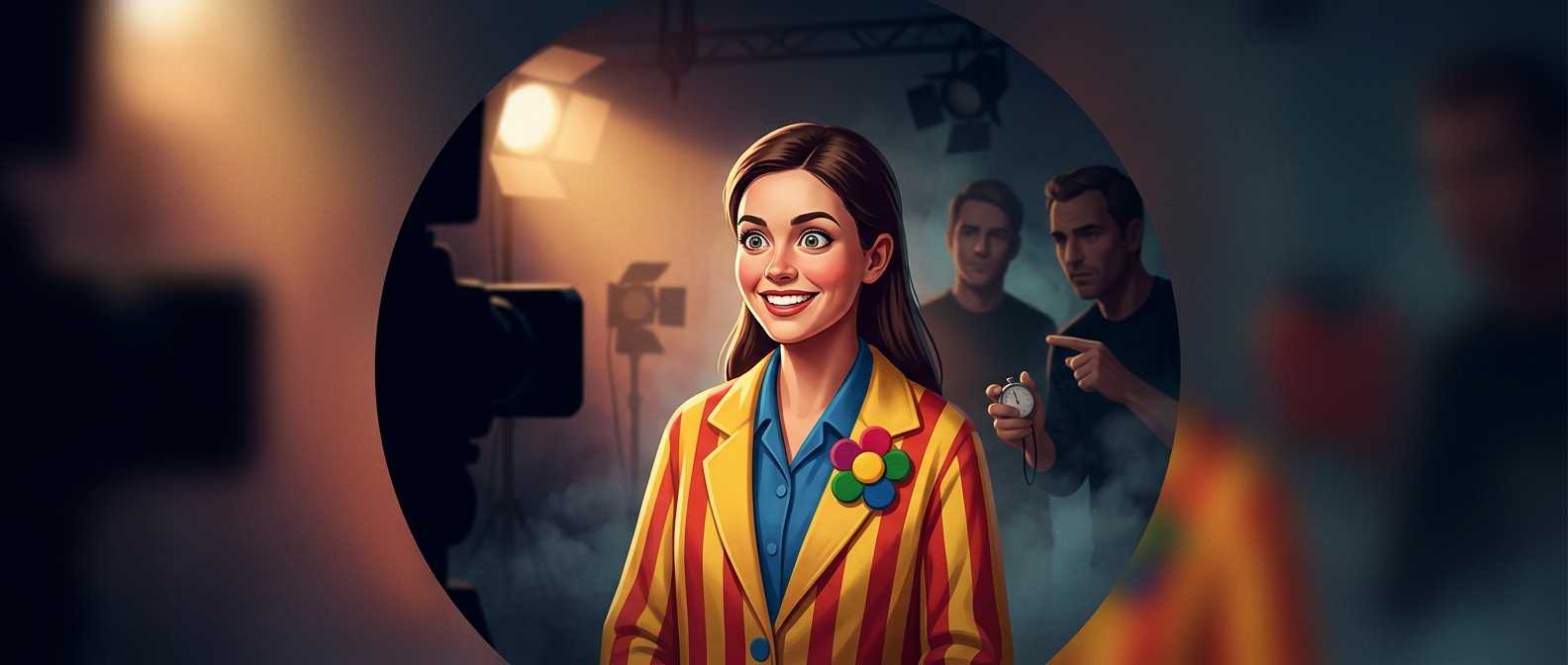
A children’s TV presenter has to create a sense of direct interaction without being able to see the child watching. Looking into the lens stands in for looking at the viewer. If the host repeatedly turns toward a crew member, checks a monitor, or drops their gaze while explaining an activity, the performance can feel less like an invitation to participate.
That is why coaching may include keeping eye contact steady and avoiding unnecessary blinking. It is not a demand to stare without blinking; blinks are unavoidable, and the goal is to keep attention from wandering at key moments. Hosts can also use clear facial expressions, gestures, and pauses to make it easier for a young viewer to follow what is happening.
A Small Choice With a Practical Effect
The screen cannot respond to a child’s gaze, but the presenter can still make the exchange feel more personal. Steady eye contact helps hold the child’s attention long enough to hear an instruction, notice a demonstration, or anticipate what comes next. In children’s television, a tiny performance choice can help bridge the gap between a one-way broadcast and a moment that feels shared.