A tiny change has to be built by hand
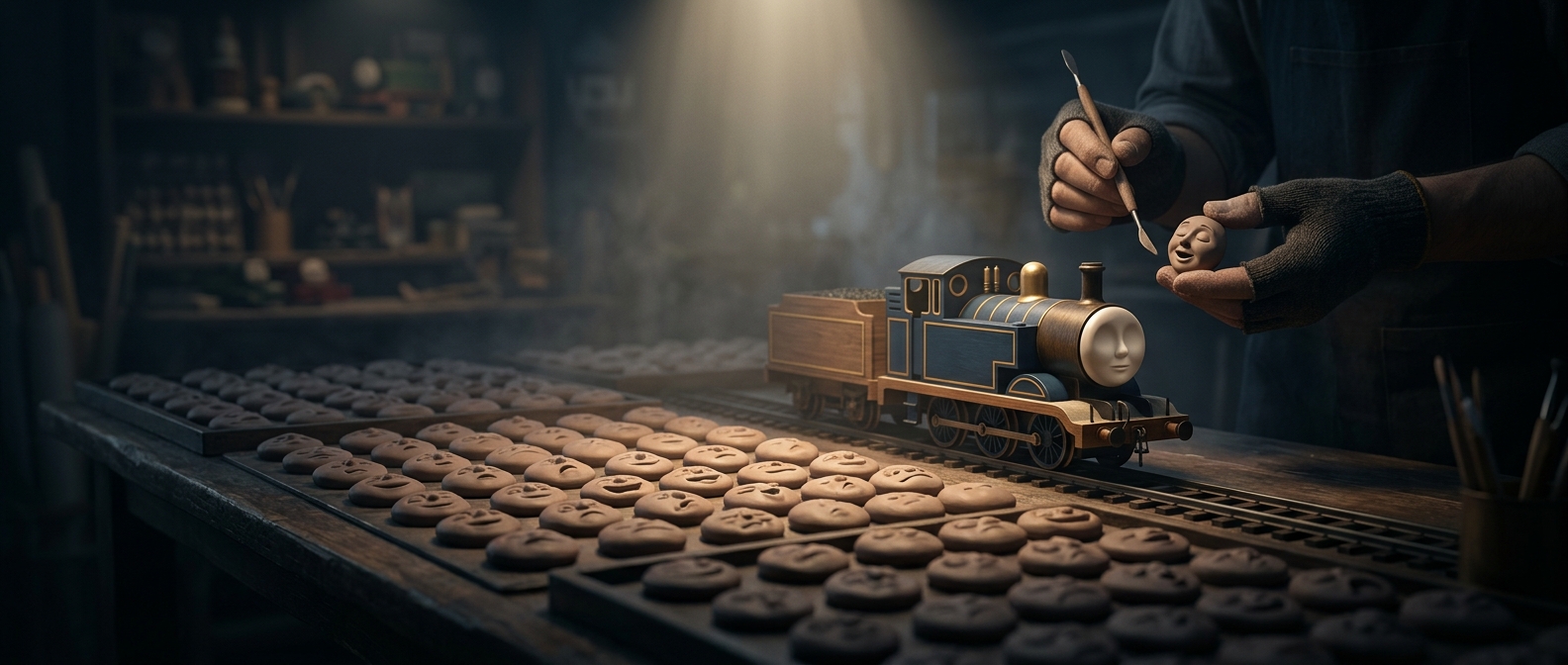
In stop-motion, a train does not change expression between frames the way a drawn character can. The animator arranges the model, takes a photograph, alters the scene slightly, and takes another. To change the train’s look, the animator replaces its molded face with another one that fits the same spot.
That makes an expression a physical part of the animation process. A face must sit in the right position and angle so the change reads clearly, while the train and camera remain steady. Even a small mismatch can make the face appear to jump rather than transform.
Why the swaps add up
A scene may need only a few expressions, but the animator has to make changes at the pace of the story: a character can react, hold a look, then shift again as the action unfolds. Each replacement happens during the frame-by-frame shoot, not as a single edit afterward. Across scenes and characters, those pauses to swap faces accumulate into hundreds of changes.
The work also shapes what viewers see. A face held for several frames gives a reaction time to register; a quick change can make surprise feel abrupt. The molded faces are therefore both props and performance tools: their design determines which emotions the train can show, while the animator’s timing determines when the audience notices them.