A Set Can Call It Morning Before the Clock Does
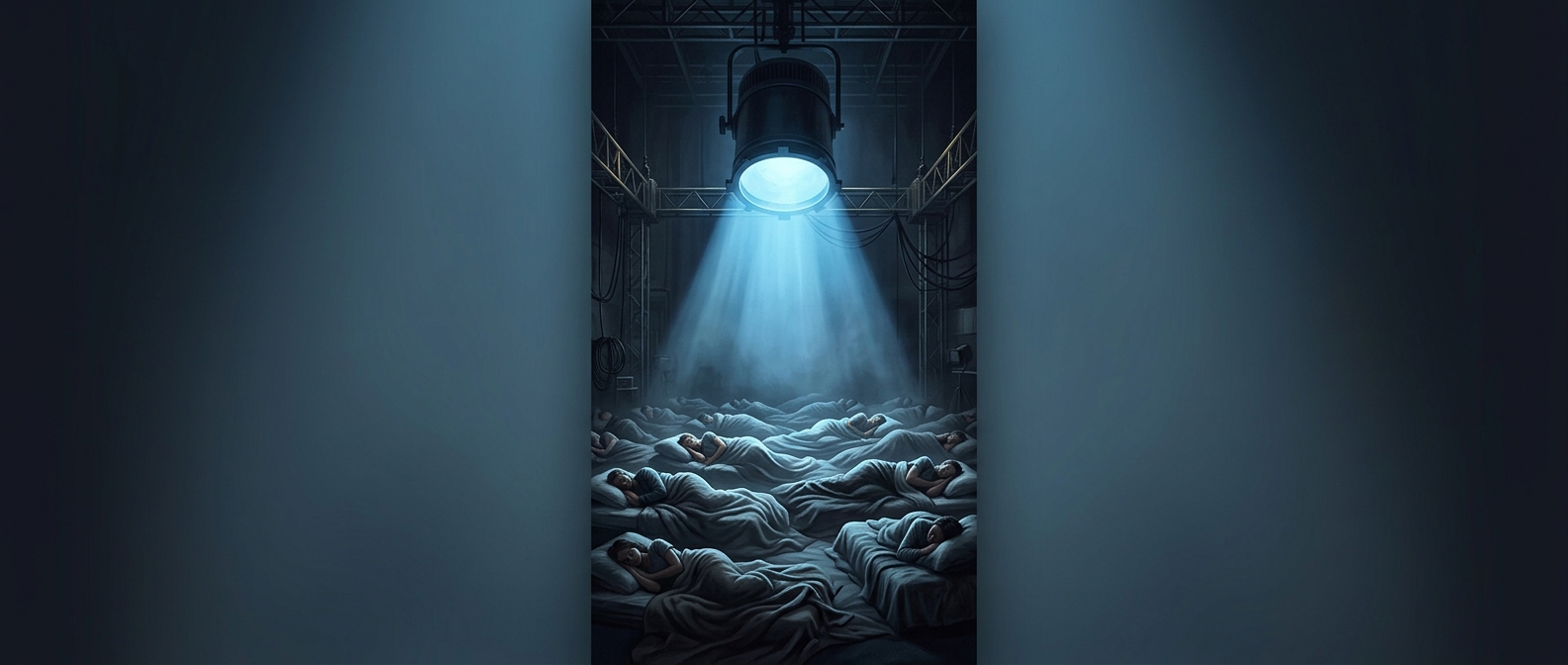
A soundstage has no sunrise to obey. Its windows may be painted scenery, covered over, or absent altogether, so producers can use the lighting rig to make a room look like daytime whenever filming requires it. Bright overhead lights can turn a late-night set into an apparent morning—even at 4 a.m.—and help signal that contestants should be up and ready to shoot.
That is useful when a production needs everyone in the same place for a scheduled scene. Rather than wait for natural daylight or let each contestant keep a personal sleep routine, the crew can coordinate wake-ups with the filming plan. The lighting helps make the change feel immediate: the room goes from dark to bright, and the set is prepared for cameras.
The Cue Is Part of a Larger Schedule
Lighting is not a clock that forces anyone awake on its own. Contestants still experience the wake-up call, the demands of filming, and the loss of ordinary cues such as a view of the sky or a reliable distinction between day and night. On a controlled set, those environmental signals can be managed to fit production hours rather than a natural day.
The body uses light as one cue for its internal timing system, which helps regulate alertness and sleep. A bright, early wake-up may therefore feel different from waking naturally after a full night. When sleep is shortened or shifted, people can become tired and less focused; in a competitive, closely filmed environment, that can also make the day harder to navigate.
Production Gains Control; Contestants Lose the Usual Cues
For producers, artificial lighting makes scenes easier to schedule and keeps the set visually consistent regardless of the hour. For contestants, the tradeoff is that “morning” becomes a production decision, not a sunrise. A room can look ready for the day while the outside world—and the contestants’ bodies—still say it is the middle of the night.