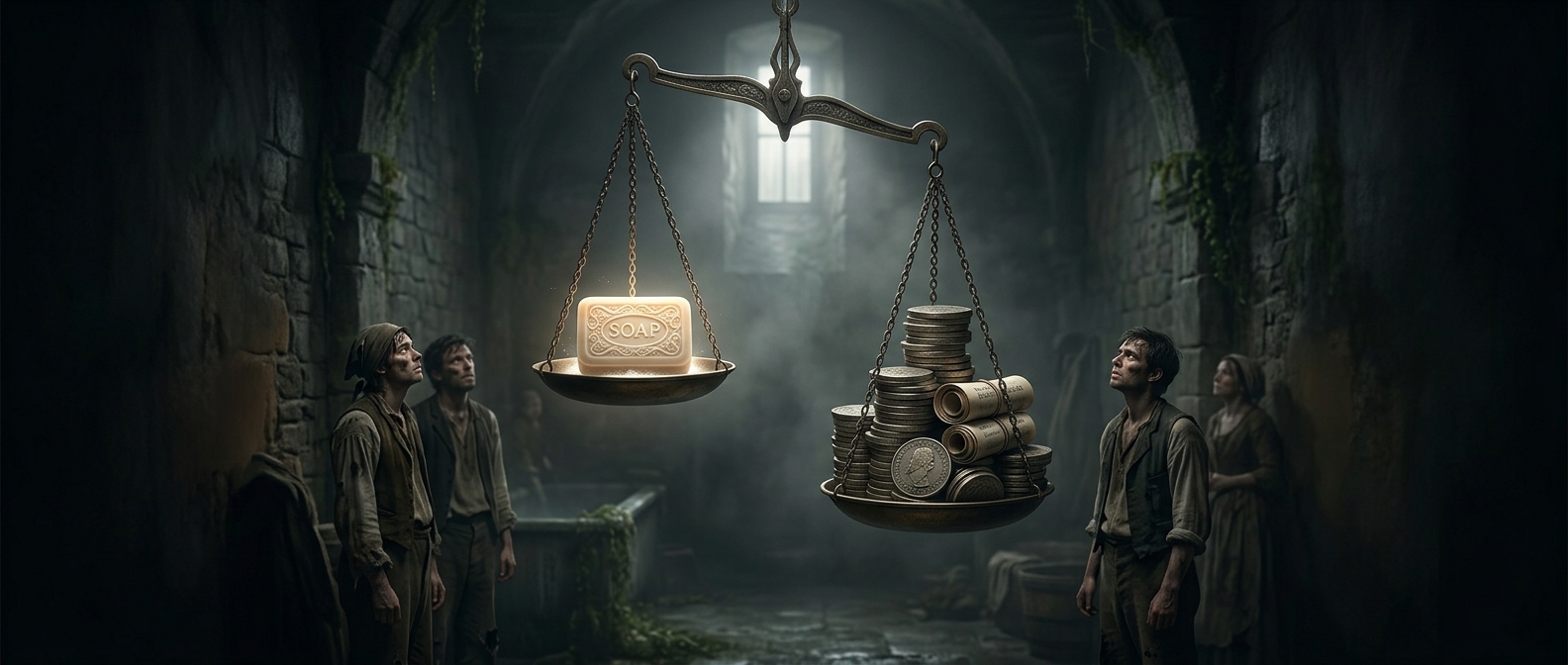
How a duty followed soap to the shop
Britain’s soap duty was an excise tax: a charge imposed on a product as it was made or sold, rather than a bill sent directly to each household. In practice, the tax became part of the cost of supplying soap. Makers and sellers had to account for it, and buyers encountered its effect in the price.
That made the burden uneven. A small increase in the price of an everyday necessity can be easier for a wealthy household to absorb than for a family already choosing among basic expenses. The tax did not formally prohibit washing; it made regular use more costly, especially for people with the least room in their budgets.
The tradeoff behind repeal
For the government, soap was a source of revenue. For households, it was part of keeping bodies, clothes, and homes clean. Those purposes collided: collecting money from a widely used product could raise funds while making a beneficial habit harder to maintain.
The duty lasted for well over a century and was abolished in 1853. Its removal illustrates a persistent problem with taxing necessities: a policy can be efficient at collecting revenue precisely because people keep buying the product, yet the cost falls most heavily on those least able to pay. In the case of soap, the price of public revenue was attached to an ordinary act of washing.