A sandal where an answer should be
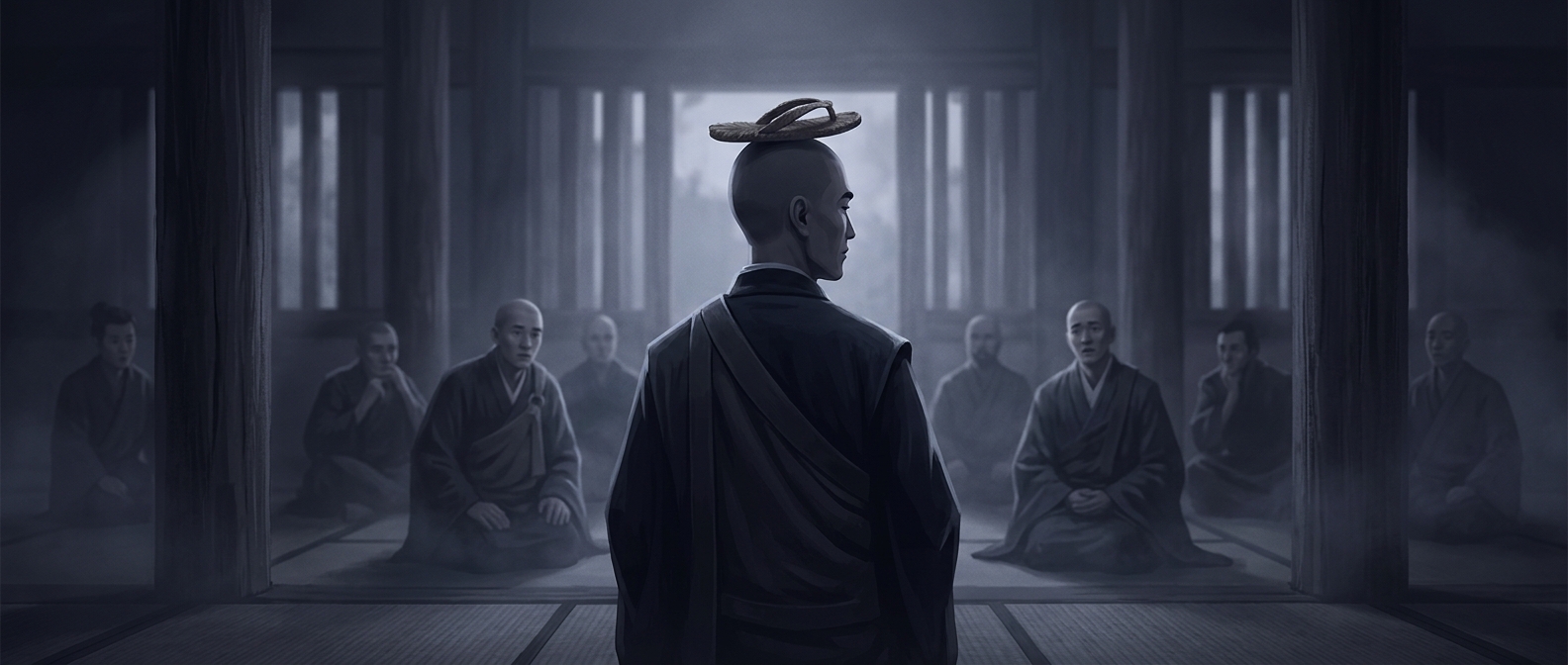
The gesture belongs to a famous Zen anecdote about a dispute over a cat. In the story, the monk Nansen finds two groups of monks arguing over the animal and demands that someone say something that will save it. No one responds, so Nansen cuts the cat in two. Zhaozhou is away during this episode. When he returns, Nansen tells him what happened and asks how he would have answered. Zhaozhou puts a sandal on his head and walks out.
Why answer with an action?
Zen teaching stories, often called koans, use puzzling encounters to unsettle habitual ways of thinking. Zhaozhou does not offer a rule about who owned the cat or a judgment about Nansen’s decision. His response refuses the terms of the debate—and leaves Nansen’s question hanging rather than resolving it in words.
The image is deliberately strange: a sandal belongs on a foot, not on a head. That mismatch makes the gesture hard to turn into a tidy argument. It may register as a rebuke, a demonstration of freedom from the monks’ dispute, or simply a response that cannot be reduced to a single explanation. The story does not supply a key that settles its meaning.
The consequence of saying nothing
The sandal does not undo what happened to the cat. That is part of the story’s force: an unconventional answer can interrupt a debate, but it cannot necessarily repair the consequences of failing to act when action was needed. Zhaozhou’s departure makes the scene memorable precisely because it answers Nansen without explaining itself—and gives the listener the unsettled question instead.