Turning astrology into a learned pursuit
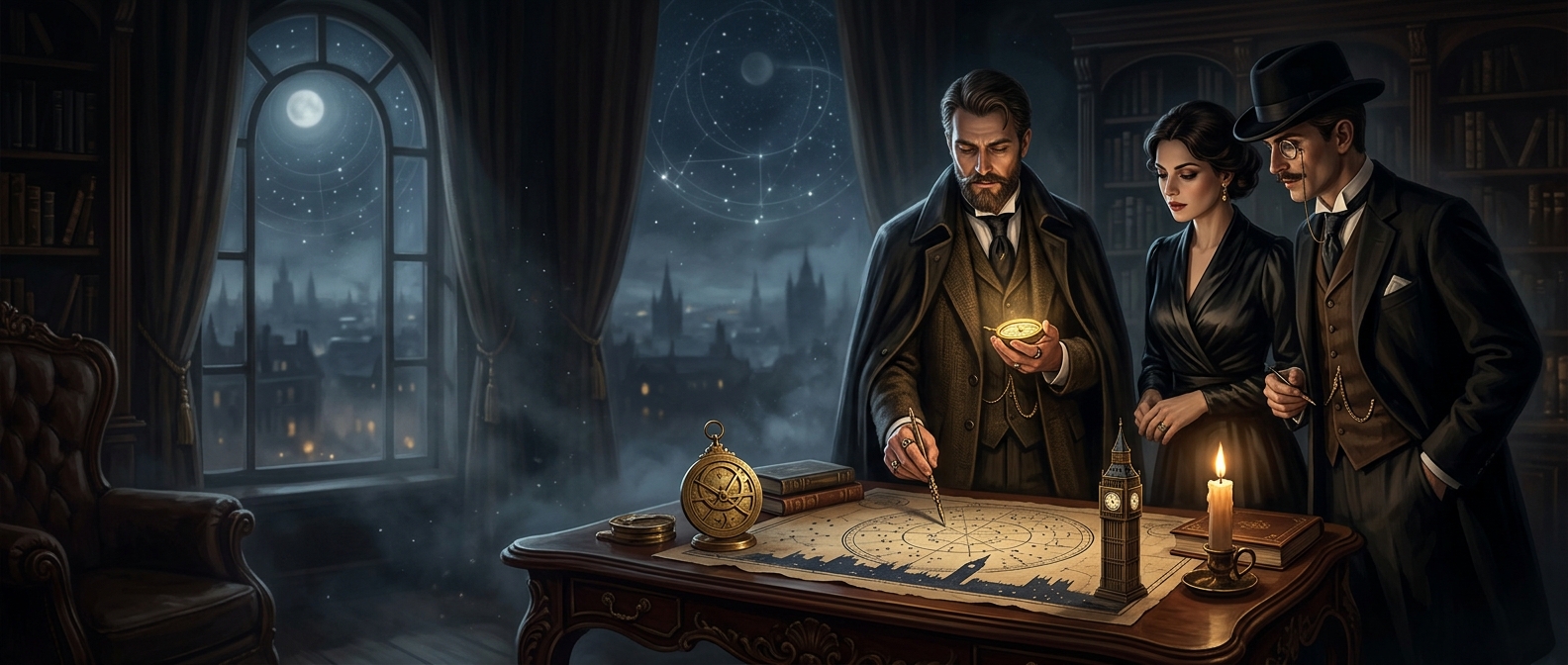
In 1915, Theosophist Alan Leo led the founding of the Astrological Lodge of London. Its aim was not simply to encourage people to look at the stars. It sought to present astrology as a serious esoteric science: a system of hidden knowledge in which celestial patterns were thought to correspond with human lives and events.
“Science” here signals the kind of authority the group wanted astrology to have, not proof that its claims met the standards of modern scientific testing. The lodge’s name and organized form helped frame astrology as something to study within a community, rather than just a private curiosity.
The social force of a lodge
A lodge could give an idea the trappings of an institution: a defined membership, shared interests, and a setting for learning and discussion. In a culture where access to influential circles was shaped by money and social standing, the participation of wealthy occultists also made the group feel more like a select club than an open public pastime.
That exclusivity was part of the appeal and the message. The lodge presented astrology as knowledge for committed insiders, worthy of sustained study. By gathering people around it in 1915, Leo’s group gave an old practice a distinctly modern form: a London society with a name, a leader, and an intellectual ambition.