The price was built into every bit
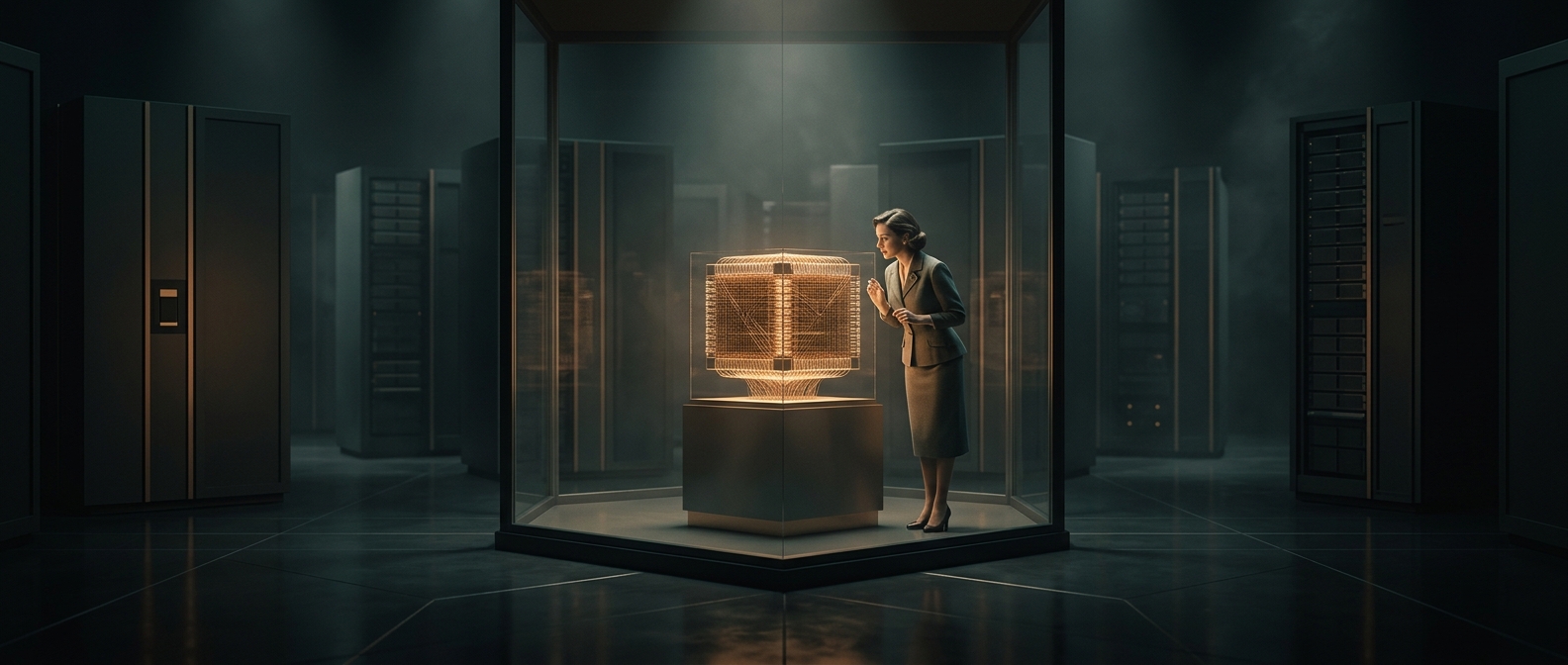
Magnetic core memory stored information in tiny rings of magnetic material. Each ring could be magnetized in one of two directions, representing a 0 or a 1. Wires ran through the rings to select and read them: a pulse through the right combination of wires could change a ring’s state, while the resulting signal revealed what it had stored.
That design made memory directly accessible—computers could reach a particular stored bit without moving through everything before it. But scaling it up meant assembling millions of rings and threading them with an intricate web of wires. A megabyte, roughly eight million bits, was therefore not just a larger stack of memory. It required an enormous amount of painstakingly assembled hardware.
Why the cost could fall
The expense came from making and connecting so many tiny components, not from the abstract information they represented. Core memory was a major advance over earlier forms of computer storage, but it was still costly to manufacture and physically bulky. As production methods improved and newer memory technologies emerged, storing the same amount of information became far less demanding in both space and money.
The striking change is in what a megabyte means in practice: once it called for a room-scale assembly of magnetic rings and wiring; now it can fit inside a device small enough to carry in a pocket.