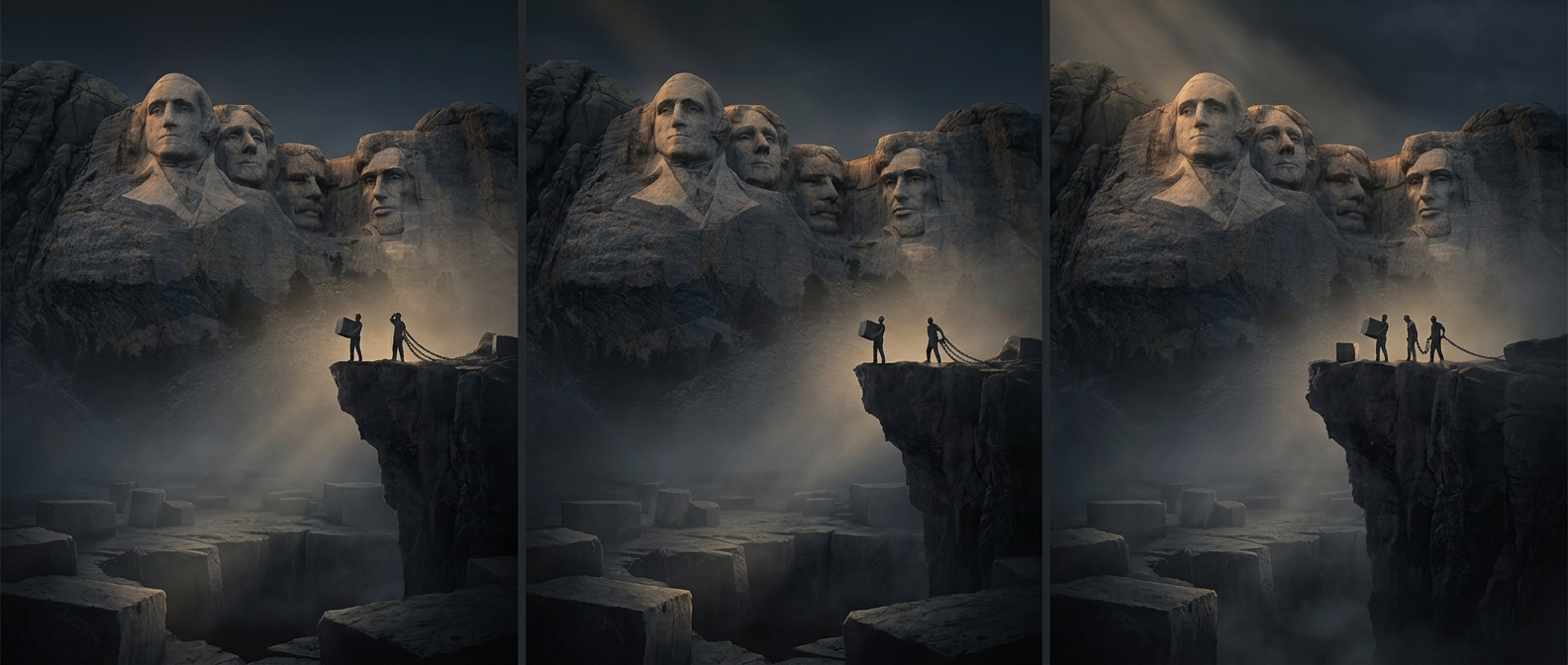
The mountain was meant to carry full figures
Mount Rushmore’s familiar faces were only the most visible part of a larger plan. Gutzon Borglum intended to carve the presidents down to their waists, turning the portraits into monumental upper-body figures rather than isolated heads. The added forms would have made each president appear more like a public monument in stone, with shoulders and clothing helping complete the image.
That ambition also meant far more work on a mountain already being reshaped with drills and explosives. The carved figures had to emerge from the granite itself, so extending the design below the faces required more time, labor, and money—not simply attaching finished statues to the rock.
Why the faces remain
The project stopped in 1941 when funding ran out, leaving the planned torsos unfinished. The faces, carved first and on a much larger scale than ordinary portraits, became the entire composition visitors now see. Their prominence can make the monument look as if heads alone were always the design; the unfinished plan tells a different story.
The missing bodies are not hidden sculptures waiting beneath the surface. They are a reminder that the monument visitors encounter is also a record of where an ambitious construction project had to stop.