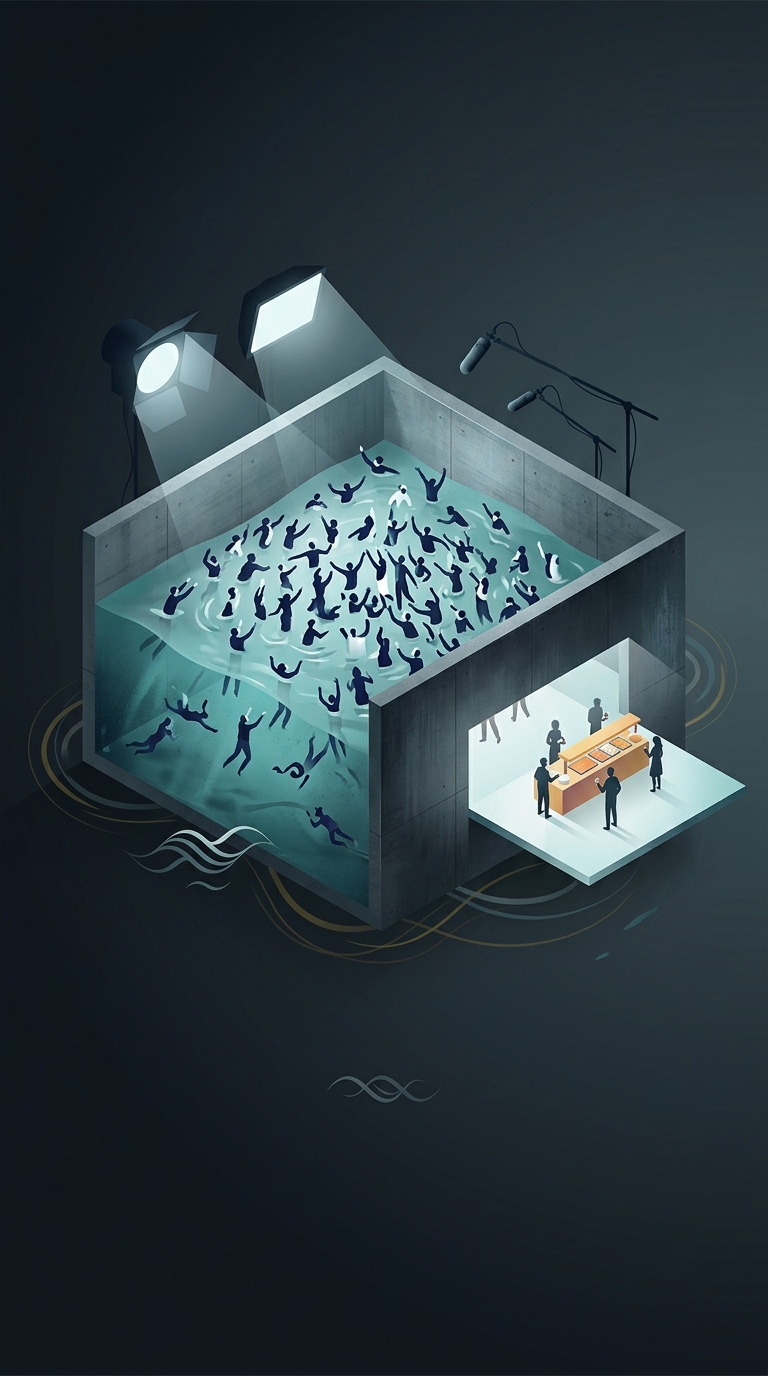
How a warm pool became an icy Atlantic
The scene’s cold had to register on screen even though the actors were working in water kept around 80°F. That temperature changes what a camera can capture: performers are not visibly shivering from freezing water, and their breath does not naturally form the white cloud viewers associate with freezing air.
The production therefore built the sensation from separate elements. The pool supplied the water and movement; the actors supplied the performances; the frozen-looking breath was added afterward. In real cold air, breath clouds form when warm, moist exhaled air cools and tiny droplets become visible. Warm conditions do not create that same effect, so the image had to be made in post-production.
The cold is an effect the audience assembles
This kind of filmmaking relies on viewers reading visual cues together. A breath cloud suggests frigid air; bodies in water suggest danger and exposure. Once those cues appear in the same scene, the audience can experience the setting as cold even though the filming conditions were not.
That separation also highlights a practical tradeoff: a scene can be made to look physically punishing without requiring every visible detail to be produced by the actors’ real surroundings. The result is a freezing ocean on screen—and a warm pool behind the illusion.