How a shallow tank could suggest an ocean disaster
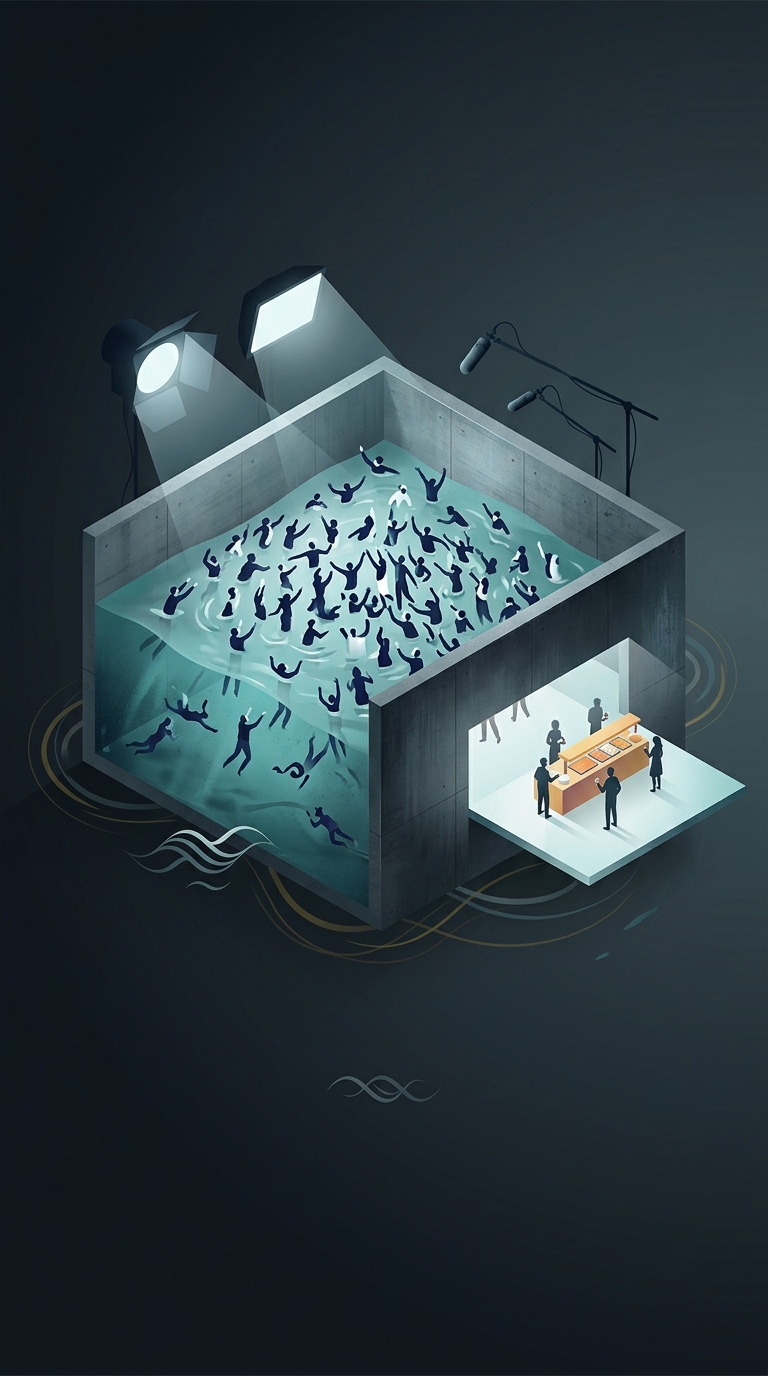
A film does not need deep water to make the frame look deep. The camera records only a slice of the scene, so the apparent scale comes from what the audience can see: dark water, floating debris, distant figures and a horizon that gives no clear sense of the tank’s edges. Keep the bottom out of view, and a performer standing on it can appear to be far from any solid ground.
That illusion depends on blocking—the planned positions and movements of performers and cameras. Extras can be arranged in layers, with people and wreckage closer to the camera obscuring the tank’s limits. Actors then sell the danger through unsteady movement, reaching and strained expressions. The setting supplies water; performance and composition supply the apparent depth.
Why control mattered as much as spectacle
A tank turns an unpredictable ocean into a repeatable filming space. The crew can reset people and floating objects between takes, keep cameras in known positions and coordinate movement across the scene. In a sequence crowded with performers, even small changes in where someone stands or what drifts past can affect the composition and the action around them.
That control also creates a tradeoff: the more carefully a scene is choreographed, the less freedom performers have to move spontaneously. Bathroom breaks and other pauses become part of the schedule, not merely a personal inconvenience, because stopping and restarting can disrupt a tightly coordinated setup.
The striking contrast is that the scene’s emotional scale and its physical scale were different. On camera, a person could look stranded in a vast, lethal expanse; just outside the frame, the set remained a bounded workplace where the crew could pause, reset and begin again.