Why a Toiletry Case Fit Military Life
A soldier’s grooming gear was useful only if it could be carried, found, and kept together while moving between places to sleep and work. A compact case turned loose items—such as a razor, soap, and toothbrush—into one portable bundle. That mattered in crowded quarters and during transfers, when there was little room for personal belongings and small things could easily get separated from a pack.
From Personal Habit to Issued Equipment
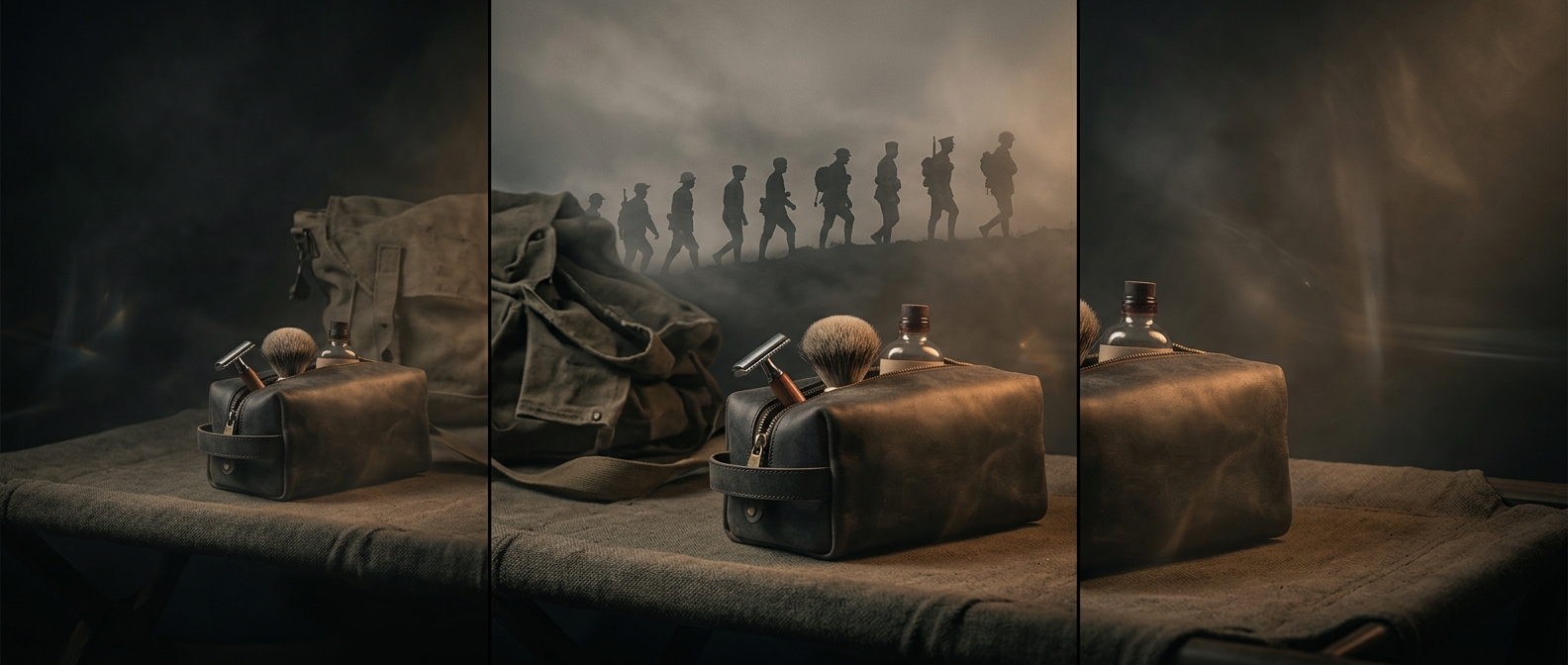
When the U.S. military issued toiletry kits during World War II, it made basic grooming easier to organize across a large force. The case was not elaborate equipment; its value was that it gathered ordinary necessities in a predictable place. A soldier could unpack it, use what was needed, then close it up again rather than search through a larger bag.
That small order also helped preserve a familiar routine amid conditions that were often temporary and unsettled. The Dopp kit’s lasting appeal comes from the same practical idea: make everyday essentials move as one unit, so a toothbrush or razor is less likely to be left behind when everything else is being packed.